


Knowing that India's defiance of the WTO rules on food stocking can derail the outcome of the forthcoming WTO Ministerial to be held at Bali in the first week of December, the visiting WTO Chief Roberto Azevedo asked India to consider 'Peace Clause' as an option to protect subsidies under the proposed National Food Security Act. "Food Security is a squarable circle. The line between price support and food security is very flimsy and not easily drawn. It is going to be a complex task," he said in New Delhi.
Now it is the next sentence that is more worrisome: "What we have agreed in Geneva is we are going to be working on a Peace Clause, which allows negotiators to find a more permanent solution for the long term. He was addressing the Confederation of Indian Industry (CII). Negotiations for a deal at the Bali meet are struck over the tenure of an interim resolution on the demand by G-33 developing countries on food security. While the G-33 is demanding the tenure of the peace clause to be 10 years, developed countries such as US are ready to accept only a 2-3 year period.
The Peace Clause provided exemption for those countries who used export subsidies for agriculture beyond the permissible limit. These countries could not be challenged before the dispute panel during the 'Peace Clause' period. It expired in 2003.
The compromise that India is therefore willing to exercise to ensure that the Bali negotiations proceeds ahead without any hiccup will now bring millions of hungry on the chopping block. It also threatens the livelihood security of millions of small farmers who receive an assured minimum support price for their crop produce. Already, as per WTO calculations, farmers in India are getting 24 per cent more minimum support price for paddy crop since the base period of 1986-88. As per the WTO criteria, Article 6.4 (b) of the Agreement on Agriculture provides for total support not to exceed 10 per cent of the total value of production for most developing members (except for China, where it is 8.5 per cent as part of its accession commitments).
I am talking of the controversial proposal moved by G-33 countries, which is a group of countries including China, India, Indonesia, Pakistan and others that came together to protect food security, livelihoods and rural development in the Doha Development Agenda, seeks amendments in the revised Doha draft modalities for agriculture. Knowing that procurement of wheat and rice under the National Food Security bill will rise manifold, India is wanting that the enhanced subsidy outgo for food procurement from small farmers as not being seen as a trade-distorting subsidy support. These subsidies, required to meet the food security needs of the hungry population, should be outside the maximum limit of ‘Aggregate Measurement of Support’ (AMS) that each country has to adhere to.
There was a proposal earlier to increase this to 15 per cent but somehow this got removed in the next revision of the draft modalities. Indian negotiators are saying that an increase in de-minimis criteria from 10 to 15 per cent could be the possible solution. But India is under tremendous pressure from US and European Union. On the other hand, in an analysis presented by Jacques Berthelot of France, the average food aid in 2010 that India gave to its 475 million people (65 million families below poverty line plus 10 million above poverty line) to meet its food security needs was to the tune of 58 kg/per person. Comparatively, the US provides 385kg/person to its 65 million people, who received food aid under several programmes like the food coupons, child nutrition programme etc.
In other words, America provides 7 times more subsidized food to its hungry on a per capita basis.
The best solution would be to change the reference year from 1986-88 to somewhere closer, especially after 2007 when the world witnessed a global food crisis that resulted in food riots in 37 countries. Considering that between 1986-88 and 2013, the price of rice and wheat have increased by more than 300 per cent, and prices of inputs like fertilisers had risen by 480 per cent in the same period (World Bank commodity price data), the base period of 1986-88 certainly has become outdated. Now this is where India needs to exert pressure rather than accepting the Peace Clause as a solution simply because it gives the ruling UPA Government an easy walkover before the 2014 elections.
Deferring the contentious issue is not a solution. India must stand up and resist developed countries pressure. After all, it is India's responsibility to feed its hungry population as well as the ensure livelihood security for its 600 million farmers. Even if Bali Ministerial fails, India cannot compromise the fate of 2/3rd of its population. The hungry in India cannot be traded at the altar of development.
Meanwhile, agricultural subsidies in the developed countries have risen from $ 350 billion in 1996 to $ 406 billion in 2011. Nobody is talking of reducing these monumental agricultural subsidies in the Western world. In fact, developed country farm subsidies are not even listed to be a topic of discussion in the negotiations at the Bali Ministerial.
India therefore need not worry about the future of WTO. Even economist Jagdish Bhagwati who has been a staunch supporter of a flawed trading regime, has finally acknowledged that "multilateral trading system is dead." He was speaking at New York on Sept 27. "The Doha Lite deal being attempted in Bali, is like a decaf and light coffee and we are trying to save the Doha Round, which is similar to the steps taken to save the Cancun Round on climate change issues."
Why should India therefore be making an effort to revive the dead horse by sacrificing its millions of hungry, including farmers and fishermen? Why can't it make instead an effort to find a better burial ground for what I have always called as the Wrong Trade Organisation?

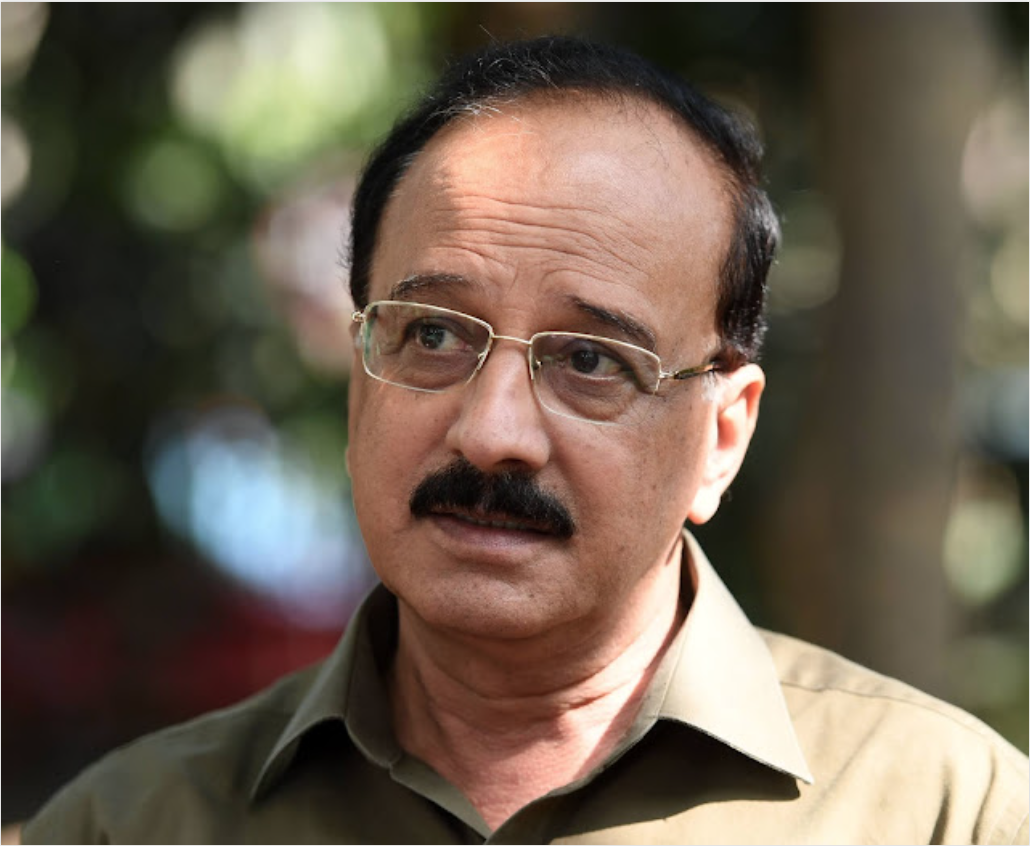
Devinder Sharma is an award-winning journalist, writer, thinker, and researcher known for his views on food and trade policy. Trained as an agricultural scientist (he holds a Master’s in Plant Breeding & Genetics), Sharma wrote for the Indian Express, and then quit active journalism to research on policy issues concerning sustainable agriculture, biodiversity and intellectual property rights, environment and development, food security and poverty, biotechnology and hunger, and the implications of the free trade paradigm for developing countries. He has been awarded with the honorary degree of Professor at Large by the CSK Himachal Pradesh Agricultural University, Palampur (India), and also has been a Visiting Fellow to the International Rice Research Institute, in the Philippines; Visiting Fellow at the School of Development Studies at the University of East Anglia, Norwich (UK); and a Visiting Fellow at the University of Cambridge (UK). Sharma is associated with numerous national and international organizations, civil society groups and farmers organisations. He also on the board of half a dozen national and international organizations, and is also a member of the CGIAR’s Central Advisory Service on Intellectual Property Rights.
ZNetwork is funded solely through the generosity of its readers.
Donate




