


On Monday, June 17, Dmitry Peskov, the spokesperson for Russia’s President Vladimir Putin, announced, “The Black Sea agreements are no longer in effect.” This was a blunt statement to suspend the Black Sea Grain Initiative that emerged out of intense negotiations in the hours after Russian forces entered Ukraine in February 2022. The Initiative went into effect on July 22, 2022, after Russian and Ukrainian officials signed it in Istanbul in the presence of the United Nations Secretary-General António Guterres and Turkey’s President Recep Tayyip Erdoğan.
Guterres called the Initiative a “beacon of hope” for two reasons. First, it is remarkable to have an agreement of this kind between belligerents in an ongoing war. Second, Russia and Ukraine are major producers of wheat, barley, maize, rapeseed and rapeseed oil, sunflower seeds and sunflower oil, as well as nitrogen, potassic, and phosphorus fertilizer, accounting for twelve percent of calories traded. Disruption of supply from Russia and Ukraine, it was felt by a range of international organizations, would have a catastrophic impact on world food markets and on hunger. As Western—largely U.S., UK, and European—sanctions increased against Russia, the feasibility of the deal began to diminish. It was suspended several times during the past year. In March 2023, Russia’s Foreign Ministry spokesperson Maria Zakharova responding to the sanctions against Russian agriculture, said, “[The main] parameters provided for in the [grain] deal do not work.”
Financialization Leads to Hunger
U.S. Secretary of State Antony Blinken said that his country regrets Russia’s “continued weaponization of food” since this “harms millions of vulnerable people around the world.” Indeed, the timing of the suspension could not be worse. A United Nations report, “The State of Food Security and Nutrition in the World 2023” (July 12, 2023), shows that one in ten people in the world struggles with hunger and that 3.1 billion people cannot afford a healthy diet. But the report itself makes an interesting point: that the war in Ukraine has driven 23 million people into hunger, a number that pales in comparison to the other drivers of hunger—such as the impact of commercialized food markets and the COVID-19 pandemic. A 2011 report from World Development Movement called “Broken Markets: How Financial Market Regulation Can Help Prevent Another Global Food Crisis” showed that “financial speculators now dominate the [food] market, holding over 60 percent of some markets compared to 12 percent 15 years ago.”
The situation has since worsened. Dr. Sophie van Huellen, who studies financial speculation in food markets, pointed out in late 2022 that while there are indeed food shortages, “the current food crisis is a price crisis, rather than a supply crisis.” The end of the Black Sea Grain Initiative is indeed regrettable, but it is not the leading cause of hunger in the world. The leading cause—as even the European Economic and Social Committee agrees—is financial speculation in food markets.
Why Did Russia Suspend the Initiative?
To monitor the Black Sea Grain Initiative, the United Nations set up a Joint Coordination Centre (JCC) in Istanbul. It is staffed by representatives from Russia, Turkey, Ukraine, and the United Nations. On several occasions, the JCC had to deal with tensions between Russia and Ukraine over the shipments, such as when Ukraine attacked Russia’s Black Sea Fleet—some of whose vessels carried the grain—in Sevastopol, Crimea, in October 2022. Tensions remained over the initiative as Western sanctions against Russia tightened, making it difficult for Russia to export its own agricultural products into the world market.
Russia put three requirements on the table to the United Nations regarding its own agricultural system. First, the Russian government asked that the Russian Agricultural Bank—the premier credit and trade bank for Russian agriculture—be reconnected to the SWIFT system, from which it had been cut off by the European Union’s sixth package of sanctions in June 2022. A Turkish banker told TASS that there is the possibility that the European Union could “issue a general license to the Russian Agricultural Bank” and that the Bank “has the opportunity to use JP Morgan to conduct transactions in U.S. dollars” as long as the exporters being paid for were part of the Black Sea Grain Initiative.
Second, from the first discussions about the Grain Initiative, Moscow put on the table its export of ammonia fertilizer from Russia both through the port of Odesa and of supplies held in Latvia and the Netherlands. A central part of the debate has been the reopening of the Togliatti-Odesa pipeline, the world’s longest ammonia pipeline. In July 2022, the UN and Russia signed an agreement that would facilitate the sale of Russian ammonia on the world market. The UN’s Guterres went to the Security Council to announce, “We are doing everything possible to… ease the serious fertilizer market crunch that is already affecting farming in West Africa and elsewhere. If the fertilizer market is not stabilized, next year could bring a food supply crisis. Simply put, the world may run out of food.” On June 8, 2023, Ukrainian forces blew up a section of the Togliatti-Odesa pipeline in Kharkiv, increasing the tension over this dispute. Other than the Black Sea ports, Russia has no other safe way to export its ammonia-based fertilizers.
Third, Russia’s agricultural sector faces challenges from a lack of ability to import machinery and spare parts, and Russian ships are not able to buy insurance or enter many foreign ports. Despite the “carve-outs” in Western sanctions for agriculture, sanctions on firms and individuals have debilitated Russia’s agricultural sector.
To counter Western sanctions, Russia placed restrictions on the export of fertilizer and agricultural products. These restrictions included the ban on the export of certain goods (such as temporary bans of wheat exports to the Eurasian Economic Union), the increase of licensing requirements (including for compound fertilizers, requirements set in place before the war), and the increase of export taxes. These Russian moves come alongside strategic direct sales to countries, such as India, which will re-export to other countries.
In late July, St. Petersburg will host the Second Russia-Africa Economic and Humanitarian Forum, where these topics will surely be front and center. Ahead of the summit, President Putin called South Africa’s Cyril Ramaphosa to inform him about the problems faced by Russia in exporting its food and fertilizers to the African continent. “The deal’s main goal,” he said of the Black Sea Grain Initiative, was “to supply grain to countries in need, including those on the African continent, has not been implemented.”
It is likely that the Black Sea Grain Initiative will restart within the month. Earlier suspensions have not lasted longer than a few weeks. But this time, it is not clear if the West will give Russia any relief on its ability to export its own agricultural products. Certainly, the suspension will impact millions of people around the world who struggle with endemic hunger. Billions of others who are hungry because of financial speculation in food markets are not impacted directly by these developments.

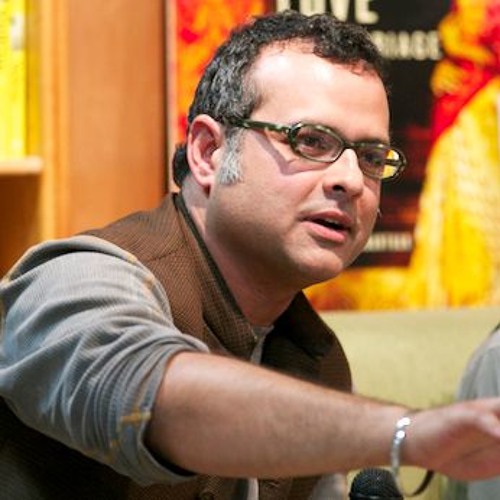
Vijay Prashad is an Indian historian, editor, and journalist. He is a writing fellow and chief correspondent at Globetrotter. He is an editor of LeftWord Books and the director of Tricontinental: Institute for Social Research. He is a senior non-resident fellow at Chongyang Institute for Financial Studies, Renmin University of China. He has written more than 20 books, including The Darker Nations and The Poorer Nations. His latest books are Struggle Makes Us Human: Learning from Movements for Socialism and (with Noam Chomsky) The Withdrawal: Iraq, Libya, Afghanistan, and the Fragility of U.S. Power. Tings Chak is the art director and a researcher at Tricontinental: Institute for Social Research and lead author of the study “Serve the People: The Eradication of Extreme Poverty in China.” She is also a member of Dongsheng, an international collective of researchers interested in Chinese politics and society.
ZNetwork is funded solely through the generosity of its readers.
Donate




