

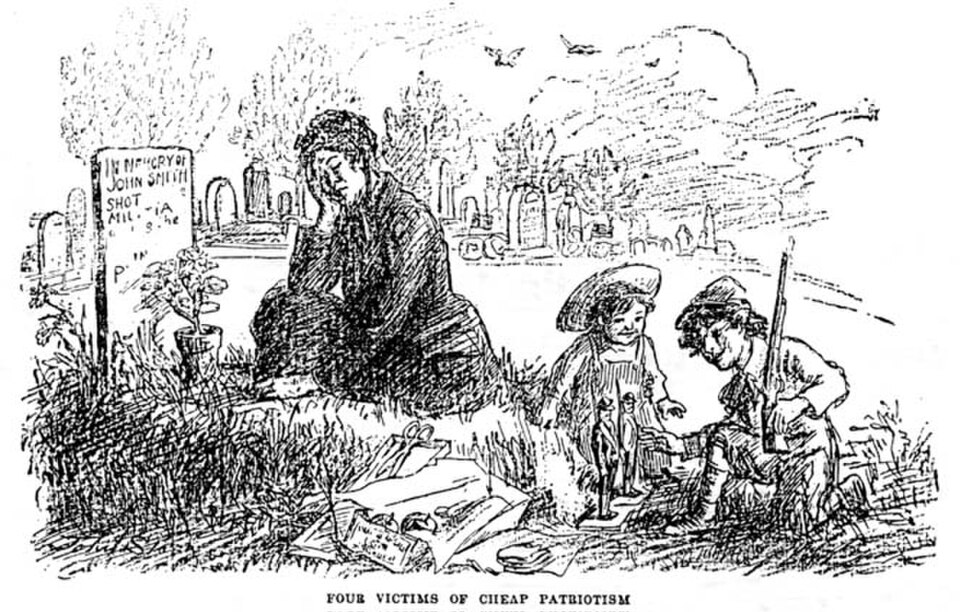
In peripheral capitalist formations, women are not merely a gendered or social category. They occupy a structural position at the intersection of capitalist accumulation, state formation, and global geopolitical hierarchies. In this sense, they function as one of the primary sites onto which the costs of systemic crisis are displaced.
Their condition is shaped by three interrelated dynamics: patriarchal social structures at the national level, the political economy of dependent development, and the persistent pressures of militarization and imperial intervention at the global level.
From this perspective, war cannot be understood as a discrete or exceptional event. It is better understood as a continuation of structural violence by other means—violence that predates armed conflict and persists long after its formal conclusion. Iran offers a clear illustration of this continuity.
Following the 1979 Revolution, the new state undertook a rapid reorganization of gender relations in both public life and wage labor. In the early post-revolutionary period, significant numbers of women were excluded from state institutions and formal employment through both ideological and administrative mechanisms.
However, this trajectory was neither linear nor stable. The post–Iran-Iraq War reconstruction period, followed by the neoliberal restructuring of the 1990s, gradually reintegrated women into higher education and labor markets. Yet this reintegration occurred under conditions defined by cheap, flexible, and highly precarious labor—consistent with the logic of peripheral capitalism and the controlled incorporation of women into the workforce.
Long-term economic sanctions imposed on Iran must also be understood beyond their stated political objectives. They function as a form of structural violence that directly disrupts and degrades the conditions of social reproduction of the working class.
In this context, women—who are disproportionately responsible for sustaining household economies—absorb the shocks of inflation, currency devaluation, and shortages of essential goods. Macro-level economic crisis is thus transferred to the micro-level of daily reproduction, where it becomes deeply gendered.
At the same time, ongoing militarization in the Middle East and repeated cycles of war and threat intensify these dynamics. War is not an exception to regional order but a constitutive element of a global system of uneven development and coercive stability.
Historical experience demonstrates that in both war and post-war periods, women are among the first groups to be displaced from formal labor markets. Iran is no exception. While crisis periods may temporarily expand women’s labor participation, phases of restructuring and austerity systematically push them back into economic marginality.
Following the Iran-Iraq War, structural adjustment policies and privatization processes—amplified by external pressures—expanded informal and low-wage labor markets. Women became increasingly concentrated in insecure, underpaid, and informal sectors of employment.
From the late 1990s onward, the expansion of women’s higher education, the growth of civil society networks, and increased social participation produced a real but constrained transformation. However, this transformation unfolded within a rigid political economy that limited its structural impact.
Successive governments, despite ideological differences, oscillated between reform and control, without fundamentally altering the structural reproduction of gender inequality embedded in the political economy. As a result, women’s social advancement has coexisted with persistent economic insecurity and institutional fragility.
The recent escalation of military tensions and attacks by the United States and Israel against Iran has produced a severe economic shock, characterized by production shutdowns, disruptions in services, and widespread layoffs. This is not a temporary disturbance but part of a longer political economy of crisis reproduction in peripheral societies.
Within this context, women are disproportionately affected by exclusion from labor markets due to their concentration in precarious, contractual, and low-wage sectors. At the same time, the closure of educational institutions and the absence of public care infrastructures shift the burden of social reproduction back onto households, and specifically onto women.
As a result, many women are forced into unpaid leave, reduced working hours, or full withdrawal from formal employment in order to sustain household survival.
This process demonstrates that war does not only destroy economic infrastructure. It intensifies the feminization of crisis by transferring the costs of survival into everyday life through the expansion of unpaid domestic labor—deepening and extending the structural effects of sanctions and austerity.
Women’s position in Iran and other peripheral societies cannot be understood through cultural or national frameworks alone. It must be situated within the global structure of capitalism and imperial power relations.
Sanctions, wars, and geopolitical interventions are not separate phenomena but interconnected mechanisms of crisis production, through which the burdens of social reproduction are systematically displaced onto the most vulnerable segments of the working class—especially women.
In this framework, women are not only victims of war, but also of a continuous and cumulative regime of economic, political, and military violence that begins before war and persists long after its formal end.
ZNetwork is funded solely through the generosity of its readers.
Donate





1 Comment
Since WW II:
Republicans have started wars for oil;
Democrats have fought their wars for drugs.