

Here is a story I have never told before:
I travelled to Tunisia in late 1993 to meet PLO Chairman Yasir Arafat. I was serving as co-chair of Builders for Peace, a project launched by then Vice-President Al Gore to help create employment and promote economic growth in the Occupied Palestinian lands. I was sent to Tunis to meet Chairman Arafat and the PLO Executive Committee to explain our mission and receive their support. I had met Arafat many times before; we knew each other and often had frank exchanges.
When I arrived, the chairman was having an animated phone conversation. He relayed that he had been speaking to his “people in Lebanon”, boasting of their daily contact and his success in rearming them. He knew this would provoke disagreement as we had argued with him before about the provocative and counterproductive nature of their armed presence in Lebanon.
He closed his comments saying, “You see, Jimmy”, that is what he called me, “these are the keys to leadership: communication and power in reserve.”
Just then, the famed Palestinian poet Mahmoud Darwish walked into the room and Arafat said to him, “Mahmoud, I’m telling Jimmy that the keys to leadership are communication and power in reserve. Isn’t that right?”
Mahmoud replied, “And also vision, sir.” Arafat waved his hand dismissively saying, “Not important.”
I have never written about this before out of respect for the now-deceased Yasir Arafat and, despite our disagreements and his obvious mistakes, his contributions to elevating the Palestinian national identity and movement.
I share it now because this idea of “communication and power” without vision still reflects the Palestinian dilemma. Arafat was an effective communicator, responsible not only for projecting the Palestinian message to audiences worldwide, but also for bridging differences within the Palestinian movement.
However, when Arafat and his generation spoke of Palestinian moral and legal rights or of a “democratic, secular Palestine,” they were speaking about ideas which, though compelling and justified, did not constitute strategic vision coupled with realistic and actionable tactics to implement that vision. And so, while Arafat inspired millions and amassed arms, the use of these weapons was counterproductive to their goals.
Today’s competing Palestinian leaderships, the Palestinian Authority, Hamas and Islamic Jihad, fail to have a realistic strategic vision or propose steps toward implementing that vision. The PA and Hamas are simply struggling to survive and maintain control over their fiefdoms. The PA president not only has no vision, but also does not communicate nor have power. Hamas’ “strategy” plays right into Israel’s hands, allowing them to separate Gaza from the rest of the Occupied Lands. Their “deterrent power” is, at best, ineffectual and counterproductive, giving Israel the excuse to cruelly strangle and periodically deliver massive blows killing hundreds of innocents. With Hamas now tamed, Islamic Jihad foolishly imagines that its random attacks and ineffective missiles will change the Palestinian situation.
As the brilliant Israeli Palestinian leader Tawfiq Zayyed once replied to criticism that he had denied the Palestinian right to armed resistance, “You may have that right, but when you use it as badly as you do, you forfeit it.”
What has remains necessary is a realistic assessment of the Palestinian situation vis-à-vis an oppressive and aggressively acquisitive Israeli state and, based on this reality, the development of a strategic vision and the tactical steps to implement it. I would turn to the heroic example of those in Palestinian and Israeli civil society, who struggle to create a movement for change that can translate the one-state reality into a democratic future for all.
It will not happen overnight, but if the “leaderships” would discipline their forces or, at the very least, get out of the way, the possibility of a mass non-violent struggle against the apartheid regime could bear fruit, as it did in varying degrees in South Africa, the US civil rights movement and Northern Ireland.
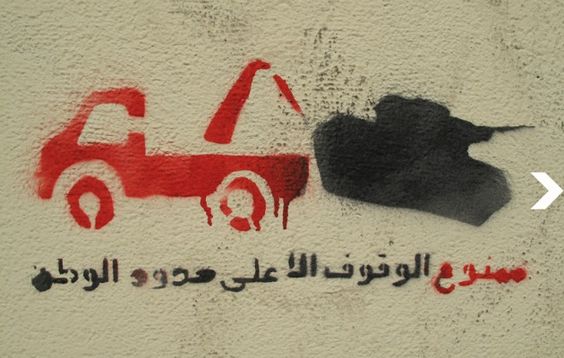
Violence plays into Israel’s hands. Civil disobedience and general strikes by Palestinian labourers, boycotts and mass peaceful demonstrations at check points and the borders would paralyse Israel. That is the genius of peaceful resistance; it turns military might into a weakness and can turn worldwide public opinion into a powerful weapon for change.
ZNetwork is funded solely through the generosity of its readers.
Donate




