


Four years ago, when Barack Obama was running against John McCain for the Presidency and when the climate crisis was not as severe as it has become, both Obama and McCain were in agreement that 1) it existed and 2) action should be taken on it. As importantly, they both spoke about this issue throughout the campaign.
Obama’s program back then, put forward in early August 2008, projected 1 million plug-in hybrid cars by 2015, a commitment to energy efficiency, investing in an upgrade of the national utility grid, weatherizing one million homes annually, a 100% auction—with no freebies for polluters–of carbon emission permits, and a goal of 5 million new green jobs. He consistently incorporated language in his speeches for the US to advance wind and solar, to “heal the planet.”
Compared to then-President George Bush, these were important, if limited, steps in the right direction, and Obama and the Democrats have made efforts, with some success, to move most of these and other clean energy programs forward.
But when it comes to talking about the much-worse, deepening climate crisis in 2012, Obama has essentially censored himself. It is stunning, and deeply disturbing, that this is happening, given events just this year like record heat and widespread drought and a new record for Arctic ice melt. Some climate scientists who have been studying the Arctic for many years believe that it is possible that before the next Presidential election in 2016, the Arctic could be ice-free during the last month of summer.
What is baffling about Obama’s silence is that polling shows consistently that taking action on climate is a winner politically. A poll of likely voters just last month conducted by Yale and George Mason University found these striking results:
“Most undecided likely voters (80%) believe that global warming is happening, while only 3% say it is not happening – which is very similar to likely Obama voters (86% and 4%, respectively).
“Two out of three Undecideds (65%) say that if global warming is happening, it is mostly human caused, the same as likely Obama voters (65%).
“Though few likely voters say global warming is the “single-most important” issue to them in this election, majorities of both likely Obama voters (75%) and Undecideds (61%) say it will be one of several important issues determining their vote for President.
“Undecideds as well as likely Obama voters say that President Obama (64% and 61% respectively) and Congress (72% and 78%) should be “doing more” about global warming.”
For several months many climate and environmental groups have tried to break the silence on climate in the Presidential election campaign, so far without success. An on-line petition effort, www.climatesilence.org, was recently launched. Over 150,000 people signed a petition to Jim Lehrer to get him to ask a question on climate in the first debate, without success.
But in retrospect, I wonder what would have happened even if Lehrer had asked such a question. Given Obama’s, and Romney’s, respective first debate performances, there’s a good chance they both would have said little of substance, done all they could to keep this from becoming a major issue.
Obama’s debate performance, as indicated by polls released over the last several days, show that Obama has pretty much lost the lead he had been slowly developing prior to the debate. All signs point to a very close election that, as of now, could go either way.
In that context, and given the results of the Yale/George Mason and other prior polls, it sure seems like it would be to Obama’s benefit that he regain his voice on climate. It’s true that, like debating, this is something that he’s not used to. He hasn’t been talking about climate for years, literally. Ever since the failed Copenhagen climate conference in late 2009, Obama has rarely mentioned the issue, and when he has said something that’s all that it has been, a mention.
But our current President does have a history of coming off the ropes with strength and passion when it has to do with his political standing or possible election defeat. If he and his campaign advisors finally realize that publicly speaking up for action to address the climate crisis is the right thing to do politically, maybe that will be what breaks the silence and, indeed, plays a key role in getting Obama elected.
It’s a shame if this ends up being what causes it, but given our desperate climate reality, it’s something to be welcomed. The planet, its people and all forms of life need a President who doesn’t make jokes about but who has a vision, however cloudy, of a time when the “rise of the oceans begins to slow and our planet begins to heal.”
Ted Glick has been a climate activist since 2004 and a progressive activist and organizer since 1968. Past writings and other information can be found at http://tedglick.com, and he can be followed on twitter at http://twitter.com/jtglick.

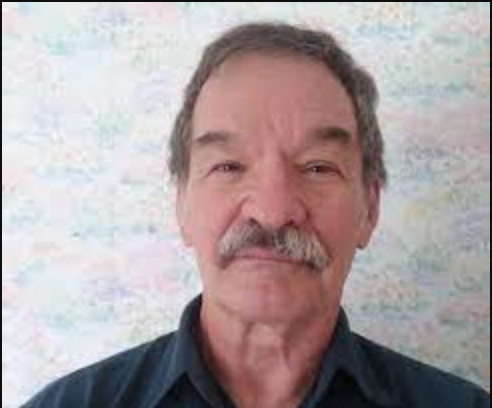
Ted Glick has devoted his life to the progressive social change movement. After a year of student activism as a sophomore at Grinnell College in Iowa, he left college in 1969 to work full time against the Vietnam War. As a Selective Service draft resister, he spent 11 months in prison. In 1973, he co-founded the National Committee to Impeach Nixon and worked as a national coordinator on grassroots street actions around the country, keeping the heat on Nixon until his August 1974 resignation. Since late 2003, Ted has played a national leadership role in the effort to stabilize our climate and for a renewable energy revolution. He was a co-founder in 2004 of the Climate Crisis Coalition and in 2005 coordinated the USA Join the World effort leading up to December actions during the United Nations Climate Change conference in Montreal. In May 2006, he began working with the Chesapeake Climate Action Network and was CCAN National Campaign Coordinator until his retirement in October 2015. He is a co-founder (2014) and one of the leaders of the group Beyond Extreme Energy. He is President of the group 350NJ/Rockland, on the steering committee of the DivestNJ Coalition and on the leadership group of the Climate Reality Check network.
ZNetwork is funded solely through the generosity of its readers.
Donate




