


Last weekend, I sat in a movie theatre packed with white people who had brought their children to see the box office hit, Hidden Figures. Hidden Figures topped the number one movie chart for two weeks in a row. This is the untold story of Katherine G. Johnson (played by Taraji P Henson), Dorothy Vaughan (Octavia Spencer) and Mary Jackson (Janelle Monae) — brilliant African-American women working at NASA, who served as the brains behind the launch of astronaut John Glenn into orbit. The Glenn launch invigorated the US space competition against the space program of the rival USSR. Despite an incredible cast, screenplay and music score the more I thought about the assumptions of the movie, the more I realized that something was very wrong.
Hidden Figures won the best cast award at the Screenwriters Actors Guild to thunderous applause. Taraji P Henson’s acceptance speech helped me clarify my unease with the subliminal message of the film when she said:
“These women did not complain about the problems, their circumstances, the issues. We know about what was going on in that era, but they didn’t complain; they focused on solutions. This story is about unity. This story is about what happens when we put our differences aside and come together as a human race.”
This is what bothered me about the movie. Why is it wrong to complain when faced with segregated toilets, inferior education, the murder of youth like Emmitt Till, and police brutality? These women didn’t complain because it wasn’t safe; these women, like millions of others, didn’t complain because of fear of being fired or the risk of physical harm. The idea of glamorizing the fact that these women didn’t complain plays into the narrative that “free will” was involved in their decision. When Henson talks about “putting our differences aside,” what differences is she referring to: white supremacy, or injustice, or general issues that make white people feel uncomfortable? What topics are placed on the altar in order to negotiate Black and white unity or “getting things done?”
Movies are a part of the propaganda narrative that we subliminally digest. That was the message of the narrative, one promoted by former President Obama to predominately Black students and audiences: Stop whining and complaining, just continue to get the job done. General Colin Powell, in his memoir notes that in the Army, African-Americans would complain about being assigned menial chores but since he was from an immigrant family he didn’t come to the job with the same baggage. From his vantage point, not only was he able to sweep the floor but devise efficient methods to get the job done.
The women of Hidden Figures are caught in a no-win situation of segregation, violence and limited options and choose the path of least resistance. It was a path that allowed them to raise their families in relative safety, have distorted but normal lives under whites supremacy and earn a living. No small achievement for Black women during this era.
Black audiences liked this movie because it portrayed the brilliance of these three major characters but also graphically choreographed the indignities they suffered. From Katherine Johnson having to run across campus, sometimes in the rain to colored bathrooms, bypassing “whites only” restrooms, to Dorothy Vaughan not able to use a local library, to Mary Jackson having to attend a segregated night class to study engineering. Black audiences can relate to the indignities and disregard that is still the backdrop to our lives in America.
But the acquiescence of the main characters to racism and the white saviors who show up in the nick of time was also a predicable theme in the movie. For example, the white men in Katherine Johnson’s office gave her the cold shoulder when she poured coffee from the office coffee pot. The next day, next to the office coffee pot was a smaller coffee pot labeled “colored.” She clearly understood the indignity of the gesture but didn’t complain. Katherine confronts her white boss, Kevin Costner, about the indignity of using a colored toilet and a colored coffee pot after he questions her lengthy absences away from her desk. Later Costner, outraged, takes a hammer to the “colored toilet sign” with Black folks passively looking on.
The good white man coming to the rescue of the three women becomes predicable as a theme in the movie, perhaps providing comfort to white audiences. It is a white judge that rules in her favor that allows Mary Jackson to attend a whites only evening school. It’s a white female supervisor who finally understands that black women should be given the opportunity to work in the computer room that affords Dorothy Vaughan the position of supervisor. All of these events could have unfolded as they appear in the movie, but I suspect the role of white people who slowly but surely come to understand the humanity of these women, albeit belatedly, ultimately saves the day for these characters. In this regard, the movie becomes a form of cinematic salve for the souls of white folks.
What is missing however is the power of the resistance movement in the 1960’s, the invisible hand moving behind the benevolence.
This formula of black victims and white saviors forms the core of how Hollywood portrays the struggle of black people. This allows white parents to distort the treatment of Africans so that their children can be afforded the illusion of social relationships that are not rooted in power.
As Taraji Henson noted, these women were not rabble-rousers. They were not in the streets protesting the indignities of white supremacy. They played by the rules and at the end of the day the system worked for them and their families. Perhaps, this is what made me uncomfortable about the movie. For white people, it’s a feel good movie that demonstrates that even during one of the vilest and most racist periods of American history white saviors rose to the occasion.
As much as I personally admire these women, without the activism of people like Rosa Parks, Malcolm X or Martin King their personal achievements would have remained just that: personal. It was the collective struggles of the 60’s with its acts of defiance and refusal to play by the rules of white supremacy that moved the struggle of black people forward.
The women of Hidden Figures were clearly intellectually superior to their white male counterparts. However, the oppression would have continued, despite their brilliance, without the power of a social movement that forced white privilege to negotiate.
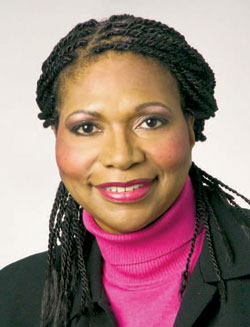
Dr. Marsha Adebayo is the author of the Pulitzer Prize nominated: No FEAR: A Whistleblowers Triumph over Corruption and Retaliation at the EPA. She worked at the EPA for 18 years and blew the whistle on a US multinational corporation that endangered South African vanadium mine workers. Marsha’s successful lawsuit led to the introduction and passage of the first civil rights and whistleblower law of the 21st century: the Notification of Federal Employees Anti-discrimination and Retaliation Act of 2002 (No FEAR Act). She is Director of Transparency and Accountability for the Green Shadow Cabinet and serves on the Advisory Board of ExposeFacts.com. Marsha will be inducted into the Maryland Women’s Hall of Fame, March 2017.

ZNetwork is funded solely through the generosity of its readers.
Donate





4 Comments
Yep, don’t complain. Stop whinging.. Get on and GET STUFF DONE, SILENTLY. Yep, institutional racism’s on par with your bus being late…”we all have problems and little hurdles along the way, but wecmake do, don’t we.” Yep, they’re the people we repect. And as soon as I read that sentence about white saviours Kevin Costner came to mind. Dances With Wolves. And he even married a Sioux woman in that movie…oh, that’s right, she wasn’t Sioux, she was white and adopted by the tribe!! So I laughed when I saw his name pop up in that paragraph, as I haven’r seen this movie. Not surprised really.
If you want a black saviour, see Denzel in The Equalizer. Robert McCall, ex CIA, now a good helpful community citizen working in a low key job at Home Mart…and what skills…someone who solves problems for others and rids the US of the whole Russian mafia, through, you guessed it, exquisite killing skills….no complaining there. Just goes about his “job” silently…gets stuff done and makes community safe…through major violence….cool. He didn’t need help from a couple of old CIA colleages when he went to visit them….he just wanted permission.
…and we’re supposed to be cheering for the military boondoggle NASA program as “we” beat the Russians??!!!
This film did not leave me with the same discomfort as The Blind Side. On the upside, films like Hidden Figures, Red Tails, and the Free State of Jones bring us forgotten history even if packaged in a tired Hollywood formulaic. The draws backs of the film, as you point out, are uncontroversial to me. However, my experience as a white West Virginian is a bit atypical. I attended the HBCU (West Virginia State-depicted in the film-as well as working there as an adjunct in the History Department. Also as an instructor at the local Job Corps, I had the opportunity to work colleagues who were the children of Tuskegee airmen. As West Virginia is the product of succession from the South, I also find the Free State of Jones to be relatable. How can we use such films as a jumping off point for greater understanding?
“Evil triumphs when good men and women say or do nothing”.
Thank you Dr. Marsha Adebayo for your enlightening and informative article.