


Sweden’s position on the Kurdish population in Turkey and on Hungary’s right-wing government has thwarted its entry into NATO.
On July 11-12, 2023, the 31 members of the North Atlantic Treaty Organization (NATO) will hold their annual summit in Vilnius, Lithuania. To prepare for the summit, NATO Secretary General Jens Stoltenberg met with US President Joe Biden to discuss the agenda for the summit. They spoke about the importance of Western support for Ukraine “for the long haul” and Stoltenberg told Biden that “he looks forward to welcoming Sweden as a full member of NATO as soon as possible.”
In their joint press conference on June 13, neither Biden nor Stoltenberg mentioned anything about Ukraine’s membership of NATO, although both hoped that Sweden would become a member, “hopefully….very shortly,” as Biden said. Despite noises in the German Bundestag from Christian Democratic members—such as urging by Roderich Kiesewetter—to bring Ukraine into NATO, there seems to be no appetite for any such move at present, least of all from German Chancellor Olaf Scholz who is being very cautious. Germany is wary of allowing Ukraine into NATO during a war, but has no problem—in principle—with Ukraine’s membership in NATO. With Sweden, the chessboard is far more complicated.
Finland joins, but not Sweden
In May 2022, Finland and Sweden applied to join NATO, a military alliance that had—at that time—consisted of thirty countries (the most recent entrant being North Macedonia in 2020). At that time, Stoltenberg said of the applications, “It is great to see you both.” Indeed, it was widely expected that these applications would be fast-tracked and that all four Scandinavian states would be within the military camp of NATO. Norway and Denmark were both founder members in 1949 (Denmark’s accession was particularly necessary so that the US could build a vast base on Danish colonized Greenland—Pituffik Space Base, the northernmost US military base—in 1951, displacing the local Inuit population).
Just short of a year later—on April 4, 2023—NATO welcomed Finland into the alliance. “Joining NATO is good for Finland,” said NATO’s Stoltenberg. “It is good for Nordic security, and it is good for NATO as a whole.” Finland shares a very long (832-mile) border with Russia, the longest border of any European Union or NATO state. By joining NATO, Finland has doubled the NATO-Russia border. Finland began to build a border fence along the “riskiest areas,” notably where Russian migrants might try to cross over. Social media in Finland mocked pictures released by the Border Guard of the fence, saying that it was just about useful for stopping horses; the “fence is not for horses,” responded Lieutenant Colonel Jukka Lukkari.
At the ceremony to welcome Finland into NATO, Finland’s President Sauli Niinistö said that his country’s membership is “not complete without Sweden.” Standing beside him, NATO’s Stoltenberg said, “I look forward to also welcoming Sweden as soon as possible.”
Why was Sweden not taken into the Western military alliance? In 1949, when NATO was established, the principle of decision-making adopted by the members was that of “consensus,” which means that all countries must agree to any decision; this consensus decision-making applies particularly to the question of membership. Two NATO members—Hungary and Turkey—ratified Finland’s entry into NATO but blocked that of Sweden. That they allowed NATO to welcome Finland, which—unlike Sweden—has a direct border with Russia, shows that it is not the war in Ukraine that troubles these two countries. They have other problems, directly with Sweden.
The Sweden problem
At a press conference in Washington with US Secretary of State Antony Blinken and NATO’s Stoltenberg, Vivian Salama of the Wall Street Journal asked, “Are you concerned that Turkey is increasingly becoming a disruptive ally?” Both Blinken and Stoltenberg ducked the question, which led Kylie Atwood of CNN to ask directly about NATO membership for Sweden. Stoltenberg obliquely noted Turkey’s concerns regarding the presence of the Kurdistan Workers’ Party (PKK) in Sweden. “All NATO allies are of course ready to sit down and address those concerns, including the threats posed to Turkey by PKK,” Stoltenberg said.
In 2009, when Sweden held the presidency of the Council of Europe, then-Prime Minister Fredrik Reinfeldt promised to shepherd Turkey into the European Union. Relations, at that time, were robust. Turkey’s war in recent years on the Kurdish minorities in the southeast of the country and in northern Syria roused the exiled Kurdish community in Sweden. Protests in Stockholm have annoyed Turkish President Recep Tayyip Erdogan, who has repeatedly called in the Swedish ambassador to Ankara to complain about these protests. When an effigy of Erdogan was burnt by the Rojava Committee of Sweden, Sweden’s foreign minister Tobias Billström wrote on Twitter, “Portraying a popularly elected president as being executed outside City Hall is abhorrent.” This statement was not sufficient. Sweden’s Prime Minister Ulf Kristersson said that his country had weak “anti-terror” laws and that his government was in talks with Ankara to see what could be done.
On his way to Azerbaijan on June 14, Erdogan dismissed the possibility that Sweden would be allowed to enter NATO this July.
In May 2023, Hungary’s president Viktor Orban went to Doha to attend the Qatar Economic Forum. He was asked why his ruling alliance, Fidesz-KDNP, which dominates the parliament (135 out of 199 seats), refuses to ratify Sweden’s entry into NATO. Orban bluntly said that he would not back down because “Sweden unfairly expresses a damaging opinion about the situation of democracy and the rule of law in Hungary.” Sweden is not alone in these concerns, which have been made very strongly by thirteen Hungarian intellectuals in a powerful book (“Igazságosság—demokrácia—fenntarthatóság”) last year.
Orban was very upset with Sweden for its support of a European Union parliamentary report from September 2022 that described the Hungarian political system as “a hybrid regime with parliamentary autocracy.” Unless Sweden revokes this attitude, Budapest says, it will not allow it to join NATO.

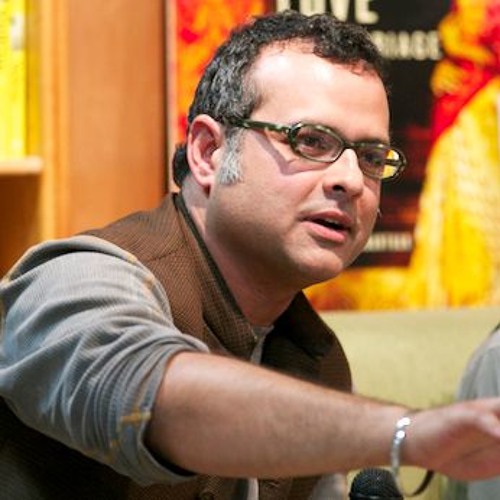
Vijay Prashad is an Indian historian, editor, and journalist. He is a writing fellow and chief correspondent at Globetrotter. He is an editor of LeftWord Books and the director of Tricontinental: Institute for Social Research. He is a senior non-resident fellow at Chongyang Institute for Financial Studies, Renmin University of China. He has written more than 20 books, including The Darker Nations and The Poorer Nations. His latest books are Struggle Makes Us Human: Learning from Movements for Socialism and (with Noam Chomsky) The Withdrawal: Iraq, Libya, Afghanistan, and the Fragility of U.S. Power. Tings Chak is the art director and a researcher at Tricontinental: Institute for Social Research and lead author of the study “Serve the People: The Eradication of Extreme Poverty in China.” She is also a member of Dongsheng, an international collective of researchers interested in Chinese politics and society.
ZNetwork is funded solely through the generosity of its readers.
Donate




