

Over the last decade, the entertainment industry has shifted away from legacy distribution models like film and television and embraced a streaming-first model. The move has been a lucrative one, bringing billions of dollars in revenue to the industry.
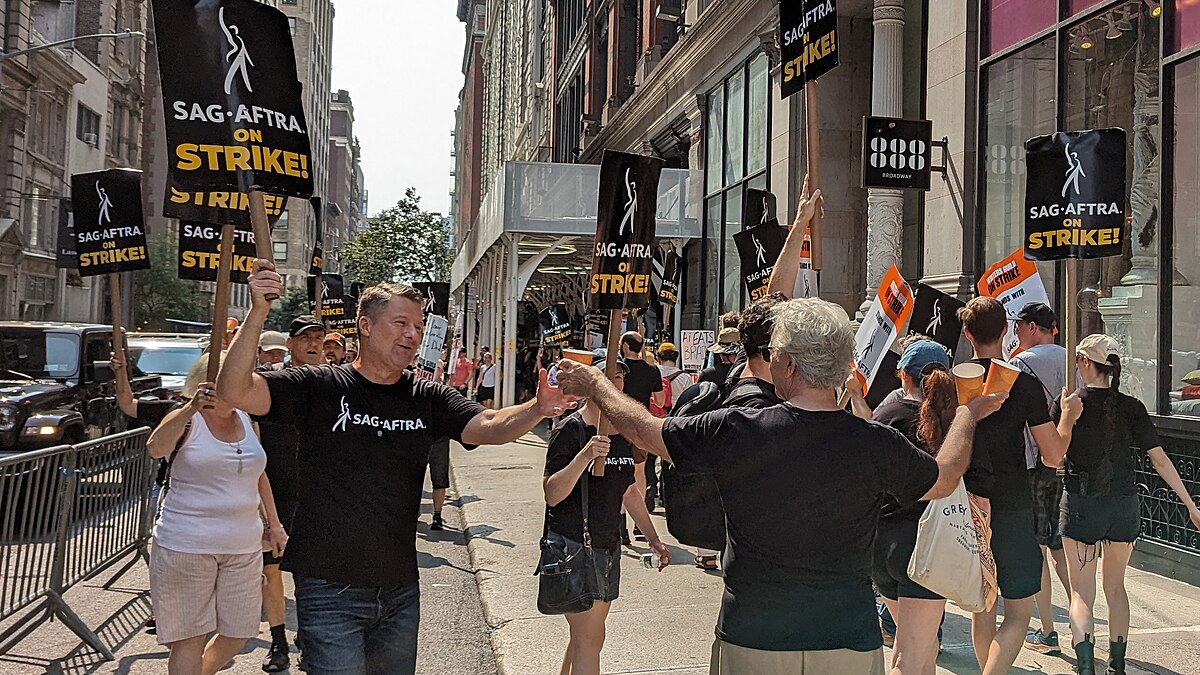
But those profits haven’t reached working actors and writers. Some 87% of actors earn less than $26,000 per year; many writers have to work second jobs to make ends meet. And so, for the first time since 1960, members of the Writers Guild of America (WGA) and the Screen Actors Guild (SAG-AFTRA) are on strike simultaneously — and Hollywood has effectively shut down.
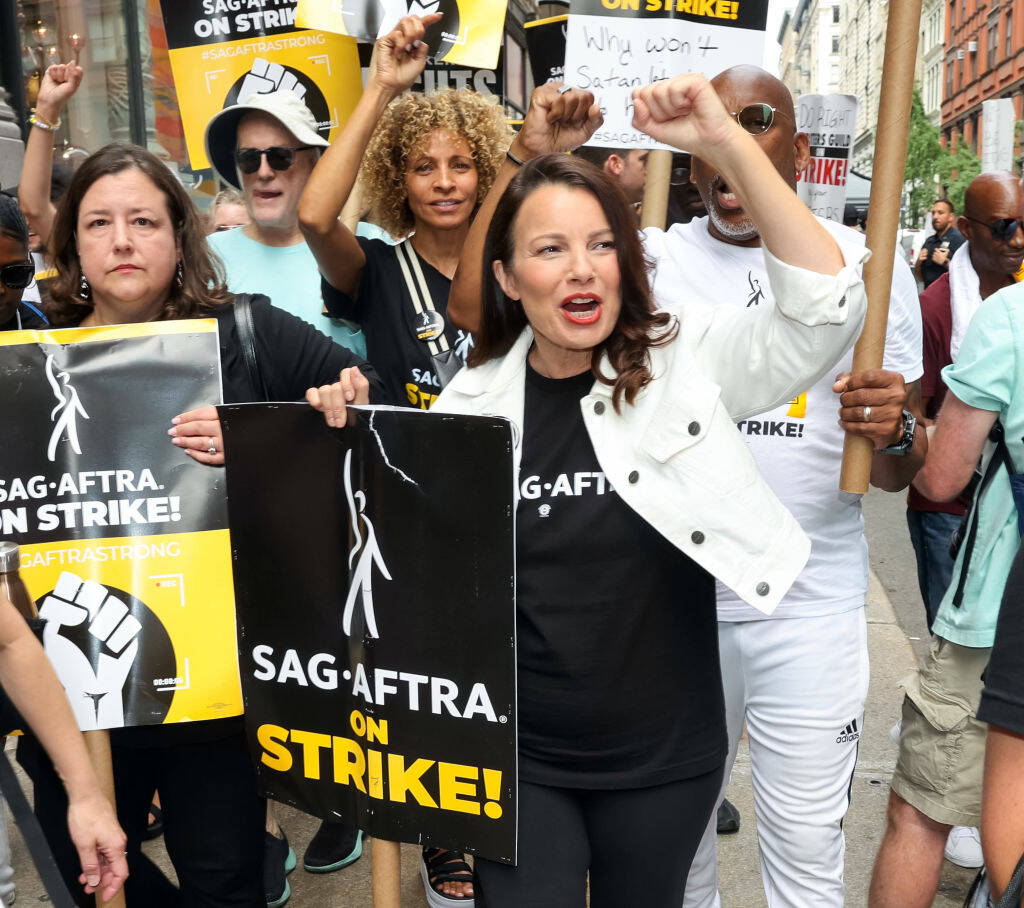
Unfair wages, insufficient benefits and a lack of job security: any one of these would be reason enough for a strike, though Hollywood’s striking union members currently face all three. But when SAG-AFTRA President Fran Drescher announced the actors’ strike, she named a fourth reason: “If we don’t stand tall right now, we are all going to be in trouble. We are all going to be in jeopardy of being replaced by machines.”
ChatGPT might not be able to write an Oscar-winning script; but if it can produce a mediocre starter draft in minutes, that may push writers toward “AI cleanup” tasks …
Maybe that line sounds a bit odd. But in the past year, the phrase “generative artificial intelligence” has seen a fair bit of news coverage. It’s even possible you’ve used ChatGPT, one of the flagship examples of “generative AI” software. Type a few words into its interface, and it responds with a human-sounding answer. Other AI tools function much the same: Midjourney and DALL-E produce digital images; Copilot writes computer code. This technology takes seconds to produce something that might take a human hours, if not days.
This software has evolved rapidly in the last year, helped along by staggering amounts of capital. Hollywood’s unions see generative AI as an issue worth striking over, and they’re right to do so.
There are broad concerns that their jobs could be displaced or eliminated. Studios might opt to employ AI-backed software to write or edit scripts, for example, rather than actual humans in a writers’ room. There are even concerns that studios want to simply own digitized versions of actors’ likenesses outright, reducing their need to hire human performers. After all, why employ background actors, when you have a library of digital likenesses to pull from?
These possibilities would spook anybody. But historically, automation doesn’t eliminate an industry’s jobs overnight; instead, the process begins by lowering workers’ wages. A screenwriter, John August, told Vox, “I see AI not so much as a threat to replace writers, but to push our pay lower.” Today, ChatGPT might not be able to write an Oscar-winning script; but if it can produce a mediocre starter draft in minutes, that may push writers toward “AI cleanup” tasks — and that would very likely impact the wages they’re paid as a result.
But there’s a deeper issue here. I’m a veteran web designer, whose career grew up alongside the tech industry; I’ve recently written a book about the intersection of tech, automation and organized labor. Referring to these platforms as “artificial intelligence” conceals the extent to which they are deeply reliant on human labor. These programs have been fed massive amounts of data, including copyrighted works, much of it created by people who haven’t been compensated. WGA and SAG members are understandably concerned that their scripts or performances will be fed back into the machines, training them to produce better work over time, and further devaluing their labor.
What’s remarkable about the two unions’ approach to AI is that they’re not looking to ban the software outright, but to sharply and sensibly regulate it. More specifically, the unions are fighting for contractual provisions to protect workers from the worst threats of automation. The WGA’s proposals would limit AI use to specific types of work, and prevent studios from using union-produced scripts to further train AI platforms; SAG-AFTRA is fighting for measures that would ensure clear consent and fair compensation, if studios seek to digitally alter or copy a performance.
These two unions are taking the threats of AI seriously — and the rest of us should, too.
What does it mean to be a professional writer, designer or engineer, when typing a few words into a box will quickly produce passable words, art or code?
Generative AI is an existential labor problem, one that truly affects all of us. What does it mean to be a professional writer, designer or engineer, when typing a few words into a box will quickly produce passable words, art or code? The striking actors and writers are a powerful reminder that there’s no such thing as “automation-proof” labor. As the actor and writer Johnathan McClain said: “ … I feel on some level we are, as far as this tech conversation is concerned, a little bit of a canary in a coal mine. This is an important moment and we’ve got to really make a decisive stand.”
Hollywood is showing us how best to take that stand: by unionizing our workplaces, and fighting for strong contracts. Now’s the time to form a union with your coworkers, and discuss what protections you’ll need to face this moment.
WBUR is a nonprofit news organization. Our coverage relies on your financial support. If you value articles like the one you’re reading right now, give today.
Even Silicon Valley, an industry that’s historically resisted labor unions, has come to understand the severity of the moment. Over the last few years, tech workers have realized that their industry’s issues — automation, sure, but also, widespread pay disparities, biased hiring practices, unsafe working conditions and more — require collective solutions. As a result, workers have formed unions at companies like Kickstarter, ActBlue and Bandcamp, as have the tech teams at NPR and The New York Times. Amazon warehouse workers voted decisively to unionize in 2022, as have tech workers who contract to Google. There are even unions at Alphabet and Apple, two upstart little companies you might know of.
Unions have a long history of fighting against automation, and protecting workers from its worst effects. If you’re looking at the strikes in Hollywood, and wondering how automation might impact your job, ask your coworkers if they feel the same way. Then ask if they’ve ever considered a union.
ZNetwork is funded solely through the generosity of its readers.
Donate




