



On the first day of March 2022, visitors to the New York Times homepage saw a headline across the top of their screens in huge capital letters:
ROCKET BARRAGE KILLS CIVILIANS
It was the kind of breaking-news banner headline that could have referred to countless U.S. missile attacks and other military assaults during the previous two decades, telling of civilian deaths in Afghanistan, Pakistan, Iraq, Syria, and elsewhere. But those “war on terror” killings did not qualify for huge banner headlines. What stirred the Times to quickly publish one about civilian deaths was—as reported on the front page of its print edition—“a deadly Russian rocket assault on Kharkiv, Ukraine’s second-largest city, that raised new alarms about how far the Kremlin was willing to go to subjugate its smaller neighbor.”
During the months that followed, the New York Times was among thousands of American outlets devoting the kind of news coverage to Russia’s war in Ukraine that would have been unthinkable while reporting on U.S. warfare. Early in April, 40 days after the Russian invasion began, a jarring headline in all capitals—“HORROR GROWS OVER SLAUGHTER IN UKRAINE”—spanned the top of the front page of the Times print edition. During April, 14 stories on the newspaper’s front page “were primarily about civilian deaths as a result of the Russian invasion, all of which appeared at the top of the page,” researchers at Fairness and Accuracy In Reporting found. During a comparable period—after the U.S. invaded Iraq—the Times published “only one story about civilian deaths at the hands of the U.S. military on the front page.”
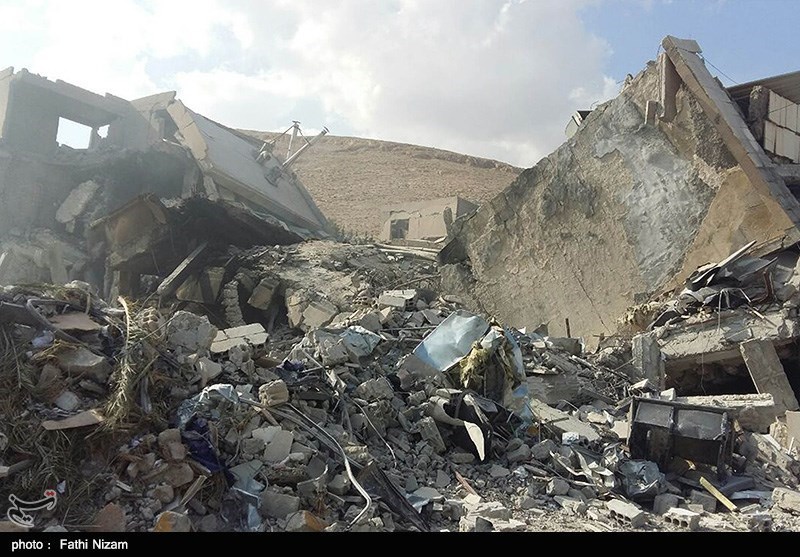
By any consistent standard, the horrors that the U.S. military had brought to so many civilians since the autumn of 2001 were no less terrible for the victims than what Russia is doing in Ukraine. But the U.S. media coverage has been vastly more immediate, graphic, extensive, and outraged about Russia’s slaughter than America’s slaughter. On the rare occasions when a major U.S. news outlet provided in-depth reporting of civilian deaths caused by American forces, the pieces were usually retrospective, appearing long after the fact—postmortems with little political impact and scant follow-up—hardly making a peep in media echo chambers.
No matter how sophisticated its high-tech weaponry, the large-scale Russian warfare in Ukraine is barbaric. That the same could also be said about American warfare in Afghanistan and Iraq was a truth nearly taboo to utter in U.S. mass media. Both the United States and Russia had brazenly flouted international law, crossing borders and persisting with massive lethal force. Coherent principles would condemn and illuminate each instance. But, despite press freedoms in the United States, very few big-name journalists and their imitators in the profession have been willing to break ranks with the gist of Washington’s official war narratives, which are, at bottom, not much more nuanced than assuming that America’s exemplary national character has been mobilized to defeat the unmitigated evil of the foe.
Nationalism masquerading as journalism covers war in darkness and light, telling us for whom the bell tolls. And so, when Russia invaded Ukraine and proceeded to terrorize, kill, and maim, the U.S. media were all-hands-on-deck with empathetic, poignant reporting via TV, radio, print, and online outlets. But when American missiles and gravity bombs hit population centers over the previous two decades, the human tragedies rarely got anything more than short shrift in the U.S. media. The extreme differences in the quantity and tone of coverage reflected—and reinforced—the agendas of war-makers based in Washington.
ZNetwork is funded solely through the generosity of its readers.
Donate

