


In 2006, Hillary Clinton sat down with the editorial board of the Jewish Press. Asked about the elections in the Occupied Palestinian Territory, Clinton said that she was unhappy with the result because Hamas came out as the winner. “I do not think we should have pushed for an election in the Palestinian territories,” she says in a tape recording released a few days ago. “I think that was a big mistake.” Clinton wanted Fatah, the more reliable partner, to win, not Hamas, whom the US considered a terrorist organization. The entire US establishment wanted Fatah to win, so there is nothing too surprising about Clinton’s views. But then she said something that should stop any democratically minded person: “And if we were going to push for an election,” she said, “then we should have made sure that we did something to determine who was going to win.”
The United States, in other words, not only should support one side or the other in an electoral contest, but that it should do ‘something’ to fix the outcome. The idea that a foreign power should intervene to manufacture an electoral result would not come as a surprise to the US foreign policy apparatus. Whether it was the Italian elections of 1948 or elections in France and Greece in the post-War era, the Central Intelligence Agency of the US intervened to defeat the Communists and usher in the conservatives. Much the same took place in the 1953 elections in the Philippines and the 1955 elections in Japan. A habit developed – the view that ‘something’ should be done to make sure that the pro-US forces win.
What happens when the US makes a ‘big mistake’ – as Clinton put it – and does not intervene to ensure the correct result? Evidence over the past several decades shows that the people of the country who vote incorrectly are punished by various means – either by having their elected leaders overthrown in coups (re: Arbenz in Guatemala from 1954) or their countries are put under a medieval siege (Iran, after Mahmoud Ahmadinejad came to power in 2005). The victory of Hamas in 2006 resulted in a terrible outcome for the Palestinians (already under occupation and denied right to their land) – it led to a the blockade of Gaza, where Hamas won decisively, and to a subsequent permanent green light from Washington for Israel’s periodic and brutal bombing of the enclave (2006, 2008, 2009, 2010, 2012 and 2014). Gaza bleeds because Israel and the United States seem to want to punish the enclave for its electoral choices in 2005.
On 19 October, the new UN Special Rapporteur on the situation of human rights in the Palestinian territory – law professor Michael Lynk – submitted his report. It makes for sober reading, as do all the reports of all previous Special Rapporteurs. What is most striking about this report is that it has a long section on the collapse of the Palestinian economy – sharply in Gaza – and the great sense of hopelessness that is occasioned as a result of this and of the heightened Israeli garrotte around the Palestinians.
The sentences on the economy have a staccato sensibility – “The Palestinian economy has not advanced” and “Unemployment is growing as a social scourge.” The data is exhausting. On Gaza, the Special Rapporteur writes, “In 2016, two years after the most recent hostilities ended, only 45 per cent of Gaza’s energy needs are being met, causing between 16 and 18 hours of daily power cuts; 70 per cent of Gaza’s population only have piped water supplied for between 6 and 8 hours, every 2 to 4 days; and 65,000 Gazans from the 2014 escalation of hostilities still do not have reconstructed homes.” Such facts are painful. They are an outcome of the blockade that was set up because Israel and the United States did not like the election outcome of 2005.
Hopelessness permeates the report. Right at the opening, Lynk writes that attacks and alleged attacks by Palestinians have been committed by minors, “which is particularly worrying because of the hopelessness it seems to represent.” These attacks (and alleged attacks) are conducted by young people who lunge at security guards with kitchen knives. There is something deeply sad about this – these are not terrorists from some well-organized group, but children who have been pushed against the wall. Late last year I met some young people from the camps of Ramallah whose frustration was palpable. “We have to do something,” they said to me, “act in some way.” The world has closed around them: whether it is the wall that encircles them, the checkpoints that demean them, the punitive demolitions and forcible transfers that break up their communities or the impossibility for them to imagine alternative futures.
I had read about the special violence against children from Nadera Shahloub-Kevorkian, who teaches at the Hebrew University. Her work puts the spotlight on the slow motion elimination of Palestinian childhood. I asked Lynk about this issue of the children. “Many of the attacks or purported attacks over the past year appeared to be committed by minors and young adults,” he said. When he was in Amman in July, Lynk heard about the condition of the youth. “The picture we were painted told us that, among many, there was a feeling that there is no viable political future on the horizon, the occupation is deepening, the ugliness of the political rhetoric defending the occupation is evident, the sense of personal confinement and the lack of mobility to travel even short distances is palpable, the unemployment rate among young Palestinians is serious and rising, and the Palestinian political divide and the lack of a strategy forward all intensifies the sense of despair.” This is a toxic combination. It is why Lynk writes in this UN report, “The plight of children is often a barometer for the gravity of a situation.”
Lack of Accountability.
One of the great unspoken tragedies of this situation is that there is little serious criticism of the Israeli state. Criticism is hushed up with accusations of anti-Semitism. Most recently American Express removed Pink Floyd’s Roger Waters from its advertisements for his criticism of the Israeli occupation. This silencing has allowed Israel to duck any accountability for its violations of international law. Indeed, Israel does not permit Special Rapporteurs from entering the Occupied Territory, which is a breach of its obligations as a member of the United Nations. Lynk met people in Jordan, not in Palestine. What this attitude does is to allow Israel to behave as it wills in Palestine – aware that it will not be seriously criticized and that the United States will protect it from any sanctions. In fact, a major weapons aid package from the Obama White House is a character certificate for Israel to continue to operate its illegal policies.
Michael Lynk catalogues the use of lethal force – “frequently without justification.” This makes for difficult reading. He told me that over the past nine months Israeli human rights groups “have pointed to the extremely low success rate when filing complaints to the Israeli military about apparent human rights and security operational violations.” For this reason, this May, B’Tselem – one of Israel’s most respected human rights groups – has decided that it will no longer engage with Israel’s military enforcement system. This is after 25 years of such work. Yesh Din, another Israeli human rights group, says that the lack of accountability means the “near impunity from prosecution for Israeli Defense Force soldiers.’ They are given a license to operate as they will.
No wonder that Lynk’s conclusion is bleak. “The lack of accountability is a systemic and deeply ingrained issue,’ he suggests. ‘It helps to perpetuate a cycle of continued violence, as soldiers appear to act with impunity, with the message being sent that Palestinian lives do not matter, while the Palestinian population becomes both more fearful and more desperate.”
Lynk told me that the lack of accountability for the actions of Israeli soldiers and the widespread use of collective punishment against the Palestinians has increased political cynicism. It is what leads to individual acts of violence. “This choice is ineffective and is often a death warrant for the perpetrator,” Lynk told me. “It reflects the despair felt by many.”
Politics is dying in Palestine. It is being killed by the occupation and its enablers, including the United States. Pockets of resilience remain, but these are under attack by Israel. The most recent non-violent activist to be arrested by Israel is Salah Khawaja of the Popular Struggle Committee of Ni’lin and Committee Against the Wall and Settlements. He is being held – incommunicado – in Petah Tikva prison. When Clinton said that she did not like the outcome of the 2006 election and that the US should have done “something,” she said, essentially, that the US should have defined the outcome by covert means. Now, overtly, Israel is crushing the non-violent peaceful demonstrators. It is putting the pressure on Palestine, suffocating it into desperation. The world meanwhile remains silent.
Vijay Prashad is professor of international studies at Trinity College in Hartford, Connecticut. He is the author of 18 books, including Arab Spring, Libyan Winter (AK Press, 2012), The Poorer Nations: A Possible History of the Global South (Verso, 2013) and The Death of a Nation and the Future of the Arab Revolution (University of California Press, 2016). His columns appear at AlterNet every Wednesday.

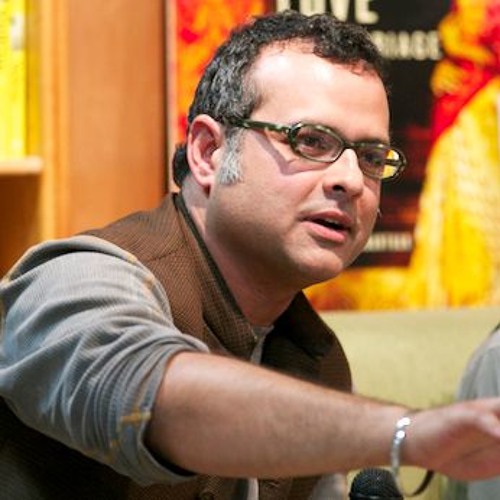
Vijay Prashad is an Indian historian, editor, and journalist. He is a writing fellow and chief correspondent at Globetrotter. He is an editor of LeftWord Books and the director of Tricontinental: Institute for Social Research. He is a senior non-resident fellow at Chongyang Institute for Financial Studies, Renmin University of China. He has written more than 20 books, including The Darker Nations and The Poorer Nations. His latest books are Struggle Makes Us Human: Learning from Movements for Socialism and (with Noam Chomsky) The Withdrawal: Iraq, Libya, Afghanistan, and the Fragility of U.S. Power. Tings Chak is the art director and a researcher at Tricontinental: Institute for Social Research and lead author of the study “Serve the People: The Eradication of Extreme Poverty in China.” She is also a member of Dongsheng, an international collective of researchers interested in Chinese politics and society.
ZNetwork is funded solely through the generosity of its readers.
Donate





1 Comment
The Palestinians must rely on world public opinion to change their fate. Western governments, particularly the US, have no incentive to punish Israel for its crimes. Israel is too valuable in the designs of American empire to be punished. Public revulsion of Israeli actions is the only force that can be applied.
This is a tall order as long as the Washington pro-Israel theocracy and their enablers in corporate media continue to bombard Americans with relentless propaganda that paints Israel as a victim.