

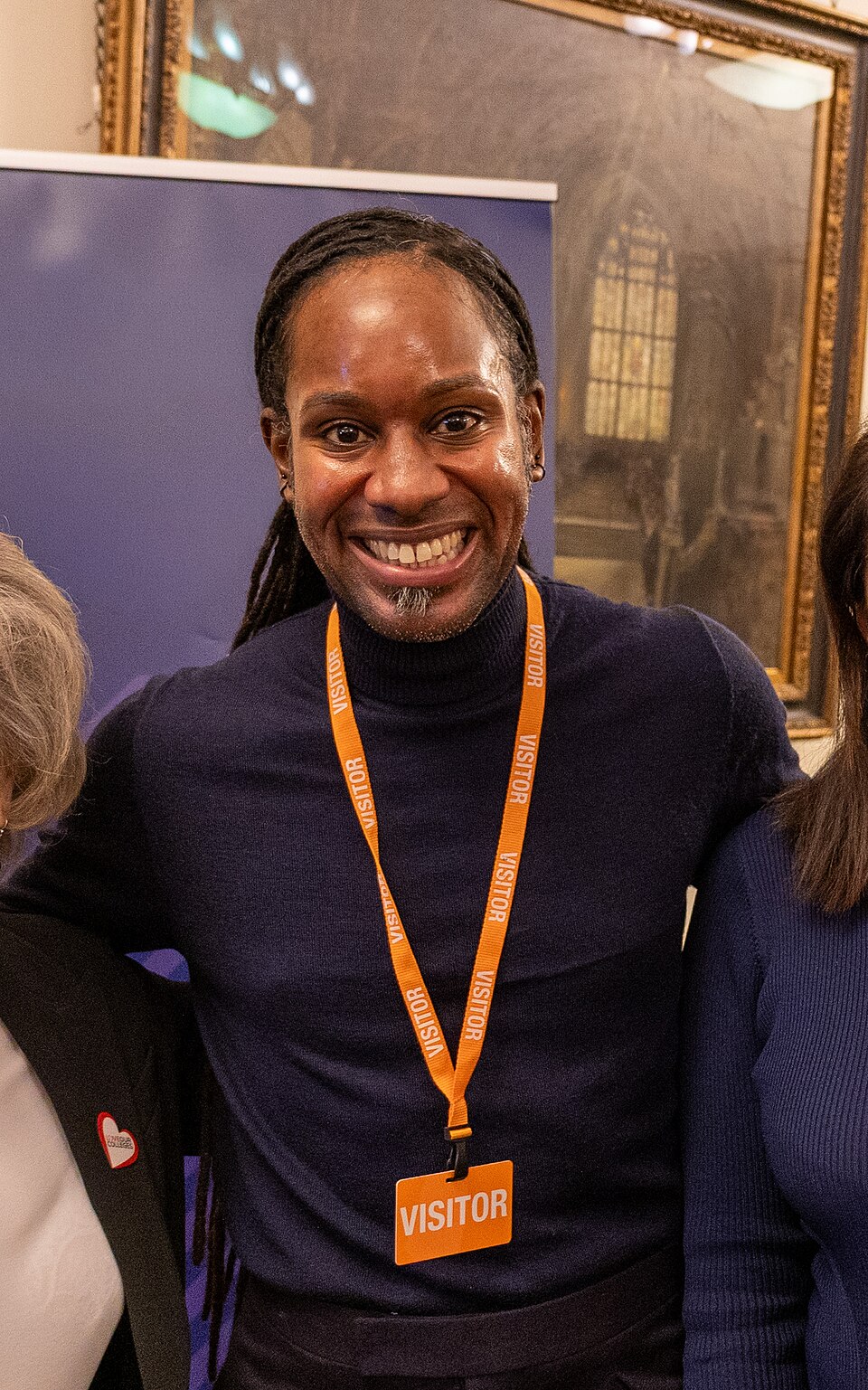
Earlier this afternoon, my oldest boyhood friend, a distinguished international lawyer who received his doctorate at Cambridge, called me to share the tragic news that Jason Arday, the Black British academic, had been found dead. I have been following this story ever since it broke out in July. We commiserated about his tragic death, and concluded that Arday was killed by many people and institutions.
Jason Arday’s death was the result of a convergence of forces that reveal the fragility of the racial settlement in post-imperial and postcolonial Britain and the contradictions of its elite institutions. He was eagerly elevated as a symbol, ruthlessly scrutinized as an anomaly, and callously discarded as a liability. His rise and fall expose the moral bankruptcy of a system that wants the appearance of racial progress without the work of structural change.
Arday was killed by white liberal proponents of performative inclusion who propelled him, shrouding him with the aura of heroic exceptionalism. Cambridge presented him as its youngest Black professor and celebrated his life story as proof of institutional transformation. His appointment was marketed through a narrative of adversity and triumph that emphasized his autism, late speech, poverty, and extraordinary athletic feats. This pattern reflects what Musa al‑Gharbi identifies in his provocative book, We Have Never Been Woke: The Cultural Contradictions of a New Elite as the behavior of white liberal symbolic capitalists, a highly educated professional class that converts the visibility of marginalized individuals into moral and cultural currency. In al‑Gharbi’s analysis, elite “wokeness” functions as a prestige economy in which institutions and their leaders signal virtue through symbolic gestures that flatter their self‑image while leaving material inequalities untouched. Cambridge embraced Arday as a form of symbolic capital, a figure whose improbable ascent could be displayed as evidence of moral renewal without requiring structural reform.
Tyler Austin Harper’s critique of elite academic hypocrisy in a recent issue of The Atlantic further illuminates this dynamic. Harper argues that universities deploy progressive rhetoric as a cheap moral shield to obscure exploitative labor practices, administrative bloat, and declining faculty security. In his account, institutions perform inclusion through branding and narrative while practicing exclusion through precarity, union‑busting, and corporate governance. Cambridge’s elevation of Arday fits this model of “inclusive exclusion,” where symbolic diversity is celebrated even as the underlying structures remain unchanged. This environment encouraged a celebratory gaze that focused on Arday’s biography rather than his scholarship, allowing mythmaking to substitute for rigorous evaluation and creating conditions in which his elevation served institutional needs more than his own.
The university killed Arday. Cambridge used his biography as a public relations asset. The institution did not conduct basic due diligence on his academic record, his claims, or his CV. Senior academics later admitted they had never heard of his work. Cambridge’s vice chancellor now acknowledges that the appointment process was flawed and that the faculty of education bears responsibility for the errors in a classic maneuver of institutional leadership deflection and passing the buck. Nearly one hundred senior academics demanded an independent investigation, noting that the appointment had been made not by the faculty but by a separate board of electors chaired by university leadership.
The institutional response intensified the damage. Cambridge initially defended him as the victim of a smear campaign. When pressure mounted, the university reversed course and announced a new investigation. It deleted webpages and removed references to his work. Jesus College ended its inquiry the moment his resignation terminated his fellowship. Cambridge’s leadership now concedes that the case has damaged the institution. The university’s actions reveal a pattern of reputational self-protection that abandons individuals once they cease to serve institutional interests.
The media killed Arday. The scrutiny that followed his appointment was immediate and intense. Allegations of plagiarism surfaced through Nathan Cofnas, a self-described “race realist” who has argued that Black people would disappear from high-profile positions at top universities including Harvard under meritocracy. The claims expanded into national coverage. The British press treated Arday as a symbol of alleged DEI excess and framed him as a diversity poster boy. The reporting was disproportionate compared to similar cases involving white academics, whose transgressions rarely attract national attention nor are universalized to other white academics. For example, when a Cambridge historian was found to have plagiarised student essays, the coverage was minimal. The frenzy echoed earlier racist press campaigns, including the notorious attacks on Benjamin Zephaniah, the renowned Black British writer, poet, actor, and musician when Cambridge considered offering him a fellowship in 1987, a reminder that the British media has long weaponized Black visibility in elite institutions. Arday’s case became a spectacle because it aligned with the ideological interests of those who oppose racial equity.
The media pursued every inconsistency in his story. His claims about charity fundraising, endurance running, and racist intimidation were interrogated. Some were unverifiable, while others were contradicted by witnesses. The press treated each inconsistency as confirmation of a broader narrative of deceit. Arday’s own words revealed the psychological strain he was under. When asked about the absence of evidence for the pig’s head incident, he said he thought the reporter would simply believe him. His embellishments became accelerants once the storm began. They allowed critics to collapse every allegation into a single narrative of fabrication.
The heavy burden of racialized expectation and representation killed Arday. Arday served as an avatar of racial uplift among his fellow minoritized academics, fulfilling the desperate desire to enter and belong in the unreformed white elite citadels of academia. They describe the burden of serving as racial proxies as unbearable. They know from bitter experience that when a white person makes mistakes, it is processed as an individual matter, but when a Black person makes mistakes, it is treated as collective and used to undermine the legitimacy of Black presence in elite institutions. Not surprisingly, the consequences of the Arday saga for Black academics have been severe. Many describe a toxic atmosphere and fear of becoming the next target. They report that the scandal has emboldened those who oppose racial equity. They say the case has revived the accusation that Black scholars are unqualified diversity hires.
The hollowness of contemporary DEI practices in Britain and elsewhere in Euroamerica killed Arday. Diversity initiatives have become symbolic rather than structural. Institutions seek quick fixes that produce visible representation without addressing systemic inequities. Cambridge’s desire for a media-friendly appointment overshadowed the need for rigorous vetting and genuine inclusion. The result is fragile success that collapses under scrutiny. Black scholars warn that representation without structural reform creates conditions in which individuals are elevated without support and discarded without protection.
Poor academic vetting killed Arday. The scandal reveals widespread failures in scholarly evaluation across UK universities including the exclusive ones. Letters from academics describe white scholars who fabricated CVs and were still promoted. Universities often fail to verify claims because of academics’ overwork, complacency, or reliance on trust. The Arday case is being racialized even though the underlying issue is systemic. The problem is not unique to DEI or Black academics. It reflects broader weaknesses in oversight and accountability in academic cultures where evaluation for tenure and promotion is often subcontracted to the ranking of journals or reputation of the publishers, not rigorous review of the candidate’s work by members of the committee, as anyone who has been in the academy long enough knows.
The myth of meritocracy killed Arday. Elite institutions reward legacy status, informal networks, and social capital. These advantages overwhelmingly benefit white elites. Black academics remain one percent of professors in the UK. DEI has not transformed academia. The path to advancement remains obstructed by structural barriers and widespread racism among white faculty. The belief that elite institutions operate as neutral arbiters of talent obscures the extent to which admissions, hiring, and promotion are shaped by inherited privilege, donor influence, and informal patronage networks that overwhelmingly favor the already powerful. The outrage surrounding Arday’s appointment reveals that preferential treatment is only scandalous when it is perceived to benefit Black people. The same critics who decry DEI remain silent about legacy admissions, Oxbridge family pipelines, and the entrenched chumocracy that routinely advances white candidates whose careers are buoyed by connections rather than merit.
The psychological toll on Black academics is profound. Many describe exhaustion, fear, and demoralization. Some say they may need to leave universities entirely. Others emphasize compassion for Arday and note the pressures placed on Black scholars who are expected to embody excellence, resilience, and representation simultaneously. They insist that the case must not tarnish the proud history of Black scholarship. Several academics warn that the Arday affair has created a climate of vulnerability, where Black scholars feel exposed to intensified scrutiny and diminished institutional protection.
Publishers killed Arday. A publishing house that gave him an advance reported as 1.4 million, which was seen as a profitable investment in his stories of trauma. The pornography of Black suffering and improbable redemption sells more than prosaic accounts of Black lives whose ordinariness underscores their humanity. Arday played to this gallery, weaving fabulist tales of his physical, mental, and emotional debilitations, the more so for him and his enabling interlocutors to bask in his dazzling achievement. The commercial appetite for spectacular narratives of adversity created incentives for embellishment, rewarding stories that conformed to marketable tropes rather than grounded realities. The memoir was positioned as an extraordinary triumph over developmental delay, poverty, and social exclusion, a framing that amplified the pressure on Arday to sustain an image of miraculous ascent.
Jason Arday’s death occurred days after his resignation. The coroner will determine the medical facts. The social facts are already clear. He lived under a spotlight that magnified every flaw, every inconsistency, every hope, and every fear. He was elevated as a symbol of racial progress in Britain’s staid elite universities, scrutinized as a threat to meritocracy, and discarded as an embarrassment. The forces that consumed him reveal the contradictions of institutions that celebrate diversity while failing to support those they elevate.
Arday’s story is not a parable about the dangers of diversity. It is a warning about the consequences of symbolic inclusion without structural change. It reveals the risks of elevating individuals without support, the dangers of treating representation as spectacle, and the failures of institutions that abandon those they once celebrated. His rise and fall expose the architecture of a racial order that rewards visibility, punishes vulnerability, and collapses under the weight of its own contradictions.
ZNetwork is funded solely through the generosity of its readers.
Donate




