

Abstract
Across divergent political contexts—from Iran to Latin America—political discourse is increasingly marked by a structural failure to recognize society as a contradictory totality. Both state apparatuses and oppositional forces tend to replace the living category of “the people” with morally charged abstractions: either a unified bloc affirming legitimacy or a deceived, manipulated mass. This article argues that such reductions are not mere analytical errors but ideological effects of contested hegemonic formations. Drawing on Gramsci’s theory of hegemony, Poulantzas’ conception of the state as a social relation, and E.P. Thompson’s historical materialism of lived experience, the article examines how class behavior is mediated through historical memory, material insecurity, geopolitical pressures, and ideological fragmentation. Using the Iranian case as a starting point and Latin America as a comparative horizon, it explores how popular sectors may oscillate between seemingly contradictory political alignments without abandoning their structural class position. This reveals the limits of both economistic and moralistic readings of political subjectivity.
1. The Event as Symptom: Misrecognition of the Social Totality
Political events such as funerals, elections, or protests do not function as self-contained phenomena. They serve as condensed expressions of deeper contradictions within the social formation.
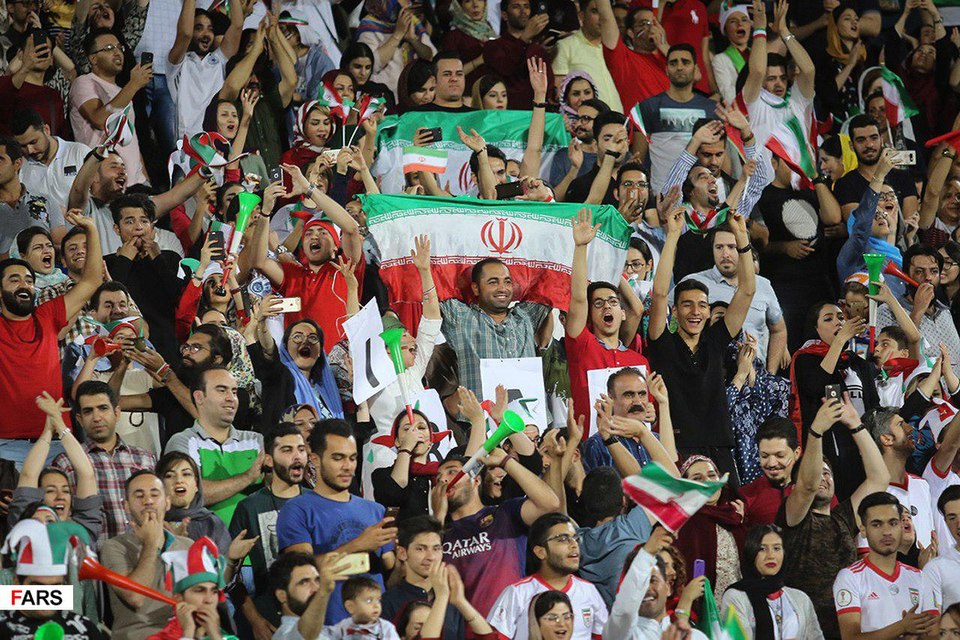
In Iran, a recent public funeral became an arena of intense interpretive struggle. State media framed mass participation as evidence of national unity and political legitimacy. Sections of the opposition, by contrast, interpreted the same presence through categories of coercion, manipulation, or false consciousness.
Despite their antagonistic positions, both discourses shared a common epistemological limit: the reduction of a differentiated social formation to a singular moral subject. What is absent in both readings is precisely what Marxist theory insists upon: the social totality as a contradictory ensemble of class relations, ideological apparatuses, and historical determinations.
2. Against Moralism: The Limits of Substantialist Readings of Class Behavior
A persistent distortion in political analysis arises when class is treated as a transparent and immediate explanatory category. In such frameworks, economic hardship is expected to generate linear political outcomes, and any deviation is interpreted as ideological error or manipulation.
However, class is not a mechanical position within the relations of production; it is a historically produced relation articulated through ideology, culture, and lived experience. As E.P. Thompson emphasizes, class is not a structure but a process: it is “something that happens in human relationships.”
From this perspective, the same subaltern groups may express apparently contradictory political orientations without abandoning their structural position within the capitalist social formation.
3. Hegemony, State, and the Production of Consent
Gramsci’s concept of hegemony remains essential for understanding why coercion alone cannot explain political stability. Hegemony is the organization of consent through civil society, cultural institutions, and historically sedimented common sense. It operates through what appears “natural” within everyday life.
In semi-peripheral formations marked by external pressure, uneven development, and internal class fragmentation—such as Iran—hegemony is further complicated by geopolitical conflict, sanctions regimes, and collective memories of war and insecurity. Here, consent is neither fully voluntary nor purely imposed; it is structurally mediated through fear of disintegration, historical trauma, and institutional dependency.
4. Latin America and the Non-Linearity of Popular Politics
The Latin American experience demonstrates that popular classes do not follow a unilinear political trajectory. In Brazil, Argentina, and Chile, sectors of the working class and informal proletariat have oscillated between redistributive progressive projects and right-wing or authoritarian alternatives.
This oscillation cannot be dismissed as mere ideological error or false consciousness. It reflects the contradictory positioning of subaltern classes within neoliberal restructuring, inflationary crises, institutional distrust, and external pressures—dynamics that parallel, albeit differently, the Iranian experience under sanctions and geopolitical tension.
Poulantzas’ insight is particularly relevant here: the state is not a neutral instrument but a condensation of class relations. Political alignment is thus mediated through shifting configurations of power rather than fixed class consciousness.
5. The Crisis of Political Epistemology
What unites these disparate contexts is a deeper crisis of political knowledge: the inability of both ruling forces and opposition to adequately read the social formation they claim to represent.
This crisis manifests as a persistent oscillation between two reductions: the state reduces society to unity (the people as legitimacy), while the opposition reduces it to deviation (the people as manipulation). Both operate within ideological interpellation, producing subjects that confirm pre-existing political narratives. In both cases, the contradictory social totality disappears.
6. Class Experience, Historical Memory, and Political Fragmentation
Political subjectivity is not generated solely at the point of production. It is formed through a complex articulation of material conditions, historical memory, and ideological struggle.
In contexts shaped by war, sanctions, inflation, and precarious labor markets, class experience becomes deeply stratified. The same material conditions can generate divergent political affects: resistance, withdrawal, nationalist identification, or defensive alignment with the existing order. This does not negate class analysis; it radicalizes it by refusing economistic reductionism.
7. Recognition as a Condition of Political Practice
A materialist politics adequate to the present conjuncture must begin from a simple but frequently abandoned premise: society precedes political representation. Recognition here does not mean endorsement. It refers to the epistemological requirement of grasping society as it actually exists—not as one desires it to be.
Without such recognition, political practice collapses into symbolic substitution: replacing real social relations with idealized or demonized images of “the people.”
Conclusion: Against the Substitution of Society
From Iran to Latin America, the recurring failure is not simply tactical misjudgment but a structural epistemological limit within contemporary political formations. Society is neither a unified subject nor a passive object of manipulation. It is a contradictory field of class relations, historical sedimentations, and ideological struggles.
Any political project that replaces this complexity with moral or binary categories inevitably reproduces its own isolation from the very social forces it claims to represent. The fundamental question is therefore not who the people are at a given moment, but whether political actors are capable of theorizing and engaging them as a contradictory totality.
Without this capacity, no transformative politics—progressive or otherwise—can sustain itself beyond the short cycle of crisis and disillusionment.
ZNetwork is funded solely through the generosity of its readers.
Donate




