Source: Other Words

After a year of economic hardship, climate disasters, and war, few could be blamed for feeling like our leaders have let us down. As we look ahead to a new year, I find it helpful to remember examples of those who not only saw the problem clearly, but brought people together to find solutions.

In 1967, the Rev. Dr. Martin Luther King, Jr. called for a “radical redistribution of political and economic power” to address poverty, war, and racism. To do so, he turned to those who were on the frontlines of these crises, not those who perpetrated them.

He worked tirelessly to organize the original Poor People’s Campaign, bringing together welfare advocates, farm workers unions, antiwar advocates, and Native, Chicano, Puerto Rican, and poor white organizers together with the civil rights movement.

King never wavered in his commitment to unite those who’d been divided for too long by politics, race, religion, and geography. “It has been one of my dreams that we would come together and realize our common problems,” he said just a few weeks before his assassination, and to “make the power structure of this nation say yes, when they may be desirous to say no.”

More than 50 years later, the power structures of our nation are invested in systems and structures that are destroying our lives and our planet.

We know that those invested in the status quo won’t come forth with solutions to these crises that compromise their interests.

A new report from Oxfam USA, for example, blames the wealthiest people in the world for our climate breakdown — not only because of their lavish lifestyles, but also their influence on politics, media, and the economy. Every year their emissions cancel out the carbon savings of some of the best green technologies we have. The report calls for a “radical increase in equality” to save our planet.

We know that those invested in the status quo won’t come forth with solutions to these crises that compromise their interests. That’s true whether we’re talking about the climate, inequality, poverty, or war. The answers will come from those who are confronting these systems directly.

And that’s the good news. In many places, people standing up against injustice are shifting what’s possible.

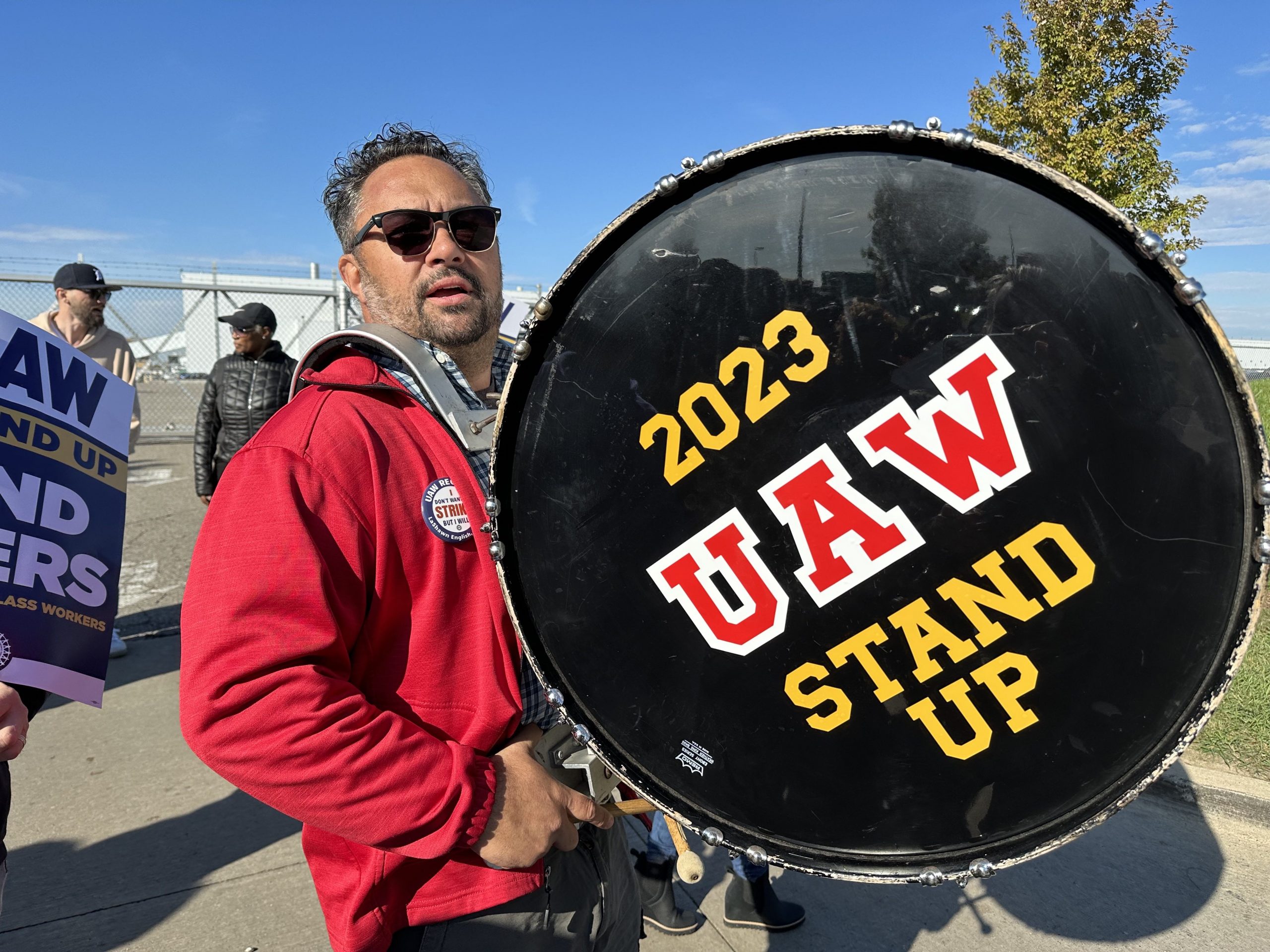
This fall, the United Auto Workers went on strike for six weeks, targeting each of the “Big Three” auto manufacturers. To confront these corporate behemoths, who’ve extracted nearly $250 billion in profits over the past decade by exploiting workers, the UAW called on specific locals to “stand up” and strike, while others continued to work even with expired contracts.

President Shawn Fain rallied their members over social media, reminding them they weren’t trying to wreck the economy, but to wreck “their” economy — the economy of the Big Three and Wall Street.

This is what hope looks like in times of great crisis, war, and inequality.

This clarity helped maintain the union’s united front. It shaped their demands for higher wages, better benefits for all workers, and an end to tiered wages. Significantly, it opened the door for workers to influence the electric vehicle market — breaking new ground for labor to find common cause with the climate movement. The union’s wins were nothing short of historic.

More recently, the UAW became the largest union to join the call for a permanent ceasefire in Gaza. This is not just a testament to the union, but to the many, many others who are coming together across politics, race, religion, and geography to demand peace, life, and freedom for Palestinians as well as Israelis.

This is what hope looks like in times of great crisis, war, and inequality. It’s not foolishly romantic to celebrate this hope. It’s what gives us the courage and compassion to stand up another day, to find each other, and to make what seems impossible, possible.

May it be so.


This article was originally published by Other Words; please consider supporting the original publication, and read the original version at the link above.

ZNetwork is funded solely through the generosity of its readers.

Donate
Donate
Leave A Reply

Subscribe

All the latest from Z, directly to your inbox.

Institute for Social and Cultural Communications, Inc. is a 501(c)3 non-profit.

Our EIN# is #22-2959506. Your donation is tax-deductible to the extent allowable by law.

We do not accept funding from advertising or corporate sponsors.  We rely on donors like you to do our work.

ZNetwork: Left News, Analysis, Vision & Strategy

Subscribe

All the latest from Z, directly to your inbox.

THE WIND CRIES FREEDOM

The Wind Cries Freedom, the new book from Z co-founder Michael Albert, is a sweeping oral history of a future American revolution.

Through thirty interconnected chapters, it draws out the strategies, failures, turning points, and hard-won wisdom of a movement that called itself the Revolutionary Participatory Society. These are not the polished memoirs of politicians: they are the unfiltered accounts of people who organized in neighborhoods, hospitals, universities, stadiums, courthouses, and places of worship, and kept a shared vision alive through cynicism and exhaustion.

The result is speculative political fiction that reads like history: messy, human, and quietly hopeful in the way that only real experience and long thought can produce.

Get your copy and peruse more features on the book’s website below.

“Read it, argue with it, but don’t look away. The future it recalls is one we must still fight to deserve.”

Yanis Varoufakis

“The most unusual and intriguing combination of prophecy, manifesto, and movement building manual that I have ever encountered.”

Bill Fletcher Junior

“This work fills a huge gap in our social movement literature.”

Cynthia Peters

You've just read your article on Z this month.

DOES Z'S SURVIVAL MATTER?

You keep coming back for a reason: serious political analysis, movement reporting, and debate beyond the priorities of corporate media. Today, Z is in a precarious financial position. If Z is part of how you understand the world, help keep it going. The readers who give monthly are the reason this work survives between fundraisers.

Z is in a precarious financial position. If it’s part of how you understand the world, help keep it going.

Number of donors710
Our goal1,000

Sustainers at $9/month or more receive the digital Z Magazine.

Already a sustainer? Click here and we won’t ask again. Thank you!

Your reading count is stored only in your browser and is never sent to us.

Sound is muted by default.  Tap 🔊 for the full experience

CRITICAL ACTION

Critical Action is a longtime friend of Z and a music and storytelling project grounded in liberation, solidarity, and resistance to authoritarian power. Through music, narrative, and multimedia, the project engages the same political realities and movement traditions that guide and motivate Z’s work.

If this project resonates with you, you can learn more about it and find ways to support the work using the link below.

Z is in the most precarious financial position in its history.

Z is a place to think beyond the limits of the present.

For decades, Z has brought together political analysis, movement reporting, debate, and visions of a different future from writers and activists around the world. That work is more than journalism. It is movement infrastructure: movements need places to develop ideas, test arguments, learn from experience, and imagine what comes next.

In the first two days of this fundraiser, 19 donors and 8 new monthly sustainers stepped up. Help us reach 1,000 donors who keep Z independent, for everyone.

For decades, Z has published the analysis, debate, and visions movements need, free of paywalls, ads, and billionaire owners. If that work should continue, Z needs your support now.

Number of donors710
Our goal1,000

Sustainers at $9/month or more receive the digital Z Magazine.

Subscribe

Join the Z Community – receive event invites, announcements, a Weekly Digest, and opportunities to engage.

Exit mobile version

