

After a year of economic hardship, climate disasters, and war, few could be blamed for feeling like our leaders have let us down. As we look ahead to a new year, I find it helpful to remember examples of those who not only saw the problem clearly, but brought people together to find solutions.
In 1967, the Rev. Dr. Martin Luther King, Jr. called for a “radical redistribution of political and economic power” to address poverty, war, and racism. To do so, he turned to those who were on the frontlines of these crises, not those who perpetrated them.
He worked tirelessly to organize the original Poor People’s Campaign, bringing together welfare advocates, farm workers unions, antiwar advocates, and Native, Chicano, Puerto Rican, and poor white organizers together with the civil rights movement.
King never wavered in his commitment to unite those who’d been divided for too long by politics, race, religion, and geography. “It has been one of my dreams that we would come together and realize our common problems,” he said just a few weeks before his assassination, and to “make the power structure of this nation say yes, when they may be desirous to say no.”
More than 50 years later, the power structures of our nation are invested in systems and structures that are destroying our lives and our planet.
We know that those invested in the status quo won’t come forth with solutions to these crises that compromise their interests.
A new report from Oxfam USA, for example, blames the wealthiest people in the world for our climate breakdown — not only because of their lavish lifestyles, but also their influence on politics, media, and the economy. Every year their emissions cancel out the carbon savings of some of the best green technologies we have. The report calls for a “radical increase in equality” to save our planet.
We know that those invested in the status quo won’t come forth with solutions to these crises that compromise their interests. That’s true whether we’re talking about the climate, inequality, poverty, or war. The answers will come from those who are confronting these systems directly.
And that’s the good news. In many places, people standing up against injustice are shifting what’s possible.
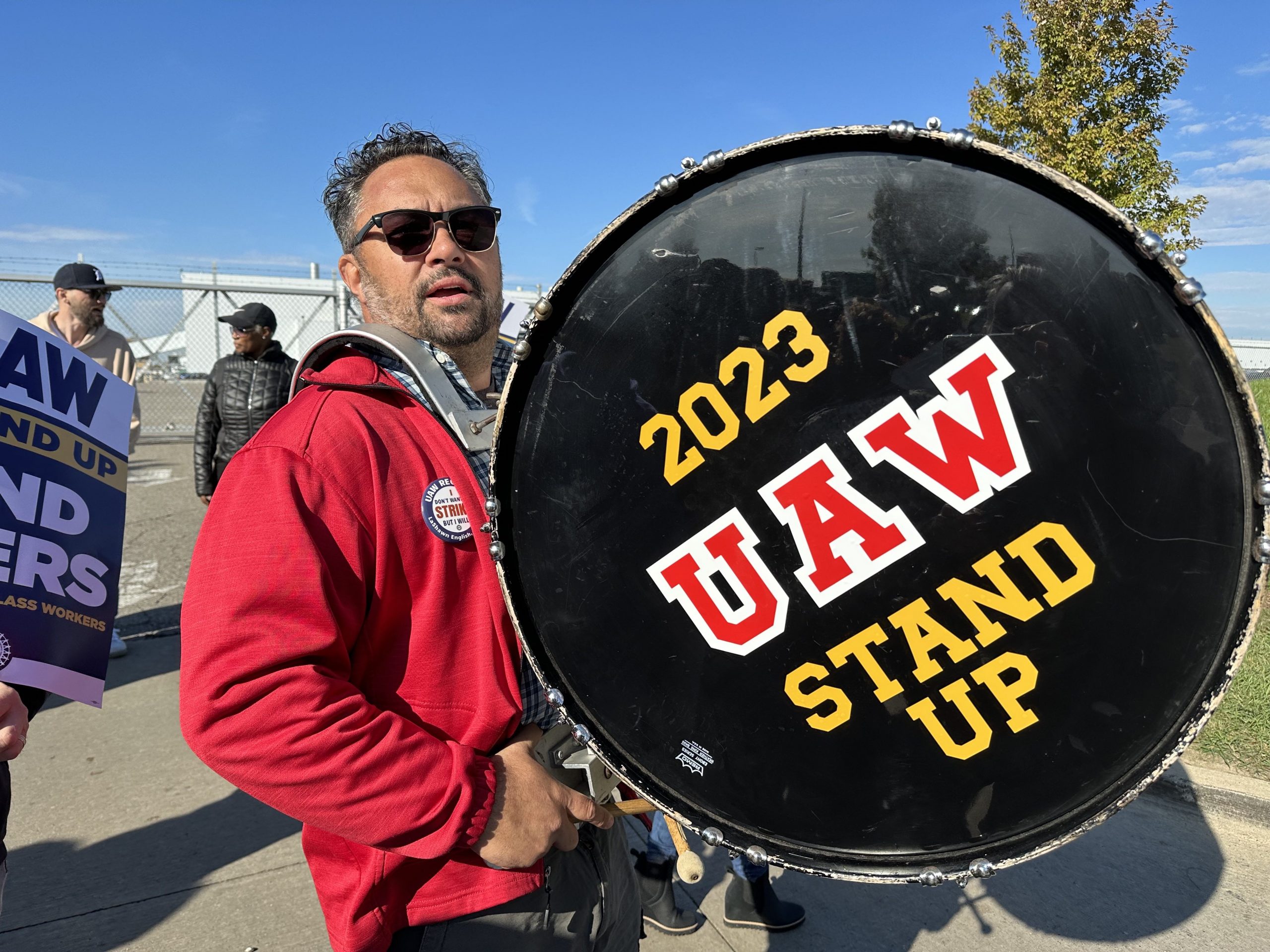
This fall, the United Auto Workers went on strike for six weeks, targeting each of the “Big Three” auto manufacturers. To confront these corporate behemoths, who’ve extracted nearly $250 billion in profits over the past decade by exploiting workers, the UAW called on specific locals to “stand up” and strike, while others continued to work even with expired contracts.
President Shawn Fain rallied their members over social media, reminding them they weren’t trying to wreck the economy, but to wreck “their” economy — the economy of the Big Three and Wall Street.
This is what hope looks like in times of great crisis, war, and inequality.
This clarity helped maintain the union’s united front. It shaped their demands for higher wages, better benefits for all workers, and an end to tiered wages. Significantly, it opened the door for workers to influence the electric vehicle market — breaking new ground for labor to find common cause with the climate movement. The union’s wins were nothing short of historic.
More recently, the UAW became the largest union to join the call for a permanent ceasefire in Gaza. This is not just a testament to the union, but to the many, many others who are coming together across politics, race, religion, and geography to demand peace, life, and freedom for Palestinians as well as Israelis.
This is what hope looks like in times of great crisis, war, and inequality. It’s not foolishly romantic to celebrate this hope. It’s what gives us the courage and compassion to stand up another day, to find each other, and to make what seems impossible, possible.
May it be so.
ZNetwork is funded solely through the generosity of its readers.
Donate
