


That’s their weekly party, according to released prisoners. Four prisoners have died since the war began on October 7, almost certainly from beatings. Nineteen guards who participated in these sick parties are under investigation, suspected of causing one prisoner’s death.
Hundreds of Palestinians who were detained in the Gaza Strip have been kept bound and blindfolded 24 hours a day, and they have also been brutally beaten. Some, perhaps even most, have no connection to Hamas. Some of them – no one has even bothered reporting how many – have died in captivity at the Sde Teiman base.
Some 4,000 Gazan workers who were arrested in Israel on October 7 despite having done nothing wrong are also being held in inhumane conditions. At least two of them have died. And more than enough has already been written about the detainees being stripped and the humiliating photographs.
In this terrible competition over the magnitude of evil, there are no winners, only losers. But it’s impossible to talk day and night about Hamas’ atrocities – writers vie with each other over who can coin the most derogatory terms for the organization – while completely ignoring Israel’s evil.
There are also no winners, only losers, in the competition over how much blood is shed and the way it is shed. But it’s impossible to ignore the horrific quantity of blood that has been spilled in the Gaza Strip. This weekend, some 400 people were killed in two days, the majority of them children. On Saturday, I saw the weekend’s pictures from Al-Bureij and Nuseirat, including children dying on the floor of Al-Aqsa Hospital in Deir al-Balah, and they are horrifying.
Israel’s refusal to increase the amount of humanitarian aid allowed into Gaza, in defiance of a UN Security Council decision, similarly attests to a policy of evil.
And as if all this weren’t enough, the voices of evil within Israel have raised the bar on satanic proposals. Journalist Zvi Yehezkeli favors killing 100,000 Gazans in a first strike. Maj. Gen. (res.) Giora Eiland had second thoughts and switched from proposing that we spread disease in Gaza to proposing that we starve its residents.
Even the left’s new Prince Charming, Yair Golan, who is currently winning 12 Knesset seats in the polls from people who see themselves as the beautiful Israelis, told Gazans in an interview with the daily Yedioth Ahronoth that “as far as we’re concerned, you can starve to death. That’s completely legitimate.”
Yet after all this, we consider Hamas the only monster in the area, its leader the only psychotic and only the way it holds Israelis hostage as inhumane. It’s impossible not to be horrified by the thought of our hostages’ fate, particularly the sick and the elderly among them. But it’s also impossible not to be horrified by the fate of the Palestinians whom we have kept bound and blindfolded for weeks and months.
Israel has no right to set standards for evil when its hands are also stained with wickedness. Forget about the killing, the starvation and the mass displacement. Our treatment of Palestinian prisoners should have particularly upset Israelis, if only because of the danger to the Israelis held by Hamas. What will a Hamas member who holds an Israeli hostage think when he hears that his comrades are being restrained and beaten incessantly?
We can cautiously conclude that at least some of the Israelis held by Hamas are being treated better than the Palestinians held by Israel. When freed hostages Chen and Agam Goldstein told Channel 12 News on Friday night about their treatment by Hamas and how their captors protected them with their own bodies during Israeli airstrikes, they were attacked vociferously on social media. How dare they tell the truth?
Hamas perpetrated a barbaric attack on October 7. It killed and kidnapped indiscriminately. There are no words to describe its brutality, including in holding dozens of senior citizens, sick people and children hostage for months in unbearably harsh conditions.
But does this make it legitimate for us to act similarly? Forget about morality. Will Israel’s brutality in the war and in its jails do anything to advance its goals? Will Hamas free its hostages faster if Israel abuses the Palestinians it is holding hostage?

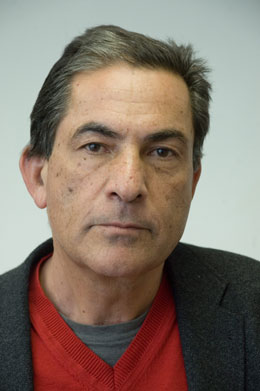
Gideon Levy is a Haaretz columnist and a member of the newspaper's editorial board. Levy joined Haaretz in 1982, and spent four years as the newspaper's deputy editor. He is the author of the weekly Twilight Zone feature, which covers the Israeli occupation in the West Bank and Gaza over the last 25 years, as well as the writer of political editorials for the newspaper. Levy was the recipient of the Euro-Med Journalist Prize for 2008; the Leipzig Freedom Prize in 2001; the Israeli Journalists’ Union Prize in 1997; and The Association of Human Rights in Israel Award for 1996. His new book, The Punishment of Gaza, has just been published by Verso Publishing House in London and New York.
ZNetwork is funded solely through the generosity of its readers.
Donate




