

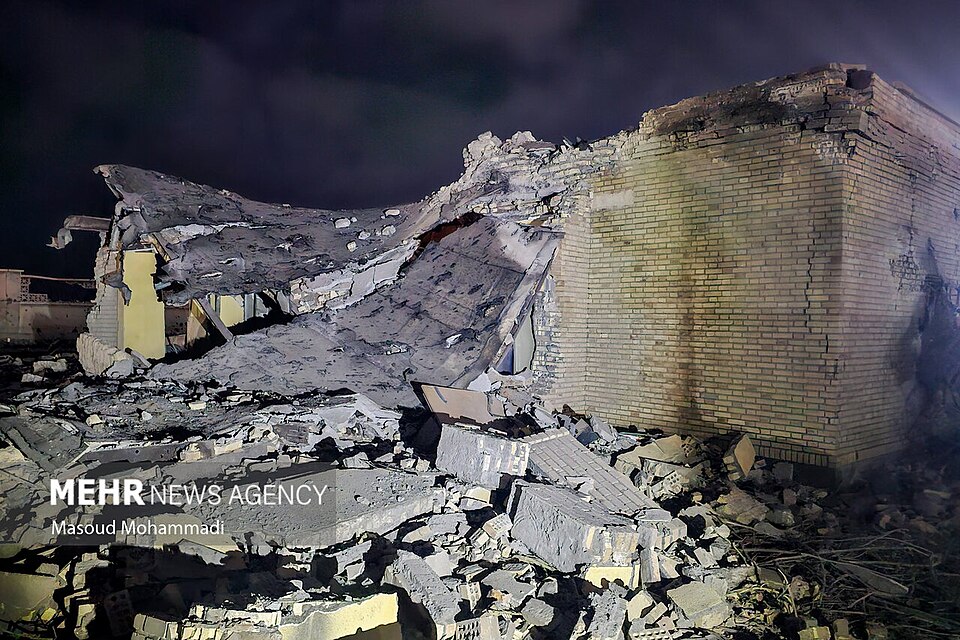
A wedding is one of humanity’s most fragile and meaningful moments. It is where families gather, where children run between relatives, where generations come together to celebrate the possibility of a future. It is difficult to imagine a place less connected to war than a home filled with people celebrating a marriage.
That is why the reported U.S. strike on a wedding gathering in Sirik, which killed civilians and injured many others, represents something far greater than another tragic incident in a distant conflict. It raises a fundamental question about the use of American power; when a military operation destroys a civilian gathering, why should the victims be required to prove that they were innocent?
The burden must be placed where it belongs — on the nation that launched the attack.
Reports from the scene, including analysis of available images, videos and weapons fragments, have raised serious questions about whether a U.S. munition directly struck the wedding location. The United States has stated that it does not target civilians and that the incident is under review. But a review conducted by the same institution responsible for the operation cannot be the final answer when civilian lives have been lost.
A powerful country cannot demand trust while refusing transparency.
If Washington believes there was a legitimate military target at that location, it has a responsibility to show the evidence. It must explain what intelligence justified the strike, who approved the operation, what precautions were taken and why a civilian area containing families was considered an acceptable risk.
The laws of war were created because history taught humanity a painful lesson; without accountability, military necessity can become an excuse for unlimited destruction. International humanitarian law requires armed forces to distinguish between civilians and combatants and to take precautions to avoid unnecessary civilian harm. These rules are not obstacles to security. They are the minimum protections that prevent war from becoming a license to destroy innocent lives.
The tragedy of Sirik is also part of a larger pattern in which civilian suffering is often described with passive language: “collateral damage,” “unintended consequences,” or “operational mistakes.” These phrases may sound technical, but behind every one of them is a human story:
A child who will never grow up.
A parent who will never see their family member return home.
A community that will remember a celebration as the night everything changed.
The problem is not only the bomb itself. The deeper problem is the political culture that allows civilian deaths caused by American weapons to become temporary news events rather than moral crises.
For years, U.S. leaders have spoken about defending democracy, human rights and international rules. But those principles lose meaning when they are applied selectively. A country cannot claim to support a rules-based world while refusing to fully examine its own actions when civilians are harmed.
Accountability does not weaken America. It strengthens the credibility of American values.
A genuine commitment to human rights requires more than statements of regret. It requires independent investigations, public disclosure of targeting decisions and meaningful assistance for victims. The families affected by the Sirik strike deserve more than sympathy after the fact. They deserve answers.
This conversation must also include the broader consequences of American military and economic pressure. Policies designed in Washington are often discussed in terms of strategy, deterrence and national interests. But for ordinary people, they are experienced differently. They are experienced through fear, uncertainty and the loss of normal life.
A nation’s power should be measured not only by its ability to strike targets but by its willingness to question itself afterward.
The wedding in Sirik should not become another forgotten chapter in the long history of civilian suffering in war. It should become a moment when Americans ask a difficult but necessary question: What happens to our moral standing when the weapons carrying our name destroy the very lives we claim to protect?
A wedding should represent hope. It should never become evidence of how far war has entered human life.
The United States has the ability to choose a different path — one where accountability replaces denial, diplomacy replaces escalation, and human dignity becomes more important than demonstrating military dominance.
That choice is not weakness.
It is responsibility.
Sophia Gonzalez, syndicated by PeaceVoice, is an American political analyst focusing on U.S. strategy, Middle East affairs, and global security. She writes to challenge interventionism and promote diplomacy.
ZNetwork is funded solely through the generosity of its readers.
Donate




