


As millions celebrate Holy Week and Passover this week, many clergy and lay activists will be delving into their own faith traditions to link these observances with ongoing struggles for economic justice.
An interfaith worker justice seder in Long Beach, California retells the Passover story of liberation in contemporary terms, relating the ancient narrative to contemporary struggles for freedom and economic justice on the part of hospitality workers. An interfaith “stations of the worker’s cross” will draw workers, clergy, and community activists to downtown Los Angeles hotels, where they will walk from hotel to hotel, calling attention to the denial of hotel workers’ rights and dignity.
Such observances call to mind the important role, particularly since the mid-20th century, that clergy and lay activists have played in American labor history. These activists helped reframe workers’ struggles within the ethical language of scripture, calling on employers and the community at large to fulfill a collective responsibility to their fellow human beings, no matter what their status or station in life.
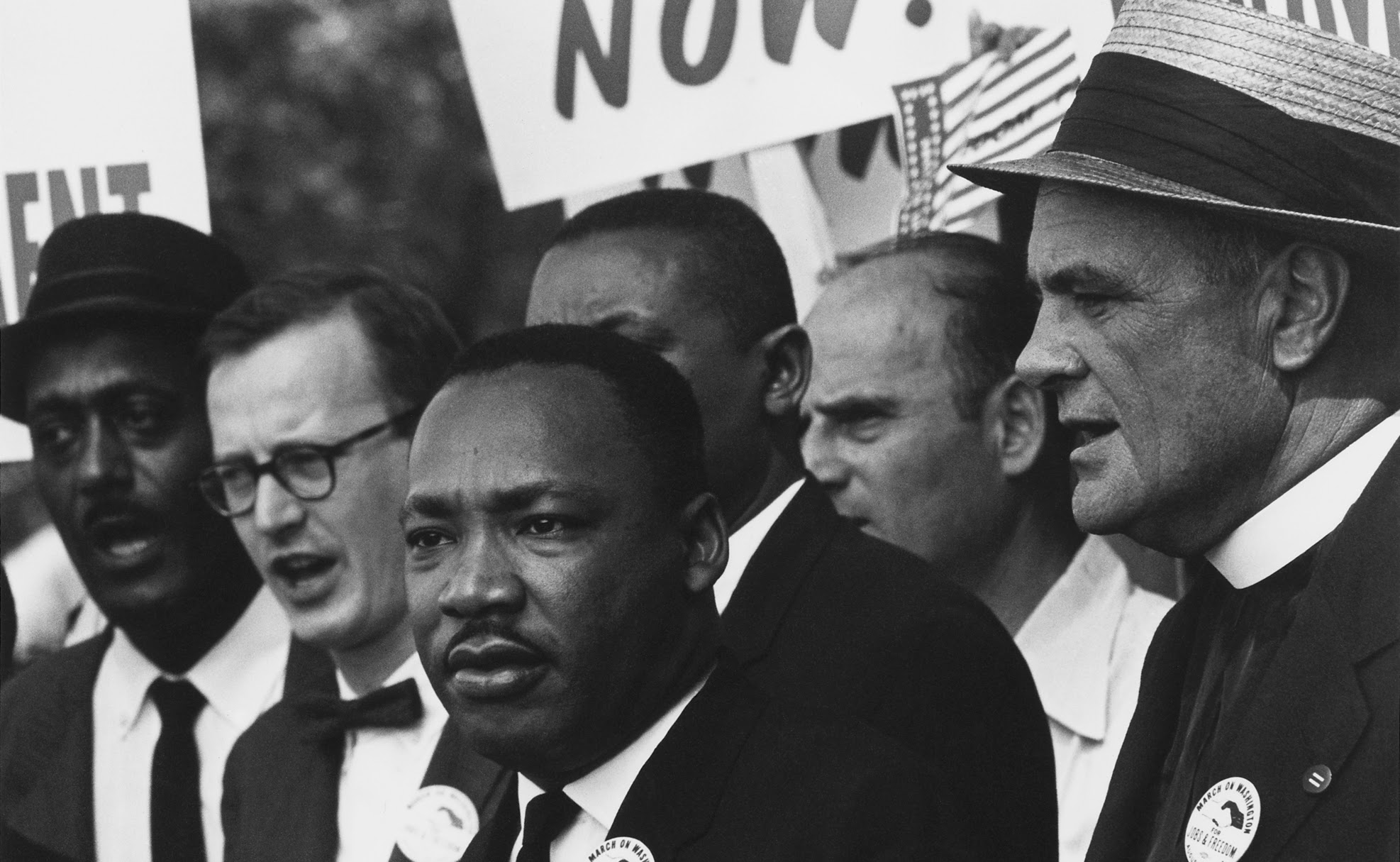
When Dr. Martin Luther King took up the cause of Memphis’s striking sanitation workers in 1968, he supported their unionizing efforts in response to the dangerous working conditions and oppressive racism they faced every day – as well as to wage levels that left 40 percent of them living below the poverty level. In the speech he delivered to strikers and others on April 3, 1968, Dr. King called for what he labeled a “dangerous unselfishness,” citing Jesus’ parable of the Good Samaritan to frame the crisis at hand. He said, “the question is not, ‘If I stop to help this man in need, what will happen to me? [but rather] ‘If I do not stop to help the sanitation workers, what will happen to them?’ That’s the question.”
The following evening, Dr. King was felled by an assassin’s bullet. It took 11 days of rage and violence in 125 cities all over the country before Memphis’s mayor allowed an agreement between the city and the sanitation workers, honoring their right to form a union. The agreement provided significant improvements in working conditions and prohibited the use of race as a barrier to promotion.
As one sanitation worker explained to a reporter several years later, “”when he [i.e., Dr. King] was here in the strike, every man wanted to stand up and be a man. And that was the whole story. We wasn’t counted as men before then. Every man be counted as a man now. It’s no more ‘boy’ . . . It’s no more of that Uncle Tom now . . . You be treated as a man.”
Faith traditions provide a language that widens the horizons of self-awareness and collective identity. They also motivate activists, clergy and laity alike, to march and picket alongside workers, offering pivotal community support that can help turn the tide in labor conflicts. In 2008, Smithfield Foods, at the time the largest pork producer in the world, agreed to a union contract with the United Food and Commercial Workers (UFCW) at its 5000-worker plant in Tar Heel, North Carolina. As labor scholar and activist Jane McAlevey described the win, “it was the single largest private-sector union victory of the new millennium,” all the more significant for taking place in a state with a low union density, and with a company that had fought off unionization for the preceding 14 years.
Religious leaders, including Reverend Nelson Johnson and Reverend Dr. William J. Barber, played a critical role in organizing pickets and in boycotting Smithfield products at a North Carolina grocery chain – as well as in leading a protest at an annual company shareholder meeting.
Reverend Johnson framed these protests in terms of community: “By calling this a community struggle, we began to change the frame and break down the structural division and set it up so that if justice is the issue here, then everyone in the community is invited to be part of the campaign.”
These benefits of faith-based activism – ethical framing and on-the-ground community support – have helped energize struggles for economic justice throughout the nation.
When the Memphis sanitation workers struck, Dr. King’s close friend and associate, Reverend James M. Lawson, came to understand that event as a “threshold moment” which significantly broadened the struggle for human rights. When he moved to Los Angeles in the early 1970’s after teaching nonviolence and leading nonviolent campaigns throughout the South, Reverend Lawson began addressing more directly and forcefully what he called “the question of economic exploitation and rapaciousness.”
With other faith leaders, he co-founded in 1996 an organization called Clergy and Laity United for Economic Justice (CLUE), an organization that mobilized activists in support of janitors, security guards, hospitality workers, and other low-wage workers – winning significant union victories along the way. The interfaith Passover seder and stations of the worker’s cross I mentioned above are sponsored and co-sponsored, respectively, by CLUE.
At a time when increasing inequality has pushed millions of Americans into poverty or great economic insecurity, the need to reaffirm genuine community within a framework of economic justice is more urgent than ever. This season of holiday observances is one in which these issues merit both deep reflection and action.
–end–
Andrew Moss, syndicated by PeaceVoice, writes on labor and immigration from Los Angeles. He is an emeritus professor (Nonviolence Studies, English) from the California State University.


Andrew Moss is an emeritus professor from the California State Polytechnic University, Pomona, where he taught a course, “War and Peace in Literature,” for 10 years.
ZNetwork is funded solely through the generosity of its readers.
Donate




