


Israel has been in conflict with the Palestinians and the Arabs since its establishment in 1948. Conflict was inherent in the Zionist project of conquest and colonization of Palestine. Indeed conflict was recognized by Zionist leaders as necessary for the implementation of the Zionist project, for nobody expected the Palestinians to peacefully acquiesce in the loss of their country.
Almost sixty years after the launch of Jewish offensive operations designed to take over all of Palestine, and forty years after the occupation of the rest of Palestine in 1967, and in the face of Israeli intransigence that is dividing the Palestinians and deterring peace, it is imperative to ask: What does Israel want?
Traditional interpretations of the Zionist doctrine suggest that the conquest and colonization of land for the purpose of establishing a Jewish state was the urgent priority of the founding fathers of political Zionism. The rational given by Jewish nationalists was that anti-Semitism was ineradicable, and conflict with the gentile world permanent, and therefore only a Jewish state could offer protection for the world’s Jews.
The Jewish state was forcibly established, and in the process inflicted gross injustice on the Palestinians and came into violent conflict with its neighbors. The Jews of the world did not come to live in Israel, and the question became: Should Israel continue to favor conquest and occupation for the unrealistic project of gathering the Jews of the world in greater Israel, or should it live in peace with its neighbors and allow the Palestinians it victimized to rebuild their shattered society on the remaining 22% of Palestine(Gaza and the West Bank)?
Israeli writer Gideon Levi indirectly answered this question with an article in April in the Israeli paper Haaretz entitled: Israel Does Not Want Peace.
Levy concluded that Israel did not want peace because Israeli leaders rejected the Arab League peace offer made in 2002 and again renewed by Arab leaders meeting in Saudi Arabia earlier this year. The Arab peace offer is based on the international consensus for a solution to the conflict, embodied in the 1967 UN Security Council Resolution 242 formula of land for peace and on a just resolution of the Palestinian refugee problem.
Israeli leaders showed no interest in the offer and Israeli Prime Minister Olmert categorically rejected the prospect of the return to Israel of even one Palestinian refugee.
Levy wrote that this was ‘the moment of truth’. He believes that the dismissal of the Arab League peace offer may have been the breakdown point, and “leaves no room for doubt that the tired refrain that “Israel supports peace” has been left shattered.”
Levy is right in concluding that Israel does not want peace. But he is wrong in thinking that this is a recent phenomenon Notwithstanding propaganda in Israel and in the West, Israeli leaders, with the possible exception of Moshe Sharrett, have not shown any serious interest in peace with the Arabs, while in fact Arab leaders have realistically demonstrated readiness to resolve the conflict peacefully.
This has now been extensively documented by the new Israeli historians. Israeli historian Avi Shlaim reported in his book “The Iron Wall: Israel and the Arab World” that Israeli archives showed that the claim that Israel had always wanted peace but there was nobody to talk to was groundless. “The Arabs have repeatedly outstretched a hand to peace,” he told the Israeli newspaper Haaretz, “and Israel has always rejected it. Each time with a different excuse.” (August 13, 2005)
Shlaim found that Syrian leader Hosni Zam wanted a peace agreement with Israel. King Farouk of Egypt was ready to make peace with Israel. King Abdullah of Jordan also wanted an agreement. Israel turned them all down. Even Nasser, portrayed by Israeli and Western propaganda as war-bent, wrote a personal letter to then-prime minister Sharett, and sent emissaries. These included Abdel Rahman Sadek, the Egyptian press officer in Paris, who, in 1955, conveyed to the Israelis Nasser’s interest in reducing tension and lifting trade restrictions. Israeli leaders showed no interest.
This made sense from the point of view of Zionist leaders. As long as the Zionist project of conquest and colonization of Palestine was incomplete, and as long as Zionist ideology could be imposed by force, there was no reason to abandon the Zionist project for the sake of making peace with the Arabs.
Besides, Zionist leaders rationalized their rejection of peace offers by arguing that their forcible conquest and colonization of Palestine have alienated the Arabs so much that no Arab leader would really want to make peace with them.
In 1956 Israeli Prime Minister David Ben-Gurion told Nahum Goldman, President of the World Zionist Organization who was urging him to negotiate a peaceful settlement with the Arabs:
“I don’t understand your optimism. Why should the Arabs make peace? If I were an Arab leader I would never make terms with Israel. That is natural. We have taken their country. Sure, God promised it to me, but what does it matter to them? Our God is not theirs. We come from Israel, it is true, but two thousand years ago, and what is it to them? There have been anti-Semitism, the Nazis, Hitler, and Auschwitz but was that their fault? They only see one thing: we have come here and stolen their country.”
Conflict has therefore always been necessary, first to carry out by force the project of conquest and transformation of Palestine into a Jewish state and second, to justify Israeli rejections of peace offers that threatened to bring the Zionists project to a premature end. Short of completely displacing the rival claimants to the land-which was tried and failed in 1948- Israel cannot live in permanent conflict.
Prof. Adel Safty is author of From Camp David to the Gulf, Montreal, New York.

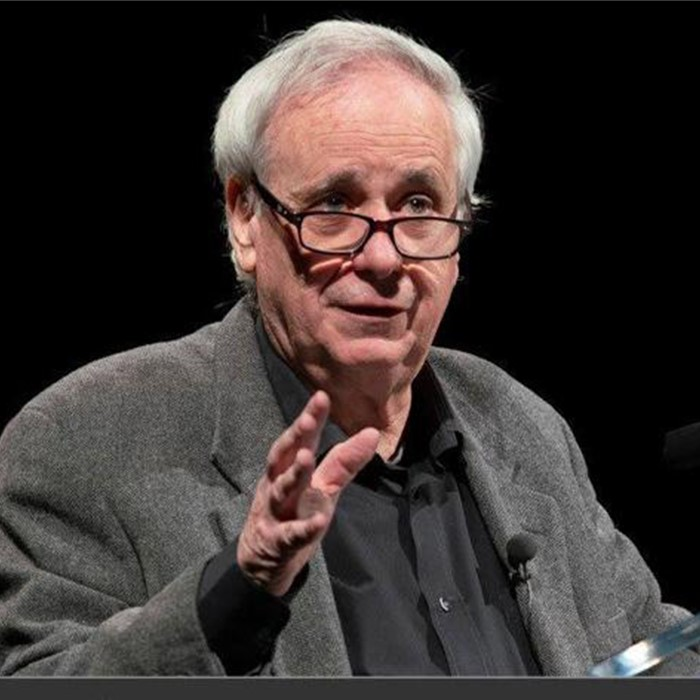
Ilan Pappé is an Israeli historian and socialist activist. He is a professor of history at the College of Social Sciences and International Studies at the University of Exeter in the United Kingdom, director of the university's European Centre for Palestine Studies, and co-director of the Exeter Centre for Ethno-Political Studies. He is also the author of the bestselling The Ethnic Cleansing of Palestine (Oneworld), A History of Modern Palestine (Cambridge), The Modern Middle East (Routledge), The Israel/Palestine Question (Routledge), The Forgotten Palestinians: A History of the Palestinians in Israel (Yale), The Idea of Israel: A History of Power and Knowledge (Verso) and with Noam Chomsky, Gaza in Crisis: Reflections on Israel's War Against the Palestinians (Penguin). He writes for, among others, the Guardian and the London Review of Books.
ZNetwork is funded solely through the generosity of its readers.
Donate




