

This story was originally published by Grist and is reproduced as part of the Climate Desk collaboration.
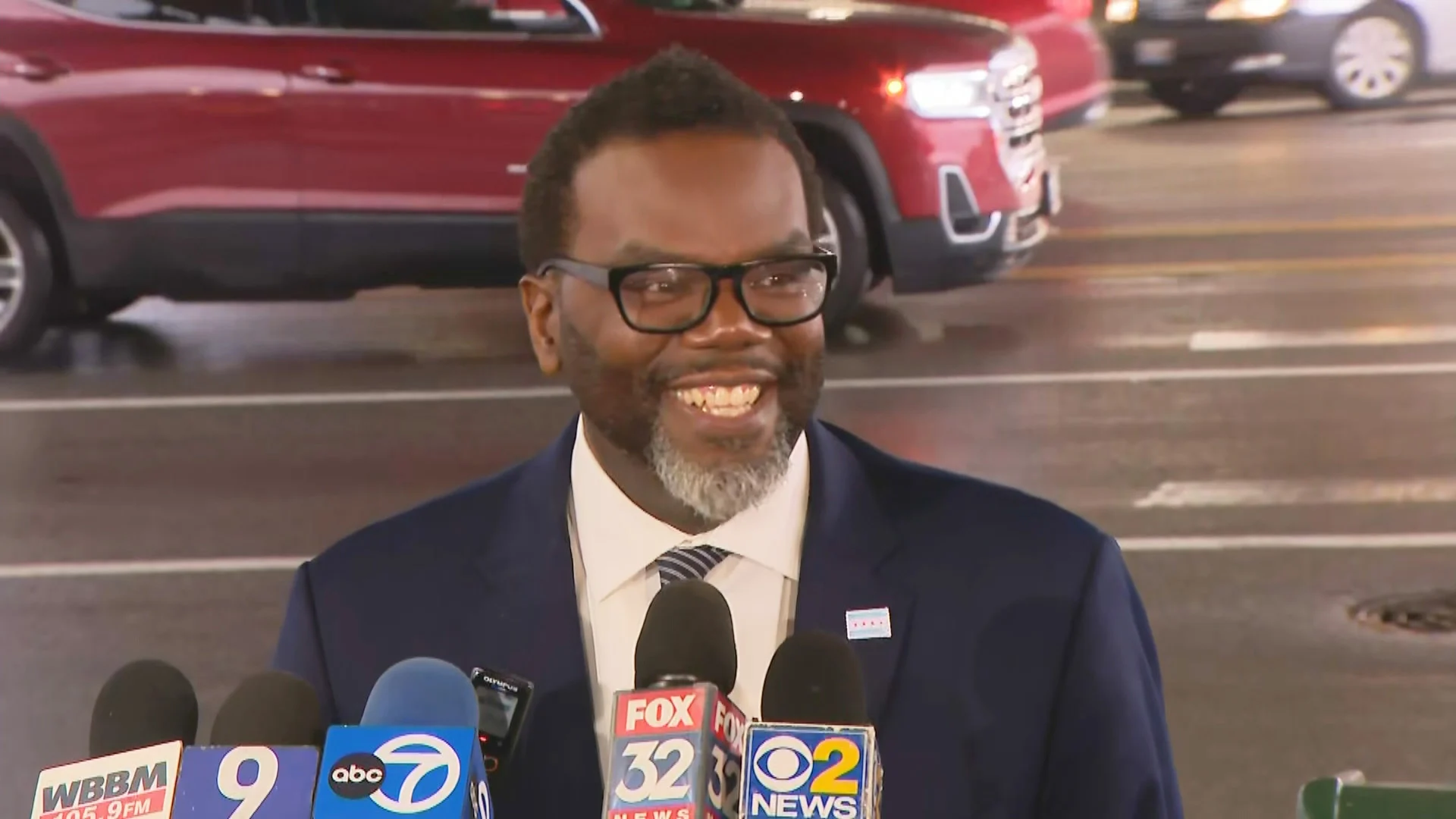
Brandon Johnson, the newly elected mayor of Chicago who won a tight race on Tuesday, campaigned on crime and education but he also talked about something else: environmental justice.
Johnson, 47, a former teacher and union organizer, currently serves as a Cook County commissioner. His campaign promises included making Chicago a leader in sustainability and addressing pollution-burdened neighborhoods in the city.
His opponent in the run-off election, Paul Vallas, 69, is the former CEO of Chicago Public Schools and ran on a tough-on-crime platform.
While environmental activists are cheered by his mayoral win, they and other observers also know the reality.
“He’s basically supportive of the environment, particularly equity … but he wasn’t elected on the environment,” said Dick Simpson, a professor emeritus of political science at the University of Illinois-Chicago and a former alderman.
So progress might depend on one thing: pressure.
“I think it’s important to put pressure on the new administration, by climate activists,” said Simpson. “Without vocal, continual pressure by both citizens and aldermen in the city council, it will remain a quite secondary issue.”
Communities in Chicago have risen up in recent years to fight back against environmental injustice, with the most recent struggle garnering national attention when residents of the Southeast Side protested against the proposed location of a scrapyard in their already polluted neighborhood.
Activists were eventually successful at preventing the move but only after years of actions that included hunger strikes.
One of those hunger strikers was Óscar Sanchez, an organizer at the Southeast Environmental Taskforce.
“We should be thinking of Brandon as a friend,” he said. “But we also hold our friends accountable.”
So activists will be watching to see if Johnson hews to his campaign promises, notably his claim that he would bring back Chicago’s Department of Environment, which was eliminated in 2011 by a previous administration. The current mayor, Lori Lightfoot, also promised to bring back the Department of Environment but failed to deliver.
Without that department in place, polluters in Chicago have largely gone unpunished according to a report by Neighbors for Environmental Justice. The local group reviewed data from 20 years and found that after the Department of Environment was shuttered, environmental violations fell by 50 percent and air quality citations fell by 90 percent.
In the meantime, Chicago’s air quality has declined. A recent Guardian analysis of air quality data found that Chicago’s South and West sides rank third in the nation for worst air quality in the United States.
For Sanchez, these issues of pollution and environmental justice are deeply connected to other issues in the city.
“Environmental justice encompasses housing, it encompasses our energy burden, it encompasses our availability to have clean water in our home, it encompasses being able to send our children to school without worrying about diesel trucks,” he said.
ZNetwork is funded solely through the generosity of its readers.
Donate




