


The State of Israel was established in 1948. Ever since, there has been continuous violence between Jews and Arabs in Israel, and between Israel and its neighbors. Sometimes, the violence was low-level and even latent. And every once in a while, the violence escalated into open warfare, as now. Whenever full- scale violence broke out, there was an immediate debate about what started it, as though that mattered. We are now in the midst of warfare between Israel and Palestine in Gaza and between Israel and Lebanon. And the world is engaged in its usual futile debate about how to reduce the open state of warfare to low-level violence.
Every Israeli government has wished to create a situation in which the world and Israel’s neighbors recognize its existence as a state and intergroup/interstate violence ceases. Israel has never been able to achieve this. When the level of violence is relatively low, the Israeli public is split about what strategy to pursue. But when it escalates into warfare, the Jewish Israelis and world Jewry tend to rally around the government.
In reality, Israel’s basic strategy since 1948 has been to rely on two things in the pursuit of its objectives: a strong military, and strong outside Western support. So far this strategy has worked in one sense: Israel still survives. The question is how much longer this strategy will in fact continue to work.
The source of outside support has shifted over time. We forget completely that in 1948 the crucial military support for Israel came from the Soviet Union and its eastern European satellites. When the Soviet Union pulled back, it was France that came to fill the role. France was engaged in a revolution in Algeria, and it saw Israel as a crucial element in defeating the Algerian national liberation movement. But when Algeria became independent in 1962, France dropped Israel because it then sought to maintain ties with a now- independent Algeria.
It is only after that moment that the United States moved into its present total support of Israel. One major element in this turn-around was the Israeli military victory in the Six Days War in 1967. In this war, Israel conquered all the territories of the old British Mandate of Palestine, as well as more. It proved its ability to be a strong military presence in the region. It transformed the attitude of world Jewry from one in which only about 50% really approved of the creation of Israel into one which had the support of the large majority of world Jewry, for whom Israel had now become a source of pride. This is the moment when the Holocaust became a major ideological justification for Israel and its policies.
After 1967, the Israeli governments never felt they had to negotiate anything with the Palestinians or with the Arab world. They offered one-sided settlements but these were always on Israeli terms. Israel wouldn’t negotiate with Nasser. Then it wouldn’t negotiate with Arafat. And now it won’t negotiate with so-called terrorists. Instead, it has relied on successive shows of military strength.
Israel is now engaged in the exact same catastrophic blunder, from its own point of view, as George Bush’s invasion of Iraq. Bush thought that a show of military strength would establish U.S. presence unquestionably in Iraq and intimidate the rest of the world. Bush has discovered that Iraqi resistance was far more formidable militarily than anticipated, that American political allies in Iraq were far less reliable than he assumed they would be, and that the U.S. public’s support of the war was far more fragile than he expected. The United States is heading towards a humiliating withdrawal from Iraq.
Israel’s current military campaign is a direct parallel of Bush’s invasion of Iraq. The Israeli generals are already noting that Hezbollah’s military is far more formidable than anticipated, that U.S. allies in the region are already taking wide distance from the United States and Israel (note the Iraqi government’s support of Lebanon and now that of the Saudi government), and soon will discover that the Israeli public’s support is more fragile than expected. Already the Israeli government is reluctant to send land troops into Lebanon, largely because of what it thinks will be the reaction of its own people inside Israel. Israel is heading towards a humiliating truce arrangement.
What the Israeli governments do not realize is that neither Hamas nor Hezbollah need Israel. It is Israel that needs them, and needs them desperately. If Israel wants not to become a Crusader state that is in the end extinguished, it is only Hamas and Hezbollah that can guarantee the survival of Israel. It is only when Israel is able to come to terms with them, as the deeply-rooted spokespersons of Palestinian and Arab nationalism, that Israel can live in peace.
Achieving a stable peace settlement will be extremely difficult. But the pillars of Israel’s present strategy – its own military strength and the unconditional support of the United States – constitute a very thin reed. Its military advantage is diminishing and will diminish steadily in the years to come. And in the post-Iraqi years, the United States may well drop Israel in the same way that France did in the 1960s.
Israel’s only real guarantee will be that of the Palestinians. And to get this guarantee, Israel will need to rethink fundamentally its strategy for survival.
[Copyright by Immanuel Wallerstein, distributed by Agence Global. For rights and permissions, including translations and posting to non-commercial sites, and contact: rights@agenceglobal.com, 1.336.686.9002 or 1.336.286.6606. Permission is granted to download, forward electronically, or e-mail to others, provided the essay remains intact and the copyright note is displayed. To contact author, write: immanuel.wallerstein@yale.edu.
These commentaries, published twice monthly, are intended to be reflections on the contemporary world scene, as seen from the perspective not of the immediate headlines but of the long term.]

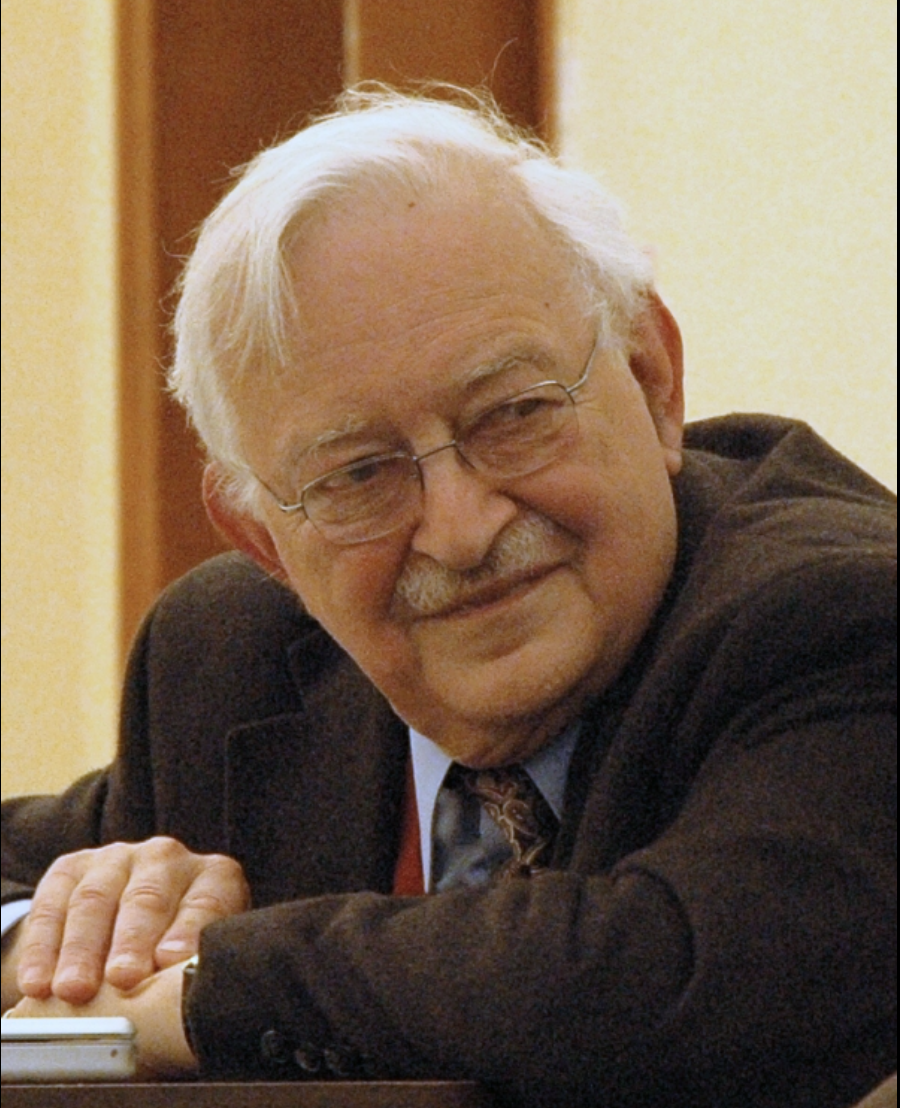
Immanuel Wallerstein (September 28, 1930 – August 31, 2019) was an American sociologist and economic historian. He is perhaps best known for his development of the general approach in sociology which led to the emergence of his world-systems approach. He was a Senior Research Scholar at Yale University from 2000 until his death in 2019, and published bimonthly syndicated commentaries through Agence Global on world affairs from October 1998 to July 2019. He was the 13th president of International Sociological Association (1994–1998). Politically, he considered himself on the "independent left" and was active in a variety of organizations. He argued that we are in the transition from our existing capitalist world-economy to some new system, and that the great political struggle of our time is about which new kind of systemic order will replace our existing one. A new systemic order could be better or worse, depending on our collective ability to push the worldwide decision in one direction or another. He believed that a crucial element in this is a vast debate about the kind of better system we wish to build, and saw the Reimagining Society Project as one of the ways to further this collective debate.
ZNetwork is funded solely through the generosity of its readers.
Donate




