

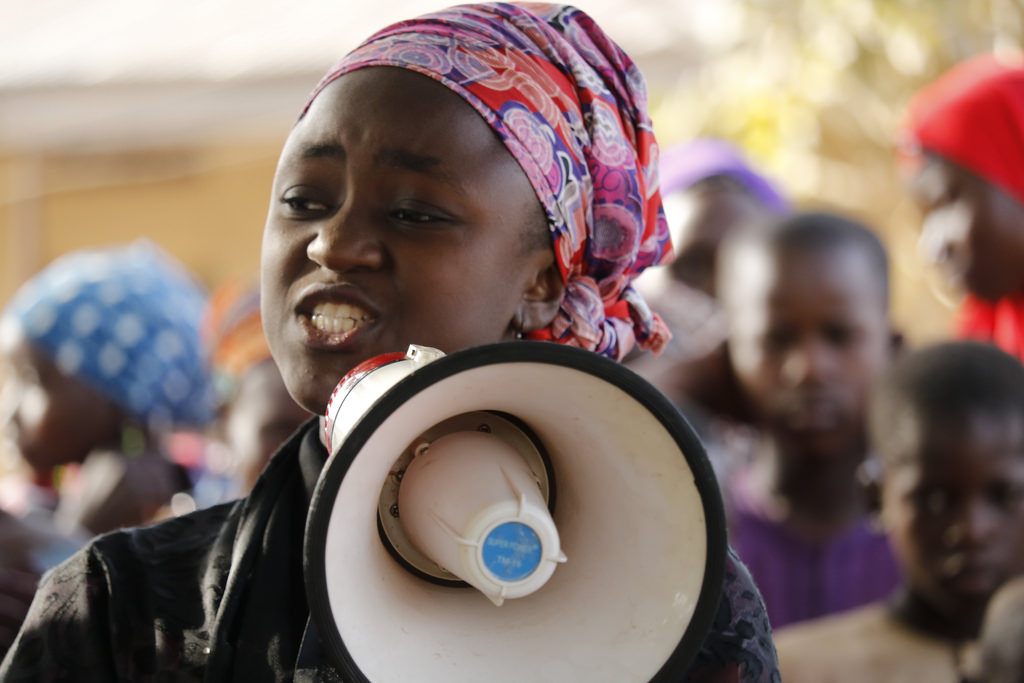
This year’s most notable decision affecting gender justice – the overturning of federal protection of the right to abortion in the US – happened more than 6,000 miles from Africa, but its impact was felt here too.
The US Supreme Court’s decision will affect legal, policy and public service spheres on the African continent. It will also intensify the ideological war to control women’s bodies and push LGBTIQ citizens further to the margins.
African states have diverse abortion policies. For example, in Cape Verde and South Africa, abortion is available on demand – in theory if not in practice, especially for poorer women. In Congo-Brazzaville, Egypt and Gabon, however, it is prohibited without any exceptions. Between those two poles are dozens of countries that allow terminations in some circumstances.
Following the US reversal of Roe v Wade, I was among the African gender justice advocates who feared a domino effect on the continent. That hasn’t happened. However, even though we haven’t seen any changes to the law to further restrict abortion access, the US decision has definitely re-energised anti-abortion narratives.
After all, the loudest and most active conservative voices and efforts in Africa are often closely linked to the far right in the US and Europe.
Big wins for US conservatives on the home front will no doubt free up funds to invest in frustrating progress elsewhere, including Africa. In the past, US conservatives have funded efforts in Malawi to dissuade the national parliament from expanding the circumstances in which abortion is permitted.
Looking forward to 2023 and beyond, Africa’s feminist movements will have to reinvest in their own defence of bodily autonomy, in accordance with the Maputo Protocol. Adopted by the African Union in 2003, this treaty obliges countries to legalise medical abortion in cases of sexual assault, rape, incest, and where the pregnancy endangers the health or life of the mother or the foetus isn’t viable. But the ideological war extends beyond the control of pregnant bodies.
The newly elected president of Kenya, William Ruto, is a controversial figure who has branded himself a Christian nationalist and spoken out against homosexuality. His first executive order restricted state recognition of a family to heterosexual couples. This policy has been a priority for conservative Western movements active in Kenya, such as Spain’s CitizenGo.
These movements and their powerful allies seek to protect a very colonial understanding of family in Africa over more expansive indigenous definitions of family. But Western conservatives’ ideas are at odds with modern African realities. Increasingly, other forms of family are emerging across the continent in households headed by single women or children, or communal homes shared by queer people ostracised by their birth families.
The emerging forms of families will need feminist movements to continue fighting for their equal recognition and protection under the law. This is especially so because conservative movements will work to tip the balance against them.
These fights are important because so often, they are a matter of life and death for Africa’s gender-oppressed peoples. In the last two years, at least two men are reported to have bludgeoned their wives to death after learning they were using contraception. Meanwhile, a man in Kenya has sued his former partner for denying him the “right” to be on “her pregnancy journey”, claiming that his desire to have children should take precedence over her feelings. LGBTIQ Africans can often be a target, too, as is suspected to have been the case for Kenya’s Sheila Lumumba and Uganda’s Matthew Kinono.
In isolation, these events may seem random but they are directly linked to the extremist conservative Western activism that the US reversal of Roe v Wade emboldened. This activism promotes false claims such as fetal personhood, spreads misinformation about contraceptives, pushes for women to be forced back into gendered family roles and stokes moral panic about LGBTIQ people. Consequently, African feminism is faced with a considerable challenge – pushing African governments to protect their citizens from these dangerous influences.
Meanwhile, the disinformation and misinformation that propels these exclusivist movements is likely to get worse, especially as libertarian billionaires such as Elon Musk take over social media platforms like Twitter. A Mozilla report published ahead of Kenya’s general election in August showed how foreign groups can manipulate a country’s public discourse through Twitter. The report’s case study was CitizenGo’s disinformation campaign against Kenya’s 2020 Reproductive Health Bill, which was eventually defeated in parliament.
The failure and/or disinterest of Big Tech owners to regulate the abuse of their platforms will only embolden such bad faith campaigns, putting women, LGBTIQ and other marginalised communities at risk, just as in the offline world.
A recent report by the Center for Countering Digital Hate noted the increasing number of posts containing slurs since Musk took over at Twitter.
Meanwhile, national governments on the continent are increasingly intolerant of the speech of groups that hold them to account. They are passing laws such as Uganda’s Computer Misuse Amendment Act and arresting critics, as happened repeatedly in Nigeria this year.
Compounding these challenges for Africa’s feminists is the fact that local elites and leaders lean towards conservative policies. In the two years since the Trump administration joined Brazil, Egypt, Hungary, Indonesia and Uganda to co-sponsor the notorious Geneva Consensus Declaration (GCD), it has gained further signatories: 36 countries, 17 of them in Africa, now support the aims of the GCD, which declares that “there is no international right to abortion”. We are ending 2022 with the Ghanian government seemingly inclined towards a revised version of “the harshest anti-gay law in the world”, which has been linked to US ultra-conservatives.
If the current trends do not decisively spell disaster, they are certainly a clear indication that African feminists and their allies have a steep uphill battle to fight in the culture war waged by Western conservatives.
ZNetwork is funded solely through the generosity of its readers.
Donate




