


I registered for People’s Summit/2017 about a month ago, and when I did so I wondered if there would be as many people at this one as there were at the first one last year about this time. Last year’s summit was held right after the end of Bernie’s historic Presidential campaign. Though attendees were disappointed that he didn’t have as many delegates as Hillary, they were still feeling the amazing energy from the amazing Bernie campaign, with all its victories, massive rallies, youthful energy and more.
In addition, the first summit in 2016 took place immediately after a national gathering of about 1500 members of the National Nurses Union, who ended up being half of the 3,000 total participants. There was no such gathering before this year’s summit.
How many people attended this year? About 4,000. There were 1000 NNU members, and twice the number of non-NNU participants as last year.
A highlight of this year’s event was the speech and question-and-answer session with Bernie. He spoke to a packed Lakeside Center theatre crowd that was in very high spirits. Before he spoke, we lined up for what seemed like maybe a quarter of a mile to get in, and once we got in, while waiting for the main event, enjoyed periodic chants of “Bernie, Bernie,” and repeated and increasingly successful audience waves going back and forth across the hall. It was an electric atmosphere.
Bernie was strong in his criticism of both “lying, hypocritical Trump” and the Democratic Party. He said that the responsibility for Trump’s victory was the strategy and politics of the dominant forces in the Democratic Party: “The Democratic Party must finally understand which side it is on.”
He specifically addressed a number of main issues, similar to his 2016 campaign speeches: Medicare for All/Single Payer; the fight for a $15 minimum wage; economic inequality; free tuition at public colleges and universities; a broken and unjust criminal justice system; the need for strong action on the climate crisis; the rights of labor to organize; and opposition to racism, sexism and heterosexism.
One weakness was that he said nothing about militarism or US foreign policy, similar to the early months of his 2016 campaign.
After he spoke he responded to five questions from conference participants pre-recorded that day. I was impressed by his answer to a question from a young African American woman running for office from Georgia concerned about gerrymandering impacts. Bernie’s answer: knock on doors, listen and talk to people about issues they’re concerned about, don’t let party labels throw you off, and you’ll end up getting votes not just from Democrats and independents but some Republicans too.
There was much more that happened over the course of the three days of the summit. There were many plenary sessions with a range of different and almost-always-good speakers. But on the major and most well-attended day of the weekend, Saturday June 10th, the entire afternoon was devoted to two consecutive sessions of Working Groups on a range of issues, 25 of them:
-Empowering Locals: the Power of Perseverance
-Solutions to Big Money and Political Corruption
-Big Organizing Beyond Bernie
-Winning Clean Energy and Climate Justice for All
-Building Progressive Power in Rural America
-Campaigning and Governing for Transformational Change
-Electoral Politics and Transformative Politics: A View from the Left
-Runaway Inequality
-Take Back Our Schools, Take Back Democracy
-Time for SinglePayer!
-Athletics, Activism and Social Change
-Digital Organizing
-Nonviolent Direct Action
-For the Common Good: Expanding Public Programs, Fighting Wall Street
-Winning the Battle for the Internet
-Down Ballot Revolutionaries
-Water, Jobs and Justice
-Democratic Socialism 101
-Building Power with a People’s Agenda
-Multi-Front, Multi-Racial Issue Organizing
-Workers Organizing: Community Alliances and the Future of Labor
-Beyond Betsy: Organizing for Education Justice
-Transforming the Democratic Party
-Peace and Justice in the Era of Trumpism
-Distributed Organizing for the Political Revolution
On the last day of the summit, on Sunday morning, perhaps because of Sanders’ strong critique the night before, there was more discussion from the stage about the question of the Democratic Party than I had heard before then. The dominant perspective of the groups which organized the summit and, apparently, most of the participants, was that for right now we should be focusing our energies on winning victories, from the most local of levels to the Presidency, through participation in the Democratic Party. But it was clear from statements made by speakers on the stage and by the response from the floor, that for many people this is more a tactical decision than a core belief. There was a clear recognition that a battle had to be waged against the corporate/weak-kneed wing for a very different kind of Democratic Party.
The day after the Summit ended, the New York Times, at the top of the front page of the June 12th paper, headlined an article, “Deepening Divide Roils Democrats as Base Tilts Left.” Referencing the Peoples’ Summit, it reported that “progressives are more emboldened than they have been in decades, galvanized by Mr. Sanders’ unexpected successes in 2016 and empowered by the surge of grassroots energy dedicated to confronting an unpopular president and pushing the party leftward.” They quoted Nina Turner, who gave an impassioned, rousing and well-received speech Sunday morning, as warning, “Unity for unity’s sake is not going to happen.”
Those who organized the People’s Summit, National Nurses United in particular, have done not just our movement and our country but the world a great service. They have taken the momentum of Bernie’s campaign and all of the anti-Trump, massive street actions and emergence of a broad resistance movement, and they have taken it to another, much-needed, higher level.
It would be a very good, very strategic thing to do in coming months for there to be a proliferation of similarly-organized and similarly–based state and local people’s summits. We need, we deeply need, to keep the momentum up, to strengthen the independent progressive movement’s interconnections and unity in action all throughout the country.
Ted Glick has been a progressive activist and organizer since 1968. Past writings and other information can be found at www.tedglick.com, and he can be followed on Twitter at http://twitter.com/jtglick.

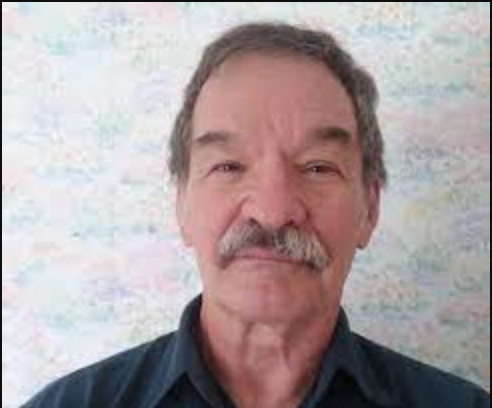
Ted Glick has devoted his life to the progressive social change movement. After a year of student activism as a sophomore at Grinnell College in Iowa, he left college in 1969 to work full time against the Vietnam War. As a Selective Service draft resister, he spent 11 months in prison. In 1973, he co-founded the National Committee to Impeach Nixon and worked as a national coordinator on grassroots street actions around the country, keeping the heat on Nixon until his August 1974 resignation. Since late 2003, Ted has played a national leadership role in the effort to stabilize our climate and for a renewable energy revolution. He was a co-founder in 2004 of the Climate Crisis Coalition and in 2005 coordinated the USA Join the World effort leading up to December actions during the United Nations Climate Change conference in Montreal. In May 2006, he began working with the Chesapeake Climate Action Network and was CCAN National Campaign Coordinator until his retirement in October 2015. He is a co-founder (2014) and one of the leaders of the group Beyond Extreme Energy. He is President of the group 350NJ/Rockland, on the steering committee of the DivestNJ Coalition and on the leadership group of the Climate Reality Check network.
ZNetwork is funded solely through the generosity of its readers.
Donate




