

If I’m completely honest, I can’t recall all the twists and turns of 1984. I probably read it in high school or maybe as an undergrad, somewhere alongside Animal Farm. They’re the kind of books teachers press into young hands to spark critical thinking, to push us to look beyond the surface, question the official story, and spot the sleight of hand in politics and power. What has stayed with me isn’t the fine detail of the plot, but the feeling it left behind: that the words on the page were not just fiction, but a warning, one I wasn’t sure I needed at the time, but which feels uncomfortably relevant now.
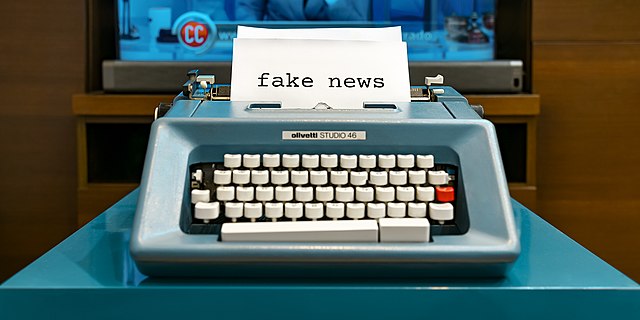
In 1984, George Orwell particularly warned us about the dangers of language twisted into a tool of control. His fictional Newspeak and doublethink have since morphed into what we now call doublespeak, the art of making lies sound truthful, brutality seem humane, and repression appear just and fair. In the U.S. and around the world, the language of democracy and human rights is often wielded not as a shield for the vulnerable, but as a weapon to serve political agendas and target those deemed expendable.
While this is hardly new, as history is littered with leaders who cloaked repression in the language of freedom, today the phenomenon is compounded by the reach and velocity of social media, 24-hour news cycles, and algorithm-driven outrage. These tools don’t just spread doublespeak; they normalize it, rewarding those who weaponize democratic ideals with likes, shares, and airtime until the distortion becomes the dominant narrative.
Words like democracy, freedom, justice, fairness, human rights, along with lofty invocations of “protecting the rule of law,” have been co-opted by those who embody anything but. What’s more unsettling is how banal this has become, so regularized that for those of us who still hold to the true principles of democracy, the world now feels upside down. One example that has stayed with me comes from the Trump administration’s deportations without due process. On social media, I repeatedly saw the refrain: “This is what I voted for, a president promising to remove those who entered the U.S. ‘illegally,’” all under the guise of protecting the rule of law. Yet the reality was far murkier. Take the case of Kilmar Abrego García, who in 2019 was granted protection from removal by an immigration judge due to credible threats in El Salvador. That order was ignored, and he was deported anyway — even as another federal judge issued a temporary restraining order to halt such actions. In other words, the rhetoric of law and justice was invoked while the actual rule of law was being actively undermined.
Another example from the U.S. is the notion that somehow suppressing the rights of trans women promotes the rights and liberties of women, a claim wrapped in the language of “protection” and “fairness.” Meanwhile, many of the same states advancing these measures have simultaneously moved to strip away women’s reproductive freedoms, curtailing their ability to make decisions about their own bodies and healthcare.
Or, on a more global scale, consider the mass killing of civilians in Gaza, permitted, even rationalized, by much of the international community, especially in the West, under the guise of delivering “justice” and “accountability” for the October 7 Hamas attacks, which targeted and kidnapped innocent civilians. Yet Israel has been allowed, and actively supported, in carrying out indiscriminate bombings that have killed thousands, actions that are anything but justice or accountability. The United States and several European countries have blocked or watered down UN Security Council resolutions calling for an immediate ceasefire, while continuing to supply Israel with military aid despite mounting civilian casualties. Meanwhile, the United States has sanctioned ICC judges and United Nations Special Rapporteur on the situation of human rights in the Palestinian territories occupied since 1967 Francesca Albanese for doing her job: speaking out against human rights abuses and supporting international accountability mechanisms.
Using the language of democracy and human rights is no different from leaders invoking “protection” during emergencies, not to safeguard the public, but to consolidate power and erode democratic norms. After 9/11, the United States expanded surveillance and curtailed civil liberties. During COVID-19, Hungary used emergency powers to rule by decree. In Egypt, anti-terror laws have been turned against journalists and political opponents. In each case, the rhetoric of safety masked a tightening grip on power. Yet when democracy and human rights are twisted into this same kind of doublespeak, we undermine values that are already fragile, and, to be blunt, growing more fleeting by the day. The Economist Intelligence Unit reported a plunge in the global average democracy rating to 5.17 in 2024, the lowest since tracking began in 2006, with roughly 39% of the world’s population now living under authoritarian regimes.
These figures are not simply a barometer of democratic vitality; they are a warning. The doublespeak that corrodes democracy on paper is the same force shaping real-world crises. To challenge these forces and those who hijack the language of democracy and human rights for their own ends, the true essence of these values must be continually echoed. Every NGO, movement, article, discussion, meme, TikTok video, or other act that counters these narratives helps protect the genuine form and spirit of democracy and human rights. Without such efforts, the values we hold dear will keep being twisted into tools of their own destruction, as we sink further into a present-day dystopia where the language of freedom is mistranslated into the language of repression.
Jared O. Bell, syndicated with PeaceVoice, is a former U.S. diplomat and scholar of human rights and transitional justice, dedicated to advancing global equity and systemic reform.
ZNetwork is funded solely through the generosity of its readers.
Donate




