

We’re facing an unprecedented “code red for humanity,” in the words of United Nations Secretary-General António Guterres—yet global action has stagnated. The world’s eyes are upon the international body now that the curtains have closed on COP27, its annual climate change convention, held in Sharm El-Sheik, Egypt, in November, and open at the Convention on Biological Diversity in Montreal in December.
Amidst the lackluster headlines spanning these events, though, Guterres—whose own agencies have warned of industrial animal agriculture’s climate perils for more than 15 years—issued a more grassroots plea. Speaking to the leaders of the C40 cities who gathered last month at a climate summit of their own, he declared, “With more than half of the world’s population, cities are where the climate battle will largely be won or lost.”
Indeed, cities—where unwavering football fandoms are born, debates over classroom curricula are waged, and unique lexicons take form (yinz know what we mean, Pittsburgh)—shape the way we live, learn, and, crucially for planetary health, eat.
Guterres is no stranger to environmental inaction among his peers. In his appeal, he explained that despite decades of tireless work, current national pledges—or a lack thereof—will carry us into the next decade with a 14 percent increase in global emissions.
Facing a near-certain future of mass flooding, heatwaves, biodiversity loss, and displaced populations, he called upon these mayors: “Your citizens look to you to provide leadership, action, and protection that is often lacking at the national level.” These words came just months after a U.N. Intergovernmental Panel on Climate Change (IPCC) report announced a dire need to cut methane emissions by a third. And C40 itself hasn’t minced words in advocating for a two-thirds reduction in the world’s most notorious methane emitter: meat.
For these reasons, our organizations and nearly 200 others urged the mayors of C40 to kickstart immediate action to transform our destructive food system on the eve of their annual summit (where, we noted, beef still had a front-row seat on the menu)—but not just at the event’s catered banquets.
Instead of waiting years for commitments to trickle down from above, municipal leaders around the world (and particularly those of C40’s nearly 100 major cities, constituting a quarter of the global economy) must seize a rapidly shrinking opportunity to shape food culture from the ground up by prioritizing plant-based foods.
To grasp the oft-overlooked power of the grassroots, consider the case study of Marshall, a small town in Texas cattle country: six-term Mayor Ed Smith, who reaped health benefits after shifting to a plant-based diet in 2008 following a cancer diagnosis, launched a healthy eating campaign, complete with an annual festival, community potlucks, and even visits by a troupe of plant-powered firefighters. Hailing from a ranching family, Smith was already beloved by his citizenry, and his initiative radiated outward, from local churches to the assistant fire chief who kicked his diabetes meds after going plant-based.
Meanwhile, a duo of doctors in Burin, a 2,500-person town in rural Newfoundland, have been credited with getting the population hooked on vegan foods through workshops and veggie potlucks after noticing that about 80 percent of illnesses they treated were brought on by diet and lifestyle. By supporting patients with the struggles that hit closest to home—not drought in North America’s heartland, but staving off heart disease long enough to see their grandchildren grow up—Drs. Arjun and Shobha Rayapudi have planted seeds of dietary change across their whole community.
But, of course, we need to scale up from these small towns—and quickly—to revive both our planet’s and our own health, currently clinging to life on the operating table. As C40 acknowledged in a recent report, “Eating less red meat and more vegetables and fruits could prevent annually 160,000 deaths associated with diseases such as cancer, heart disease, diabetes and stroke in C40 cities.” These concerns were front of mind with officials in New York City—where, like the world at large, heart disease is the number-one killer—as they unveiled at a recent White House conference that their entire public hospital system is now serving plant-based meals by default.
Through this subtle “nudge,” the city is actually setting a bold new paradigm, wherein patients must opt out (twice) if they don’t want the vegan chef’s special. Sixty percent are happily chowing down, adding up to nearly 800,000 meals annually. Using a model published in the International Journal of Environmental Studies, we determined that if a city serving a million meals per year implemented a program like New York’s, it could save the equivalent emissions of driving a passenger car over 1 million miles.
New York’s not alone in this visionary initiative. Millions are collectively discovering a key ingredient to change on our own dinner tables, and these roots are growing entire forests. Within the last decade, dozens of municipal leaders, including the fifteen C40 cities who have signed the Good Food Cities Declaration, have heard the cries from their citizenry to undo the harms of the 20th century’s brainchild, the factory farm. Cities like Berkeley, San Diego, Amsterdam, Vancouver, Helsinki, Washington, DC, and Montreal (host to the upcoming COP15) have made historic commitments to reduce their own meat procurement, with DC’s mayor even issuing a proclamation in support of a global transition to a plant-based food system.
In October, Los Angeles joined 19 others, from Didim in Turkey to Buenos Aires in Argentina, in endorsing the Plant Based Treaty, an international treaty putting food systems at the heart of the climate crisis. Councilmember Paul Koretz proclaimed, “This landmark resolution marks a vital cultural shift as Americans prioritize both combating climate change and improving their health.”
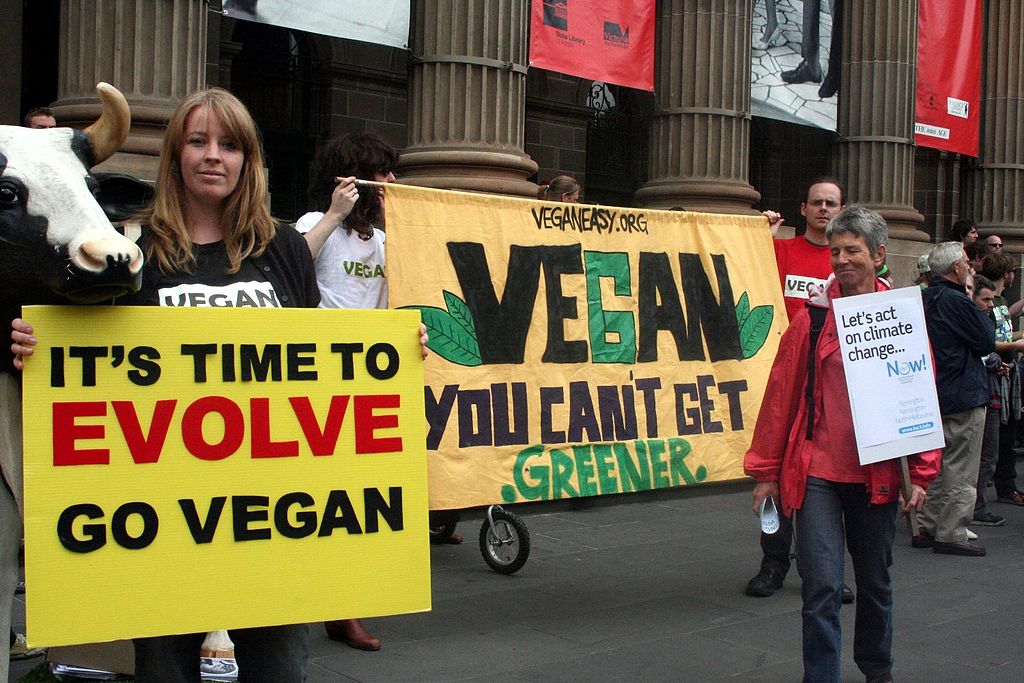
The direct footprints of city-procured meals are just the start. By putting more plants on the plates they serve in schools, hospitals, convention centers, and events, these cities are helping citizens rethink their food norms and ushering in a more resilient way of eating.
Recent polling by VegTO found that citizens are already eager to cut back on their meat intake in their day-to-day lives, with over half intending to eat more plant-based foods if their leaders make them more accessible. Cities can follow a number of best practices, like those we outlined in our letter to C40, to invest in, improve the affordability of, and incentivize plant-based options: from supporting community programs like the Toronto Vegetarian Food Bank (which has provided over 350,000 meals to people struggling with food insecurity) and school gardens like Massacussetts’ CitySprouts to running public information campaigns as Haywards Heath Town Council did for Veganuary. Beyond their own board rooms, city officials can help plant-forward eating proliferate everywhere.
In lieu of wringing our hands each night about every step forward that’s been thwarted by governmental gridlock on the world’s stage, each of us can play a profound role in changing the food landscape in our own cities and towns—the communities where we gather to eat, where we forge traditions, and where we eke out our values. We cannot, of course, let our global leaders off the hook; after all, a quilt is always stronger with all of its individual squares sewn firmly together.
But as more of us call upon our own leaders to flip their food norms, embrace the Plant Based Treaty and the Good Food Cities Declaration, and make plant-based foods accessible to all, we’ll create the unified front that’s needed to move our global leaders toward addressing animal agriculture’s massive deforestation, species extinction, water pollution, and resource depletion.
As leaders at the U.N.’s biodiversity conference debate the extinction crisis, they’ll gaze out the convention center’s windows upon the skyline of their host city of Montreal. Perhaps they’ll catch wind of a resolution recently passed by the city to curtail its dependence on meat for the sake of our imperiled planet and serve at least 75 percent vegetarian meals in its public venues, including the one in which they’re gathered. Perhaps they’ll be moved by Montreal’s bold strides to take another look at a U.N.-supported report implicating the food system as the primary driver of biodiversity loss—and they’ll return home energized about a new food future.
From bagels and poutine in the bustling city of Montreal to backyard barbeques in rural Marshall, every city’s voice is needed in the fight for our planet, and it starts with one citizen writing their council member or showing up at town hall. Piece by piece, each of our communities will become cornerstones of a new global food system centered around plants.
ZNetwork is funded solely through the generosity of its readers.
Donate




