

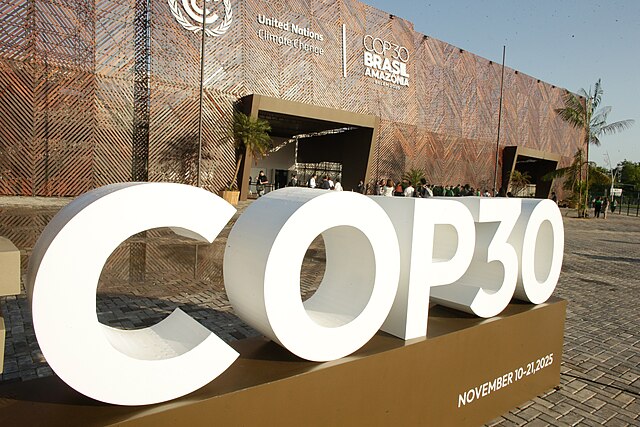
Thousands of youth delegates at COP30, like me, are gathering to push governments to act, not just talk, on the climate crisis. But this year feels different. The balance of power is shifting – and for once, it’s not superpowers like the U.S. setting the tone.
By censoring and defunding its scientists, Washington is giving away the future of climate innovation and the influence that comes with it.
Europe’s top research funders just announced a record number of applications, with U.S. submissions to the European Research Council tripling since 2024. It’s no mystery why. President Trump’s attacks on universities – funding cuts, censorship, and federal investigations – have made it harder and riskier to do serious research. America’s best and brightest minds are boarding one-way flights, taking with them decades of scientific leadership and soft power.
This brain drain is redrawing the map of innovation and pushing climate leadership, especially in data-driven technologies like AI, toward Europe and the Global South.
This is a conceptual shift as much as it is a geographic one, in which intelligence is distributed across tools, data, and networks. The shift is already visible. Brazil is powering AI research hubs with renewable energy. Kenya and Ghana are launching climate intelligence labs that make weather and crop data freely available to farmers.
Meanwhile, Washington is busy silencing the very researchers who made it a scientific superpower.
At COP30, the vacuum left in America’s absence will allow less powerful nations a rare chance to lead. Global South negotiators are arriving with a clear demand: open access to the data that underpins climate action. Without it, they can’t plan, predict, or protect. And without local ownership, any green transition will only reproduce the same inequities that created this crisis in the first place.
What they’re asking for, in essence, is a shared global ‘second brain’ for the planet’s data – a transparent system where information is stored, connected, and used for collective problem-solving rather than political control.
Some technologists are already working in this direction. Sachin Dev Duggal, 2023 EY Entrepreneur of the Year, is among those exploring ways to make AI a tool for collaboration rather than domination – systems that think with people, not for them. His latest venture, SecondBrain AI, emphasizes connecting ideas across disciplines and cultures, rather than hoarding them in silos. It’s the kind of thinking the climate movement needs: practical, transparent, and rooted in shared progress rather than profit.
Because growth, at its core, depends on how quickly people can turn information into usable knowledge. AI can help shorten that gap, especially in regions where talent is high, but resources are limited. It can help small businesses plan better, teachers personalize lessons, and clinics make faster diagnoses. The goal isn’t one global system, but tools that adapt to local needs and help institutions learn over time.
Emerging tools like SecondBrain bring together knowledge from people and organizations in one shared map, turning scattered files and emails into something searchable and useful. Small AI tools can act on that information under human supervision, making it practical and trustworthy. A focus on efficiency and collaboration makes these collaborative tools well suited to regions like the Global South where resources like funding, internet speed, and energy can be limited.
And that word – collaboration – is where the contrast begins. While others are building systems to connect knowledge, America is dismantling the very institutions that produce it. You can’t hollow out your universities and silence your scientists and still expect to shape the future. For the rest of the world, it’s a chance to lead differently: to share, not hoard, and to design technology that serves people, not politics.
For too long, the U.S. has treated data like a weapon – something to protect behind patents and national security walls. But the climate crisis doesn’t respect borders, and neither should knowledge.
If Washington wants to lead again, it must do more than invest in a few tech projects whilst defunding its universities and censoring its scientists. It must defend academic freedom, end political interference in research, and support a truly open, global system of climate intelligence.
Some policymakers claim that cutting “woke” programs will make America more competitive. They couldn’t be more wrong. Innovation depends on openness – on disagreement, experimentation, and the freedom to fail. Replace that with fear, and you get paralysis, not patriotism.
If nothing changes, the U.S. could soon depend on foreign-built climate models and Global South-led clean tech. The irony is almost poetic: the nation that once exported science will end up importing the very tools it abandoned.
When I walk into COP30, I’ll be thinking about that: how the real climate revolution won’t come from governments alone, but from those willing to democratize data, defend science, and insist that truth should belong to everyone.
If Washington doesn’t join that movement soon, the rest of the world will move on without it.
ZNetwork is funded solely through the generosity of its readers.
Donate




