


It is widely argued that the September 11 terrorist attacks have changed the world dramatically, that nothing will be the same as the world enters into a new and frightening “age of terrorâ€â€”the title of a collection of academic essays by Yale University scholars and others, which regards the anthrax attack as even more ominous.1
It had been recognized for some time that with new technology, the industrial powers would probably lose their virtual monopoly of violence, retaining only an enormous preponderance. Well before 9/11, technical studies had concluded that “a well-planned operation to smuggle WMD into the United States would have at least a 90 percent probability of success—much higher than ICBM delivery even in the absence of [National Missile Defense].†That has become “America’s Achilles Heel,†a study with that title concluded several years ago. Surely the dangers were evident after the 1993 attempt to blow up the World Trade Center, which came close to succeeding along with much more ambitious plans, and might have killed tens of thousands of people with better planning, the WTC building engineers reported.2
On September 11, the threats were realized: with “wickedness and awesome cruelty,†to recall Robert Fisk’s memorable words, capturing the world reaction of shock and horror, and sympathy for the innocent victims. For the first time in modern history, Europe and its offshoots were subjected, on home soil, to atrocities of the kind that are

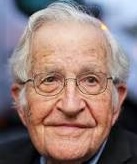
Noam Chomsky (born on December 7, 1928, in Philadelphia, Pennsylvania) is an American linguist, philosopher, cognitive scientist, historical essayist, social critic, and political activist. Sometimes called "the father of modern linguistics", Chomsky is also a major figure in analytic philosophy and one of the founders of the field of cognitive science. He is a Laureate Professor of Linguistics at the University of Arizona and an Institute Professor Emeritus at the Massachusetts Institute of Technology (MIT), and is the author of more than 150 books. He has written and lectured widely on linguistics, philosophy, intellectual history, contemporary issues, and particularly international affairs and U.S. foreign policy. Chomsky has been a writer for Z projects since their earliest inception, and is a tireless supporter of our operations.
ZNetwork is funded solely through the generosity of its readers.
Donate




