


Recently I was asked if I thought the Obama administration was involved to any significant degree in encouraging civil unrest in Venezuela. My answer begins with a question of its own: do bears shit in the woods?
The Obama White House aided and abetted the military overthrow of Honduras’ democratically elected president Manuel Zelaya in the summer of 2009.[1] It did much the same when right-wing business interests in Paraguay conducted a “judicial coup” against that nation’s democratically elected president Ferdinand Lugo three years later.[2]
These Latin American coups were undertaken with U.S. aid and diplomatic cover for a simple reason. Zelaya and Lugo were moving to align their countries with the leftward and populist shift of Latin American politics and policy that has been evident since the charismatic socialist Hugo Chavez was elected president of Venezuela in late 1998. That shift involves related and significantly successful efforts to reduce savage socioeconomic inequalities within Latin American states and to re-orient those states’ political-economies and security arrangements around their shared regional interests. Washington’s bipartisan imperial elite abhors such developments for reasons that are neither mysterious nor novel.
If Obama assisted right wing coups to preserve oligarchic and military rule in the relatively small and economically insignificant nations of Honduras and Paraguay, it’s not much of a reach to imagine he would like to see regime change in socialist Venezuela. The leader of Latin America’s challenge to Washington’s hemispheric power and to the related scourge of U.S.-imposed neoliberalism, Venezuela has undertaken significant experiments not only in attacking poverty by redistributing its considerable petroleum-based wealth downwards but also in participatory citizens’ and workers’ democracy.
It’s not for nothing that the United States has been “more committed to ‘regime change’ in Venezuela than anywhere else in South America,” spending hundreds of millions of U.S. taxpayer dollars funding opposition groups there since Chavez was first elected. Nowhere has Latin America’s independent and leftward drift gone further and with greater consequence than in Venezuela, which happens – no small matter in Washington’s calculations –to sit atop the world’s largest oil reserves. [3]
The money has been provided on a bipartisan basis, consistent with U.S. Secretary of State John F. Kerry’s repeated criticism of Chavez’s “dictatorial” policies when he ran for the U.S. presidency as a Democrat in 2004.
The militantly neoliberal and imperial Obama has never had any love for Venezuela’s Bolivarian Revolution. In the foreign policy chapter of his 2006 campaign book The Audacity of Hope, he criticized “left-leaning populists” like Chavez for thinking that developing nations “should resist America’s efforts to expand its hegemony” and for daring – imagine! – to “follow their own path to development” [emphasis added].” Such dysfunctional “reject[ion] [of] the ideals of free markets and liberal democracy” along with “American” ideas like “the rule of law” and “democratic elections” (interesting terms for the heavily state-sponsored U.S. effort to impose authoritarian financial and corporate-state policy on poor countries) would only worsen the situation of the global poor, Obama claimed.
Obama did not comment on the remarkable respect the U.S. showed for “democratic elections” and “the rule of law” when it supported an attempted military coup to overthrow the democratically elected Chavez government in April of 2002. Obama also ignored a preponderance of evidence showing that the “free market” neoliberal “Washington Consensus” had significantly deepened and expanded poverty across the world in recent decades.
President Obama’s Latin American policy has been richly consistent with the arrogant imperial sentiments expressed in The Audacity of Hope. Highlights include:
- Extending the United States’ crushing half-century trade embargo on Cuba.
- Continuing to provide hundreds of billions of U.S. taxpayer dollars to the corrupt, right wing paramilitary regime of Columbia, a lethal enemy of democratic, left-leaning governments and movements across Latin America.
- Obtaining seven new military bases in Columbia to enhance the Pentagon’s capacity to support the rollback of national independence, democracy, and social justice in Latin America.
- Maintaining a strict silence when Peruvian armed forces massacred indigenous people protesting land grabs by multinational corporations operating under U.S.-Peru Free Trade Agreement in June of 2009.[4]
- Aiding and abetting right-wing coups in Honduras (2009) and Paraguay (2012).
Of course, we hardly have to guess about the Obama administration’s wish for regime change in Venezuela today. As Latin American expert Mike Weisbrot noted two weeks ago in The Guardian, “we all know who the US government supports in Venezuela. They don’t really try to hide it: there’s $5m in the 2014 US federal budget for funding opposition activities inside Venezuela, and this is almost certainly the tip of the iceberg – adding to the hundreds of millions of dollars of overt support over the past 15 years.”
The Obama administration, Weisbrot adds, is “telling the Venezuelan opposition that Washington is once again backing regime change.”[5] That message came loud and clear last April, when Kerry refused to recognize the election results after Chavez’s successor Nicholas Maduro clearly defeated opposition leader Henrique Caprilles in a national presidential election. The message is evident also in the White House’s commentary on the recent disturbances in Venezuela. The administration’s statements have consistently backed the right-wing business elite’s narrative, which portrays the Chavista Maduro government as dictatorial and engaged in draconian repression of “the democratic” opposition.”
Never mind that the Maduro government won municipal elections by a wide margin through an electoral process that former U.S. president Jimmy Carter has described as among the fairest and most open in the world. Never mind that the right-led Venezuelan opposition has undertaken a large number of violent and criminal actions that no functioning democratic government could ignore. Or that the “democratic opposition’s” leaders, including Caprilles and the extreme rightist Leopoldo Lopez (a U.S.-educated plutocrat from “one of the historically richest families in Venezuela”[6]) have a long history of profoundly anti-democratic activity, including participation in a short-lived and U.S.-support business and military coup against Chavez in April of 2002. Despite all this and more, “the Obama government continues to fund this opposition even more openly than did the Bush regime.”[7]
Would Obama be prevented from pursuing regime change in Venezuela by some sort of attachment to the principle of “national sovereignty,” which he invokes in warning Russia to keep out of Ukraine? Please. Let’s not be naïve. Beyond its aforementioned actions in Latin America, his Obama administration has expanded the number of “sovereign” states where U.S. Special Forces are deployed from 60 at the end of the George W. Bush years to 134 (nearly 70 percent of the world’s nations) today.[8] It carries out a regular and ongoing campaign of murderous drone attacks and other “targeted assassinations” (most victims are innocent civilians) inflicted across national borders throughout the Muslim world. It operates an astonishing Orwellian network global surveillance whose targets have even included the personal cell phone of Germany’s sovereign head of state.
The real barriers to U.S.-basked regime change in Caracas are external to Washington’s desires. They have to do with the balance of forces inside Venezuela, Latin America, and the hemisphere. As journalist Steve Elsner notes:
“There are several key factors favoring the Venezuelan government that make regime change…less [than] likely. First, the Chavistas have the electoral support of fifty percent or more of the population with a mobilization capacity that has since 2003 exceeded that of the opposition. Second, less than two months ago the Chavistas defeated the opposition at the polls by a substantial margin. Third, [they have] solid support in the military, not just from an ‘institutionalist’ faction but from officers who identify with Chavismo. And fourth, Venezuela counts on a united Latin America, more so than at any other time throughout its two-century history, and solid backing during the current conflict from governments throughout the region.”[9]
The popular Bolivarian revolution has gone too far and achieved too much in Venezuela to be quickly unseated like a Zelaya, a Lugo, or an Arbenz (overthrown in a CIA coup in 1954). As Weisbrot recently noted, the Venezuelan right’s leading figures (Caprilles, Lopez, and Maria Corina Machado) “are all far too rich, elitist, and right wing (think of Mitt Romney and his contempt for the 47%) for a country that has repeatedly voted for candidates running on a platform of socialism.” Further:
“Back in 2003, because it did not control the oil industry, the government had not yet delivered much on its promises. A decade later, poverty and unemployment have been reduced by more than half, extreme poverty by more than 70%, and millions have pensions that they did not have before. Most Venezuelans are not about to throw all this away because they have had a year and a half of high inflation and increasing shortages. In 2012, according to the World Bank, poverty fell by 20% – the largest decline in the Americas. The recent problems have not gone on long enough for most people to give up on a government that has raised their living standards more than any other government in decades.” [10]
The Obama administration is probably not stupid enough to push for a Venezuelan coup this spring or summer. The context is not propitious from a pragmatic imperial perspective. Washington has a few other things to take up its attention on the global stage at present. And administration planners no doubt remember how ridiculous the George W. Bush administration looked when it supported the 2002 Venezuelan coup, which was rapidly undone by a giant popular mobilization.
Long term, however, Washington and its right wing allies can be expected to continue a prolonged war of attrition and sabotage designed to increase the costs to ordinary Venezuelans for supporting a socialist and democratic government in their country – for trying to “follow their own path to development” beyond the supervision of their supposed North American superiors. That was the strategy that finally compelled endlessly besieged and harassed Nicaraguans to vote out the Sandinista Party in the early 1990s.
Those of who oppose the counterrevolutionary activities of the U.S. Empire in Latin America must not rest easy as the current crisis winds down and loses momentum in Venezuela.
Of course, the best thing United-States-of Americans could do for their fellow citizens and workers in Latin America would be to take a lesson from them by building powerful grassroots social and political movements for democratic regime change at home. In doing so, they would be helping themselves as well as those on the wrong end of the U.S. Empire abroad. Living in a rich nation where nearly a quarter of all children scandalously live below the poverty level while six Wal-Mart heirs possess between them as much wealth as the bottom 40 percent of the population, and where the “ordinary, visible parliamentary institutions of self-government” have “decline[ed] to the status of a banana republic amid the gradual collapse of public infrastructure” (former longtime Republican U.S. congressional staffer Mike Lofgren[11]), U.S. residents need look no further than their own “homeland” to see the authoritarian, socially and ecologically toxic prices imposed by U.S. neoliberal state capitalism and imperialism. Like the new Bolivarians of Latin America, they should organize to shift the direction of history towards genuine popular sovereignty and the common good and against the wealth and power of the opulent Few.
This was the message I recently I got from a Chilean left anarchist who spoke in Iowa City a few weeks ago. When U.S. audience members occasionally tell him they are sorry for U.S. sponsorship of a fascist coup against Chile’s democratically elected left government in 1973, this Latin American activist related, “I always tell them I don’t accept apologies from ordinary U.S. citizens. You didn’t coordinate and assist the coup. Members of your ruling class did. The best thing you can do for us is the best thing you can do for yourselves: overthrow your own ruling class.”
Paul Street’s next book, They Rule: The 1% v. Democracy (Paradigm, 2014, http://www.paradigmpublishers.com/Books/BookDetail.aspx?productID=367810) is scheduled for release in the late summer of this year.
Selected Endnotes*
1. For numerous sources and details, see Paul Street, The Empire’s New Clothes: Barack Obama in the Real World of Power (Boulder, CO: Paradigm, 2010), 90-98, 238-239.
2. Natalia Viana, “USAID’s Dubious Allies in Paraguay,” The Nation, April 29, 2013, http://www.thenation.com/article/173762/usaids-dubious-allies-paraguay
3. Mike Weisbrot, “Venezuela is Not Ukraine,” The Guardian, March 4, 2014, http://www.theguardian.com/commentisfree/2014/mar/04/venezuela-protests-not-ukraine-class-sturggle
4. Raul Zibechi, “Massacre in the Amazon: The U.S.-Peru Free Trade Government Sparks a Battle over Land and Resources,” America’s Program Special Report, June 16, 2009, at http://americas.irc.online.org/am/6191 ; Julio Cesar Tello, “Obama Ignores Peru,” Karikuy, January 30, 2009, at http://karikuy.blogspot.com/2009/01/obama-ignores-peru.html ; John Gibler, “Indigenous Protest and State Violence in the Amazon,” Huffington Post, June 19, 2009, at www.huffingtonpost.com/john-gibler/indigenous-protest-and-st_b_214901.html
5. Mark Weisbrot, “US Support for Regime Change in Venezuela is a Mistake,” The Guardian, February 18, 2014, http://www.theguardian.com/commentisfree/2014/feb/18/venezuela-protests-us-support-regime-change-mistake
6. Steve Elsner, “U.S. Policy Toward Venezuela: Seeing the Larger Pattern” (February 23, 2014), http://venezuelanalysis.com/analysis/10397
7. “Venezuelan Protests: Another Attempt by U.S.-Backed Right-Wing Groups to Oust Elected Government?” Democracy Now! (February 20, 2014), www.democracynow.org/2014/2/20/venezuelan_protests_another_attempt_by_us
8. Nick Turse, “The Special Ops Surge in 134 Countries,” Truthdig (January 16, 2014)
http://www.truthdig.com/report/item/the_special_ops_surge_in_134_countries_20140116?ln
9. Elsner, “U.S. Policy.”
10. Weisbrot, “Venezuela is Not Ukraine.”
11. Mike Lofgren,” “Anatomy of the Deep State,” Moyers & Company (February 21, 2014), http://billmoyers.com/2014/02/21/anatomy-of-the-deep-state/
* Readers and critics with questions about sources are free to write with specific queries to me at paul.street99@gmail.com. If fully annotated, most essays I write for ZNet could easily run to more than 100 notes – more than this writer has the capacity to create in a reasonable period of time.

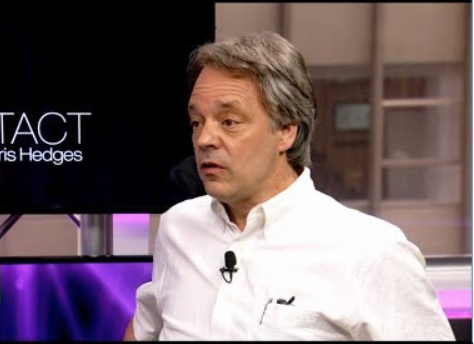
Paul Street is an independent radical-democratic policy researcher, journalist, historian, author and speaker based in Iowa City, Iowa, and Chicago, Illinois. He is the author of more than ten books and numerous essays. Street has taught U.S. history at numerous of Chicago-area colleges and universities. He was the Director of Research and Vice President for Research and Planning at the Chicago Urban League (from 2000 through 2005), where he published a highly influential grant-funded study: The Vicious Circle: Race, Prison, Jobs and Community in Chicago, Illinois, and the Nation (October 2002).
ZNetwork is funded solely through the generosity of its readers.
Donate





3 Comments
With respect to Paul Street’s excellent , as usual , March 6, 2014 ZNet article – “Venezuela, the United States, and Obama” – he alluded brilliantly the insightful remark of what Americans can do against the relentless, savage global, neoliberal and imperialist agenda of the US, concerning that when U.S. audience members occasionally tell a Chilean leftist anarchist that they are sorry for U.S. sponsorship of a fascist coup against Chile’s democratically elected left government in 1973, this Latin American activist wisely related to them, “I always tell them I don’t accept apologies from ordinary U.S. citizens. You didn’t coordinate and assist the coup. Members of your ruling class did. The best thing you can do for us is the best thing you can do for yourselves: overthrow your own ruling class.” In other words, what Paul Street and the Chilean activist is saying is that it is imperative that we have to deal with the root cause of the US supported coups in Chile, Guatemala, Paraguay, and Honduras which lies in the very destructive social system and political economy of the US that is becoming more and more a Latin American banana republic. We must make a radical transformation of our society towards a fundamental , drastic equitable and just socio-economic and political reconstruction , as the late Reverend Martin Luther King, Jr. proposed so wisely and courageously. And he is absolutely right in saying that this requires the building of powerful grassroots social and political movements for democratic regime change at home.Thus, In doing so, they would be definitely helping themselves as well as those on the wrong end of the U.S. Empire abroad. In conclusion, this is unavoidable. Ultimately, we must do this, and the sooner the better for all of us, including the whole planet. It is imperative existentially that we fulfill this visionary aim..
Beautiful quote that you close with by the Chilean anarchist. What was his name? I\d love use that.
Excellent, well written and documented article, as usual Paul