

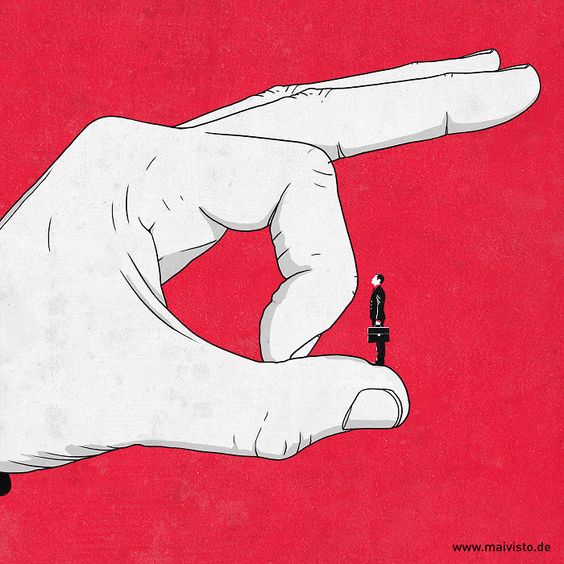
In early December, President Joe Biden signed a bill that forced railroad workers and their large, profitable employers to accept a contract that did not include paid sick time, a central demand of the railworkers’ unions. Congress crafted a deal intended to avert the economic consequences of an impending rail strike, but progressive voices like Senator Bernie Sanders insisted that any deal must include seven paid sick days. After a handful of Senate Republicans stood in the way of paid sick leave, Democrats ultimately compromised on a deal without it.
This moment, a lost opportunity to improve working conditions, calls for a larger discussion about how workers nationwide lack a federal guarantee of paid sick leave. The Family and Medical Leave Act (FMLA) only requires up to twelve weeks of unpaid sick leave. According to the Economic Policy Institute, unpaid sick leave “can make a painful dent in the monthly budget,” especially for those with longer illnesses. This makes it especially problematic that one in five civilian workers, 33 million people in all, do not receive paid sick time.
Establishing a federal paid sick leave guarantee would improve the lives of railworkers and others in nonprofessional/nonmanagerial jobs, who do not receive generous paid time off. But the way that federal paid sick leave gets implemented, whether it’s modeled after the states or international examples, is equally important.
While fifteen states and Washington, DC, have a paid sick leave mandate, that typically means that workers receive sick time “on an accrual basis,” usually one hour of sick leave per every thirty hours worked. Many of those states limit accrued leave to forty hours a year, which amounts to just one workweek. The average full-time employee (forty hours/week) would have to work approximately nine months in order to earn that forty hours. This does not give workers nearly enough flexibility to attend to medical emergencies without sacrificing their income. Because of this dilemma, those without paid sick leave are more likely to work while they’re ill, which risks harming coworkers in the case of viruses like COVID-19 or the flu.
The Economic Policy Institute correctly states that “the United States continues to be behind its international peers in providing [the] basic federal protection” of paid sick leave. There are very telling case studies from Europe, such as in Germany where employers are legally required to pay employees “100% of wages for the first six weeks of sickness.” German workers are entitled to the full benefit if they have been employed for at least four weeks, which is far better than Americans having to work nine months to accrue just one week of leave. Paid sick leave in Germany is functionally nonaccumulated, because for every new illness, the six-week pay period restarts. Workers do not need to bank their hours or realistically worry that they’ll run out, especially when Germans took an average of just eleven sick days in 2021. Small businesses in Germany, with thirty or fewer employees, can adapt to the costs of a generous sick leave mandate by getting reimbursed up to 80 percent of sick leave payments from the employers’ cost-sharing fund, which they pay into. The cost-sharing fund is managed by employees’ health insurance providers (nongovernmental entities called “sickness funds”), which receive a surcharge from small businesses and pay out the reimbursements. Because the United States does not have Germany’s universal private health care system, a similar cost-sharing program could be administered by states’ unemployment insurance departments, which already collect employer contributions.
Sweden’s paid sick leave guarantee is similarly beneficial to workers and predictable for employers. In Sweden, if a person has worked for one month, they are entitled to two weeks of paid sick leave at 80 percent of their salary. After two weeks, employers are required to tell the Swedish Social Insurance Agency about an employee’s illness, which enables that employee to apply for a public sickness benefit whose duration depends upon official assessments of “work capacity.” After day fourteen, employers are usually required to create a plan to provide accommodations for an unwell employee to return to work. Businesses in Sweden are similarly compensated for higher sick leave payments but through the government. Employers submit declarations of sick pay to the Swedish Tax Agency, which puts money in businesses’ tax accounts if their employees can be classified under “special high risk protection,” referring to bouts of illness lasting over twenty-eight consecutive days. The average Swede took 2.99 days of paid sick leave in the first quarter of 2022, but they never have to worry about the possibility of needing more paid sick time and not receiving it.
Sweden and Germany are just two examples of countries with progressive paid sick leave mandates, which are the norm throughout much of Europe. US workers would be better off with any version of federal paid sick leave, but this benefit can only be reliable if it is “nonaccrued.” Tying sick leave to the number of hours worked creates far more complications for workers than providing a straightforward benefit after the first month on the job. The federal government should take note of the best sick leave policies internationally to create a new benefit that fully includes all workers through a secure, and universal, guarantee.
ZNetwork is funded solely through the generosity of its readers.
Donate
