

Source: The Guardian
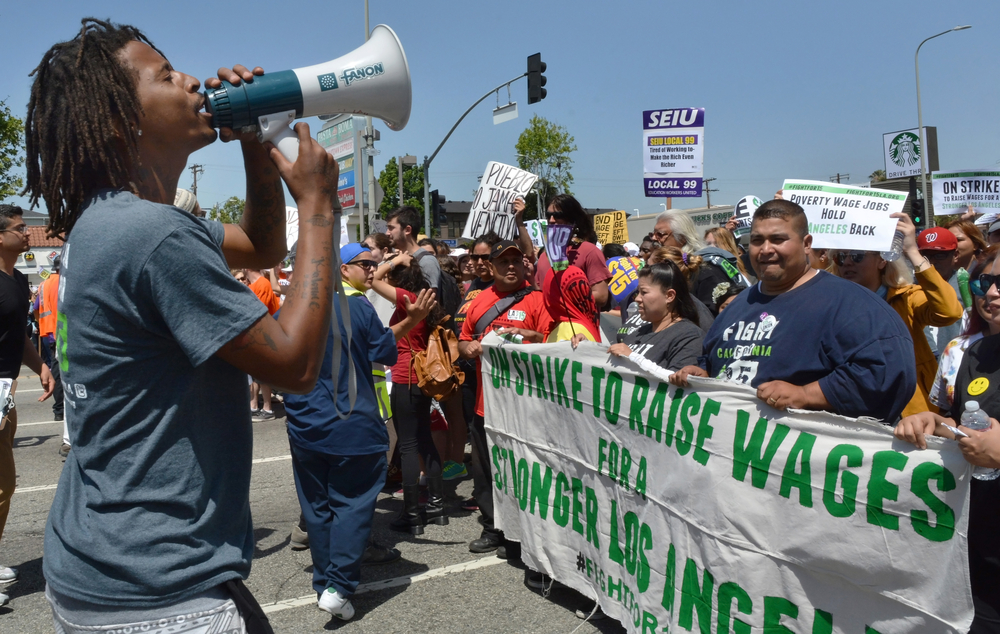

Photo by Dan Hol/Shutterstock
Workers at fast-food restaurant chains in 15 cities around the US went on strike on Tuesday demanding a raise in their minimum wage to $15 an hour.
The workers at McDonald’s, Burger King and Wendy’s, joined by home care and nursing home workers, took action as the Biden administration is attempting to push through an increase in the federal minimum wage from $7.25, in what would be the first increase in since 2009.
Strikes occurred in Charleston, South Carolina; Chicago; Flint and Detroit, Michigan; Raleigh and Durham, North Carolina; Houston; Miami, Orlando, and Tampa, Florida; St. Louis; Oakland, Sacramento, and San Jose, California; and Milwaukee.
Since 2012, the Fight for $15 movement has organized low-wage workers around the US to push for state and local minimum wage increases and to increase the federal minimum wage to $15 an hour
“We hear you out there applauding essential workers. We see the big show you make of thanking us. But to be honest, that hasn’t translated into changes for my life. We were living on a razor’s edge long before Covid-19 hit South Carolina. And we’re living on it still,” said Taiwanna Milligan, a McDonald’s worker in Charleston who makes $8.75 an hour after working at the restaurant chain for eight years, in a recent op-ed demanding a $15-an-hour federal minimum wage increase.
Workers are conducting the strikes as a proposal to raise the federal minimum wage to $15 an hour by 2025 is included in the coronavirus relief package House Democrats plan to pass and send to the Senate over the next two weeks.
In the Senate, the legislation still faces potential hurdles, including the Democratic senators Joe Manchin of West Virginia and Kyrsten Sinema of Arizona who have opposed including the bill in pandemic relief, and the possibility of the Senate’s parliamentarian ruling a minimum wage measure can’t be included in the relief bill.
Ieishia Franceis has worked at Freddy’s Frozen Custards in west Durham, North Carolina since July 2020 and makes $9.20 an hour. She was one of several workers who went on strike on Tuesday.
“A $15 minimum wage would free me up to do a lot of things. My main goal is to be able to save enough money to put a down payment on a house and have home ownership. It would allow me to begin that process. It would allow me to have money left from one paycheck to the next, to provide for my family better as far as food, and allow me to get transportation so I won’t have to take the bus,” she said.
In October 2020, Franceis and her co-workers went on strike after their requests for paid sick leave for Covid-19 quarantining and testing were initially denied. The Families First Coronavirus Response Act passed in March 2020 exempted employers with more than 500 employees from granting employees two weeks pay if they needed to quarantine or recover from Covid-19. Now Franceis and her co-workers are fighting for a $15 minimum wage, hazard pay while they continue working during the pandemic, health benefits and ultimately a union.
“Sometimes businesses get so caught up in doing business that they forget who runs their businesses. We’re going to keep fighting and not going to stop until we get all the equality we’re fighting for,” added Franceis. “Congress needs to put our money where their mouth is. During their campaigns, they said they were going to raise the minimum wage to $15 an hour. Live up to what you said. We shouldn’t have to wait until next year or the next year. The bill is there. Just pass it and be done with it.”
Based on a recent analysis by the Brookings Institution, 47% of essential workers are in occupations where the median wage is currently less than $15 an hour. Gradually raising it to $15 an hour would increase pay for 32 million workers in the US, including 59% of workers with a total family income below the poverty line. With the federal minimum wage increase, 31% of Black workers and 26% of Latino workers in the US would receive a raise.
ZNetwork is funded solely through the generosity of its readers.
Donate




