Source: Radio Free Europe / Radio Liberty

US and Iranian officials are meeting in Geneva, Switzerland, on February 17 for a second round of negotiations over a deal aimed at curbing Tehran’s nuclear program and averting war.

The sides held indirect talks earlier this month in Oman, the first since Israel and the United States bombed Iran’s key nuclear sites during a brief conflict in June.

The talks come amid a major American military buildup in the Middle East. Tensions have been building after mass nationwide protests in Iran last month, during which authorities launched a brutal crackdown that rights groups say killed thousands of people.

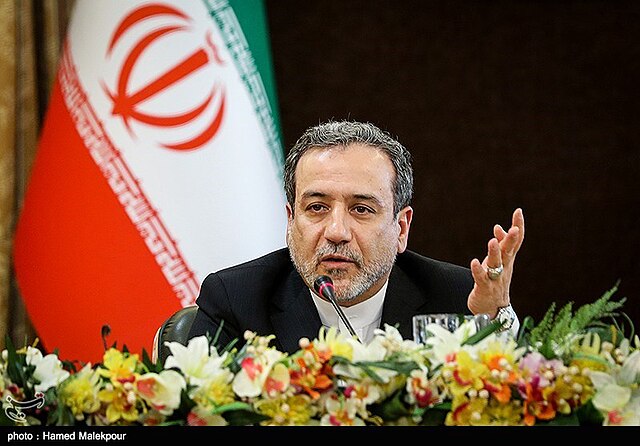
Iranian Foreign Minister Abbas Araqchi is holding talks in Geneva with White House special envoy Steve Witkoff and US President Donald Trump’s son-in-law Jared Kushner, with Omani representatives acting as mediators.

“I am in Geneva with real ideas to achieve a fair and equitable deal. What is not on the table: submission before threats,” Araqchi said on X on February 16 as he arrived for talks with Rafael Grossi, head of the International Atomic Energy Agency.

Tehran has said it is willing to accept restrictions on ⁠its nuclear program in exchange for relief from crippling US economic sanctions, but it will not relinquish its right to enrich uranium.

Washington has sought to expand the scope of the talks to include restrictions on Iran’s ballistic missiles program and ending Tehran’s support for armed groups in the Middle East — issues that Tehran considers nonstarters.

The United States and Iran will have to overcome deep mistrust and animosity to strike a deal. Another barrier is the increased political costs of an agreement for both sides.

“Today, any positive concession to the Islamic republic would effectively be rewarding a regime that in recent weeks has killed several thousand Iranians,” Ali Vaez, director of the Iran Project at the Brussels-based International Crisis Group, told RFE/RL’s Radio Farda.

For Iran, “reaching an agreement with a president who has not only carried out military strikes against Iran’s nuclear facilities but has even threatened military intervention in Iran’s internal affairs is difficult,” he said.

Negotiating a new comprehensive nuclear deal will be extremely difficult, experts say.

To avoid a war, Vaez said, “the only viable short-term path is a largely symbolic understanding that buys time and potentially creates better conditions for more detailed and technical negotiations in the future.”

US Secretary of State Marco Rubio, speaking in Hungary on February 16, said Trump has “made clear he prefers diplomacy and an outcome of negotiated settlement.”

“It’s been very difficult for anyone to do real deals with Iran because we’re dealing with radical Shi’a clerics who are making theological decisions, not geopolitical ones. But, let’s see what happens. I hope it works out,” Rubio added.

The negotiations in Geneva come after repeated threats from Trump of military action against Tehran, first over Iran’s brutal crackdown on protests, and then more recently over the country’s nuclear program.

Western countries have long suspected Iran of seeking a nuclear weapon, while Tehran insists its program is for civilian purposes only.

World powers struck a landmark nuclear deal with Tehran in 2015 to prevent an Iranian bomb. Western economic sanctions were eased at the time, but Iran began reneging on commitments after Donald Trump, in his first term as US president, withdrew from the agreement in 2018 and re-imposed sanctions.

On February 13, the US president said regime change in Iran would be the “best thing that could happen.”

He also confirmed that a second aircraft carrier, the USS Gerald R. Ford, would soon join a “massive” US armada in the Arabian Sea.


This article was originally published by Radio Free Europe / Radio Liberty; please consider supporting the original publication, and read the original version at the link above.

RFE/RL journalists report the news in 27 languages in 23 countries where a free press is banned by the government or not fully established. We provide what many people cannot get locally: uncensored news, responsible discussion, and open debate.


ZNetwork is funded solely through the generosity of its readers.

Donate
Donate
Leave A Reply

Subscribe

All the latest from Z, directly to your inbox.

Institute for Social and Cultural Communications, Inc. is a 501(c)3 non-profit.

Our EIN# is #22-2959506. Your donation is tax-deductible to the extent allowable by law.

We do not accept funding from advertising or corporate sponsors.  We rely on donors like you to do our work.

ZNetwork: Left News, Analysis, Vision & Strategy

Subscribe

All the latest from Z, directly to your inbox.

THE WIND CRIES FREEDOM

The Wind Cries Freedom, the new book from Z co-founder Michael Albert, is a sweeping oral history of a future American revolution.

Through thirty interconnected chapters, it draws out the strategies, failures, turning points, and hard-won wisdom of a movement that called itself the Revolutionary Participatory Society. These are not the polished memoirs of politicians: they are the unfiltered accounts of people who organized in neighborhoods, hospitals, universities, stadiums, courthouses, and places of worship, and kept a shared vision alive through cynicism and exhaustion.

The result is speculative political fiction that reads like history: messy, human, and quietly hopeful in the way that only real experience and long thought can produce.

Get your copy and peruse more features on the book’s website below.

“Read it, argue with it, but don’t look away. The future it recalls is one we must still fight to deserve.”

Yanis Varoufakis

“The most unusual and intriguing combination of prophecy, manifesto, and movement building manual that I have ever encountered.”

Bill Fletcher Junior

“This work fills a huge gap in our social movement literature.”

Cynthia Peters

You've just read your article on Z this month.

DOES Z'S SURVIVAL MATTER?

You keep coming back for a reason: serious political analysis, movement reporting, and debate beyond the priorities of corporate media. Today, Z is in a precarious financial position. If Z is part of how you understand the world, help keep it going. The readers who give monthly are the reason this work survives between fundraisers.

Z is in a precarious financial position. If it’s part of how you understand the world, help keep it going.

Number of donors707
Our goal1,000

Sustainers at $9/month or more receive the digital Z Magazine.

Already a sustainer? Click here and we won’t ask again. Thank you!

Your reading count is stored only in your browser and is never sent to us.

Sound is muted by default.  Tap 🔊 for the full experience

CRITICAL ACTION

Critical Action is a longtime friend of Z and a music and storytelling project grounded in liberation, solidarity, and resistance to authoritarian power. Through music, narrative, and multimedia, the project engages the same political realities and movement traditions that guide and motivate Z’s work.

If this project resonates with you, you can learn more about it and find ways to support the work using the link below.

Z is in the most precarious financial position in its history.

Z is a place to think beyond the limits of the present.

For decades, Z has brought together political analysis, movement reporting, debate, and visions of a different future from writers and activists around the world. That work is more than journalism. It is movement infrastructure: movements need places to develop ideas, test arguments, learn from experience, and imagine what comes next.

In the first two days of this fundraiser, 19 donors and 8 new monthly sustainers stepped up. Help us reach 1,000 donors who keep Z independent, for everyone.

For decades, Z has published the analysis, debate, and visions movements need, free of paywalls, ads, and billionaire owners. If that work should continue, Z needs your support now.

Number of donors707
Our goal1,000

Sustainers at $9/month or more receive the digital Z Magazine.

Subscribe

Join the Z Community – receive event invites, announcements, a Weekly Digest, and opportunities to engage.

Exit mobile version

