

In reading historian Marcus Rediker, one can learn a great deal about the “Golden Age of Piracy.” Far from being cruel brutes, pirates often practiced an egalitarian proto-socialism, with loot being spread more or less evenly between the captain and crew. Pirates also did not discriminate on the basis of race. Many pirates were Black victims of slavery who escaped for the short and exciting life of a buccaneer.
Despite Rediker’s impressive scholarship, the common pop culture image of pirates—violent, barbarous, cutthroat—has remained. It’s that image appearing in my mind recently, but not because I have been rereading Treasure Island or rewatching Captain Blood. Rather, it has been because of US attacks on sailors in the Caribbean. Policymakers may lack the eye patches, peg legs, or parrots, but their conduct is of the same calibre.
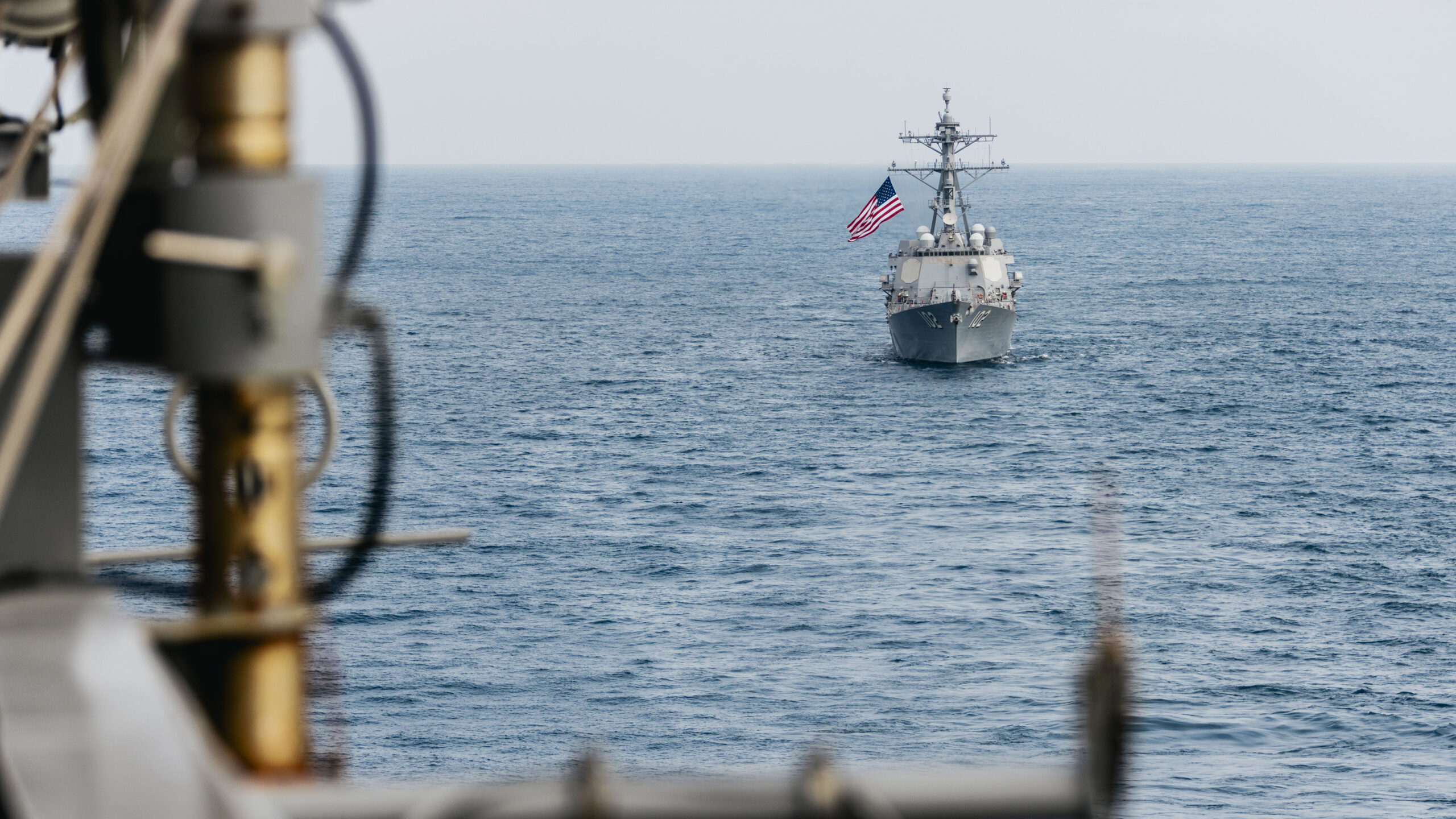
On day one of his term, Donald Trump signed an executive order designating drug cartels “foreign terrorist organizations and specially designated foreign terrorists.” At the time of writing, three Venezuelan vessels have been attacked via US military drone, said to have been drug smugglers. In total, seventeen people have been killed.
Legally, this is all quite dubious. Smuggling drugs is not a death penalty crime in the United States, and there has been precious little evidence that sailors on the ships are guilty of anything. Brian Finucane, a former legal expert for the State Department, told The Intercept that the attacks are “flat-out murder.” The Venezuelan government has accused the US of waging “undeclared war” and called for the United Nations to investigate.
None of this has deterred members of the Trump administration. The president took to Truth Social to publish this warning: “IF YOU ARE TRANSPORTING DRUGS THAT CAN KILL AMERICANS, WE ARE HUNTING YOU!” Vice President J.D. Vance chortled, “I wouldn’t go fishing right now,” referring to the unfortunate fate of the destroyed vessels. Regarding the international community, Secretary of State Marco Rubio told a reporter, “I don’t care what the UN says.”
These flagrant violations of international law are part and parcel of how Washington has treated Latin America for generations. When the International Court of Justice ruled in 1986 that the US had illegally funded the Nicaraguan Contras and mined Managua harbor, the response was to ignore the court and to block any attempts at enforcing its decisions. Britannia ruled the waves; America waives the rules.
US intervention in Latin America always takes place under cover of official righteousness. The Monroe Doctrine said Washington was merely keeping out European influence in the hemisphere. Theodore Roosevelt’s corollary to the Doctrine declared Uncle Sam could “exercise international police power in ‘flagrant cases of such wrongdoing or impotence.’” President Woodrow Wilson stated his ambition was to “teach the South American Republics to elect good men.” Good, that is to say, by his standards. More recent interventions have been justified under notions of national security, Cold War grand strategy, or anti-drug trafficking.
Yet the true motivations for these interventions often has more to do with control of resources and cheap labour, rather than any high-minded rhetoric. Historian Bruce Calder’s study of Wilson’s intervention in the Dominican Republic, The Impact of Intervention, found the US-imposed military government “completely capitulated to foreign interests, ignoring those of the Dominican people” and “advanced the fortunes of the country’s existing planter and merchant elite.”
President Theodore Roosevelt ordered a US fleet to support a handful of Panamanian rebels breaking away from Colombia. It was felt that the rebels would provide a better partner with which to build the Panama Canal. The dubious new republic was quickly recognized and just as quickly agreed to the project. The Nation magazine editorialized that “even the buccaneers who sailed the Spanish Main would have found it too much for them.” During the debate over returning the canal to Panama, Republican Senator S.I. Hayakawa joked that we should “hang on to” the canal because, “we stole it fair and square.”
When Guatemalan President Jacobo Árbenz sought to take over unused land owned by the United Fruit Company (today Chiquita Banana), the corporation launched a massive propaganda campaign to convince the US to intervene. Árbenz, an admirer of President Franklin Roosevelt, was painted as an agent of Soviet communism. In 1954 Arbenz was deposed in a CIA engineered coup, and United Fruit’s revenues were saved.
Marine Corps Brigadier General Smedley Butler captured the situation 90 years ago when he described the US and its military acting as “gangsters for capitalism.” In an article for Common Sense Butler detailed how he “helped make Haiti and Cuba a decent place for the National City Bank [today Citibank] boys to collect revenues in.” He continued, “I helped in the raping of half a dozen Central American Republics for the benefit of Wall Street… I helped purify Nicaragua for the international banking house of Brown brothers in 1909-1912.” Whether wielding a gangster’s Tommy gun, a pirate’s blunderbuss, or drone bombs, the plunder has continued ever since.
Despite Trump’s claim that these attacks are meant to stop drug traffickers “intending to poison Americans,” the question of controlling Venezuela’s rich oil resources has clearly occupied his mind. Trump allegedly said during his first term that Venezuela is a country the US “should be going to war with” because “they have all that oil.” More recently he mused that Venezuela’s President Nicolás Maduro is “sitting there with a lot of oil under his feet. That’s not a good situation.” Given the eight warships, including a nuclear submarine, that have been rapidly deployed in the Caribbean, it certainly looks like more is afoot than simple drug interdiction.
Mark Twain once gave a satirical answer as to what flag the US should fly over the then-newly conquered Philippines. The author and leading light of the Anti-Imperialist League suggested “we can have just our usual flag, with the white stripes painted black and the stars replaced by the skull and cross-bones.” Perhaps now is time to take a page from Twain’s book, and replace Old Glory with the Jolly Roger.
ZNetwork is funded solely through the generosity of its readers.
Donate




