


Urbánika is an international collective of tech commoners that calls itself an “immersive activism school.” Led by Humberto Besso-Oberto Huerta of Mexico, the group wants to help build peer-governed, climate-resilient smart cities and communities, especially in Latin America. For this ambitious goal, Urbánika has nearly finished kitting out a climate-positive “SolarPunk Bus.” The amazing vehicle will serve as a mobile learning center as it tours Latin American cities in coming months. More about that in a moment.
But first, some news about another innovative Urbánika initiative: an educational video series, “PostCapitalism and the Commons.” This course consists of fifteen short videos in which I introduce the commons and commoning in its many dimensions.
The course starts with a brief history of the commons and a survey of contemporary commons, and then moves on to discussing the Market/State and many anti-social, anti-ecological enclosures of commons.
The series also discusses commons as a relational social system that helps people carry out their own provisioning and peer governance. This challenge requires people to understand the need for making an OntoShift – a shift of worldview in understanding what a commons entails, namely, new types of relationships, social practices, and ethical commitments. The last segments of the video series address bioregionalism, land, and urban commons. More episodes are planned in the coming months.
The course is meant for changemakers, especially for those who are already aware of the serious limitations of the Market/State system and the need for developing new ways of life. You can find the entire series online here.
The course aims to “provide knowledge and modern examples about commons to show that there are plenty of alternatives to our current extractivist and transactional way of living.” It also wants to facilitate “reflection, debate, and experimentation” and show that “commoning is an achievable, enjoyable, and full of live practice.”
The course is free to access, and the bus was developed, thanks to donations by thousands of people. The course is licensed under a Creative Commons Attribution-NonCommercial-ShareAlike 4.0 license, so that it can be reproduced, remixed, and shared at no cost. In the notes section underneath each video, there are links to resources, weblinks, a self-test review of the content, and an invitation to apply one’s knowledge of commons to the real world. Schools are invited to use the videos in their teaching about commons. Social-action groups may find the videos useful in reflecting on their own organizational dynamics.
The PostCapitalism and the Commons video series is a follow-up to a lighter series of educational videos produced by Urbánika two years ago. This series, “Commoning 101 – Learning Pills,” (with Spanish subtitles), is a series of amusing virtual-reality animations that introduce the commons to viewers in short gulps. The animations feature a space alien, Kin, who engages with an avatar version of me (looking twenty years younger!) in conversations about commons.
Urbánika plans to use the videos – especially the first series, “PostCapitalism and the Commons” – as part of an educational bus tour that will soon travel to twenty cities in seven Latin American countries.

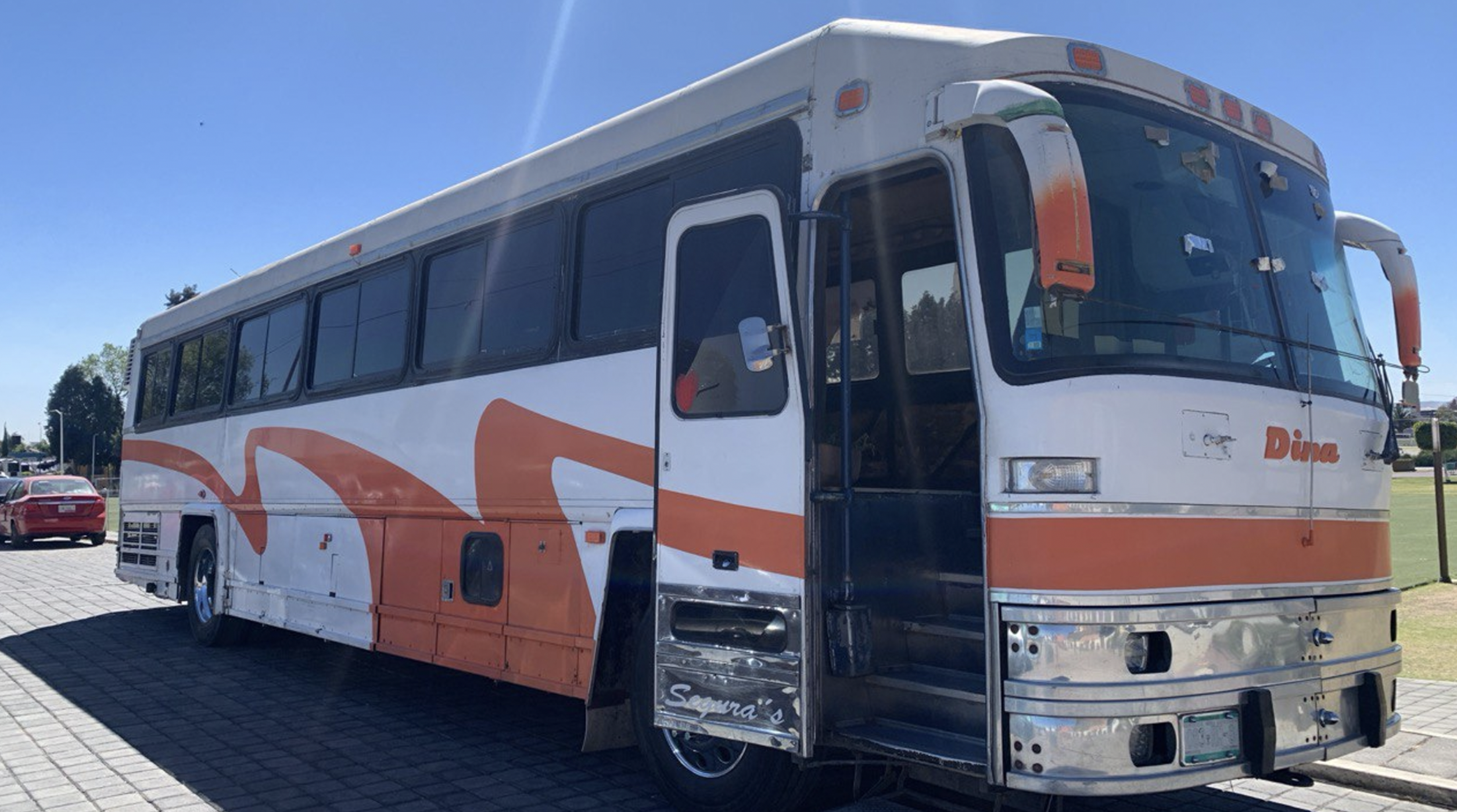
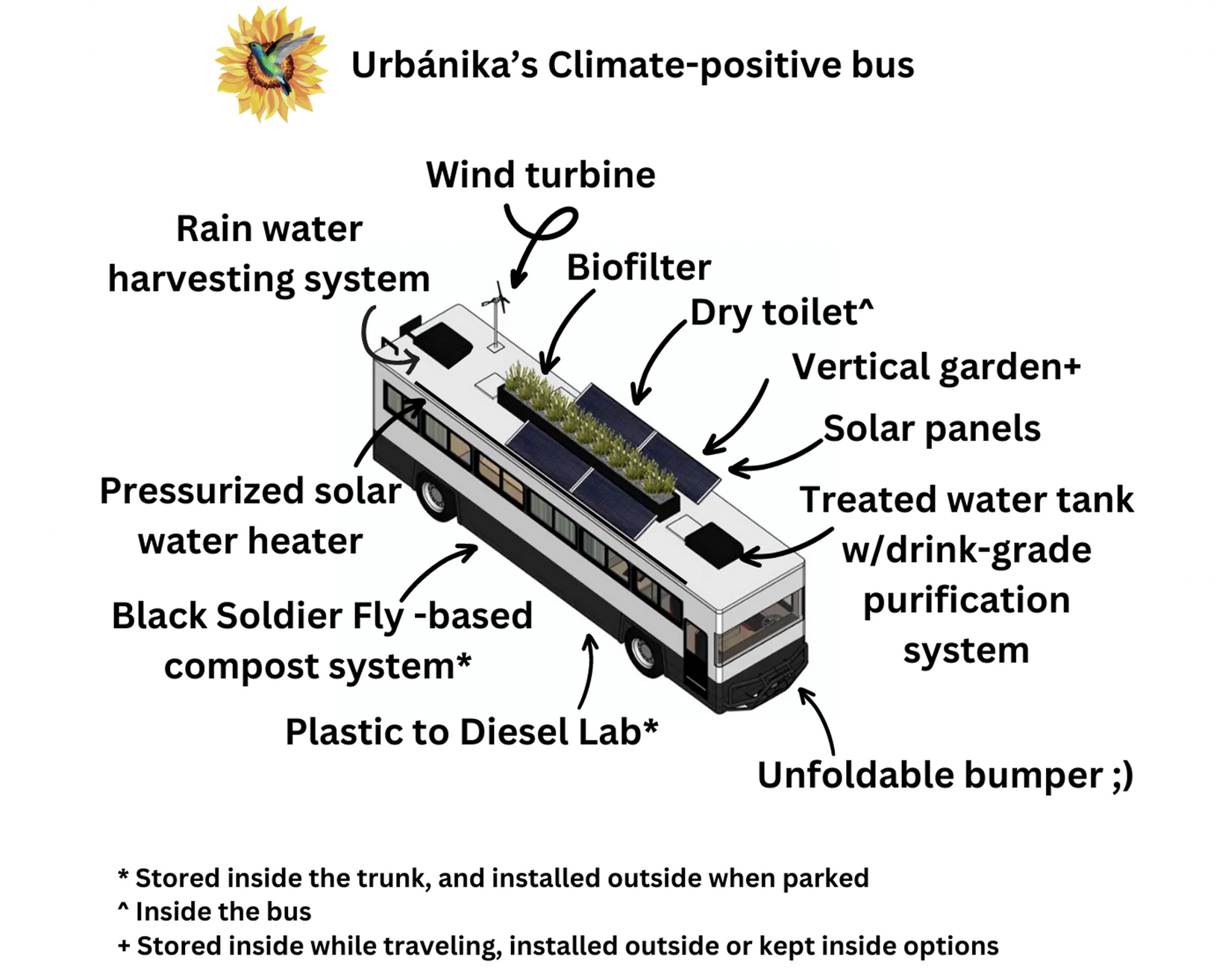
For this, the group has crowdfunded funds to create a state-of-the-art, climate-friendly “SolarPunk bus.” This full-size bus has many eco-features as a rain water harvesting system, wind turbine, a rooftop biofilter (to treat gray water to make it drainkable), and dry toilet. There is a black soldier fly biodigester for organic waste and a vertical garden for food production, among other tech features. The bus will function as a mobile school and home throughout the course of the tour, which aims to “facilitate the emergence of neighborhoods as urban commons.” It will also encourage the use of “open source Web 3.0 tech that can help people break free from hierarchical dependencies of the government and the markets.”

In addition to the video course, there will be workshops on convivial blockchain tech and peer governance, movie nights with follow-up discussions, and the development of interfaces to assist commoning in neighborhoods. This initiative will contribute to Urbánika’s long-term vision, the rise of peer-governed, climate-resilient smart cities and communities.
You can check out Urbánika on its Twitter/X feed and Instagram feed .
ZNetwork is funded solely through the generosity of its readers.
Donate




