


Whatever happened to the “polycrisis”? A couple of years ago it was the buzzword of the world, describing a concatenation of interacting crises that aggravated each other and made solutions appear impossible. In the year since the inauguration of Donald Trump his words and actions have so dominated world events that discussion of the polycrisis has atrophied. But the polycrisis is alive and well and massively aggravated by Trump’s aggressive and erratic behavior.
This commentary, and the following two, trace the development of the polycrisis in the Trump era, examine the intensification of its dynamics, look at its possible outcomes, and give a preliminary perspective on how it might eventually be quelled.
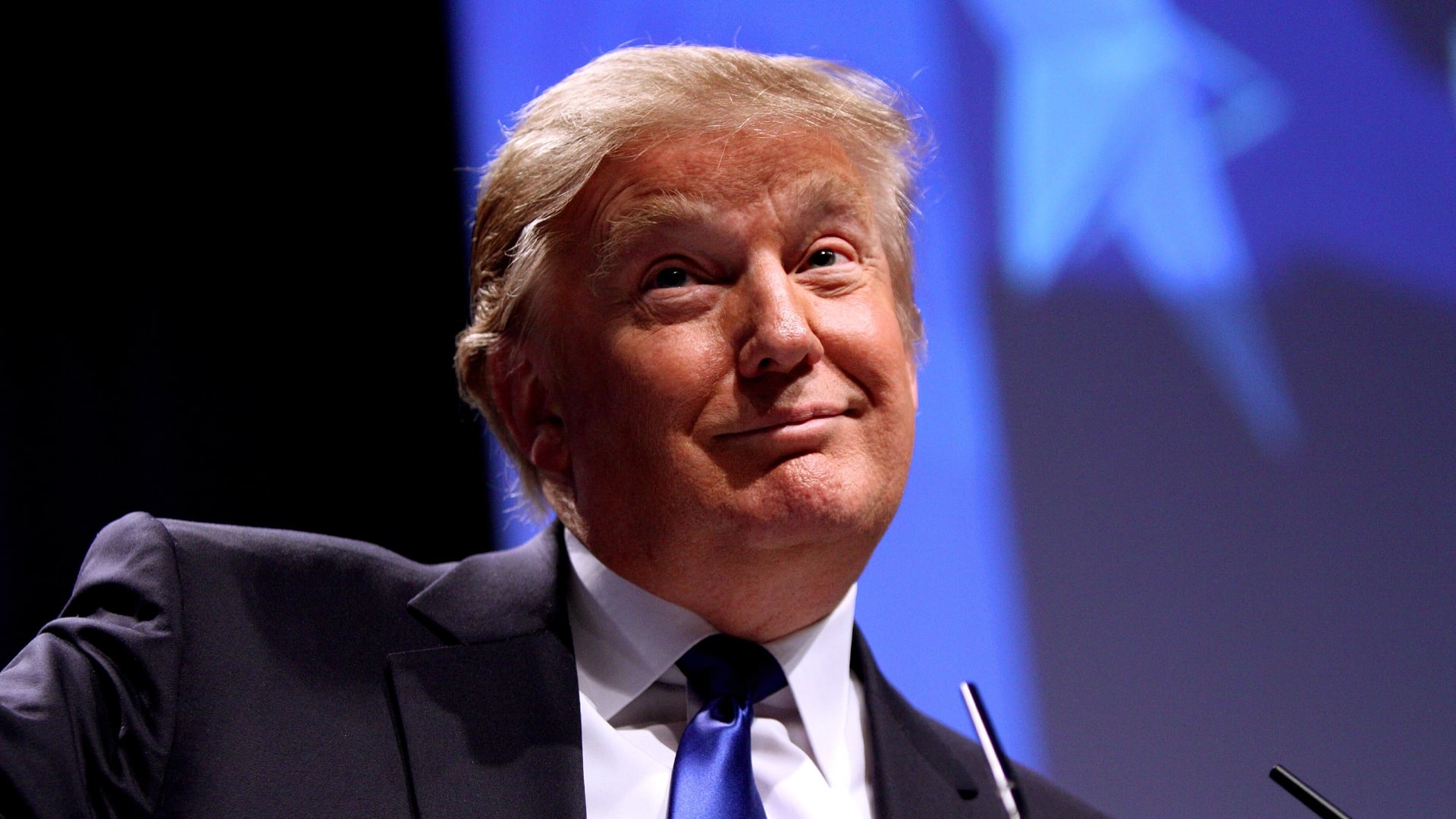
Donald Trump speaking at CPAC in Washington D.C. on February 10, 2011. Photo credit: Gage Skidmore, Wikimedia Commons, CC BY-SA 3.0.
For the two decades from the fall of the Soviet Union in 1989 to the Great Recession in 2008, the world order was largely shaped by economic globalization and US global domination. Since then the world order has been riven by interacting crises that came to be dubbed “the polycrisis.” “Polycrisis” characterizes the way crises in many different spheres – ranging from geopolitics and economics to climate and inequality – are aggravating each other and even converging.
The key concept for the polycrisis is interaction. It cannot be understood by simple cause-and-effect models within a single sector or even within the world order as a whole. The interaction of forces, acts, and events determines its patterns and its course. This interaction is illustrated by two crises that might appear quite separate, war and climate. Many of the world’s current armed conflicts are caused or aggravated by climate change; for example, desertification caused by rising temperatures precipitated Sudan’s civil war. Conversely, military buildups and wars are significant causes of global warming; the total military carbon footprint is more than five percent of global emissions. And of course, each of these interacts with the breakdown of international cooperation on climate and security; the rise of para-fascist parties and movements; and many other aspects of the polycrisis.
The next commentary in this series will examine the dynamics of the polycrisis in the Trump era. There are contradictory tendencies both within and among the polycrisis dynamics. For example, there is a fracturing of globalization but at the same time continued growth in world trade and the concentration of global economic power. Such contradictions make it of limited value to extrapolate these polycrisis dynamics into longer-term trends, other than the probability of increasing chaos and conflict.
Why analyze the polycrisis? Certainly not in order to make credible predictions about the future. Unpredictability is an essential element of the polycrisis. But nonetheless there are two good reasons to try to understand it. First, to avoid faulty assumptions that lead to strategic errors. For example, it was widely believed that Trump’s tariffs would severely damage Chinese exports, but, due to the realities of a global economy, Chinese exports actually increased substantially in the year after Trump’s “liberation day” tariffs. Second, to have a better idea of what needs to be overcome and how to replace it. It’s easy to identify one aspect of the polycrisis as “the” problem and focus on it without noting its context. But any effort to move beyond the polycrisis will require a holistic approach to both the problems and the solutions.
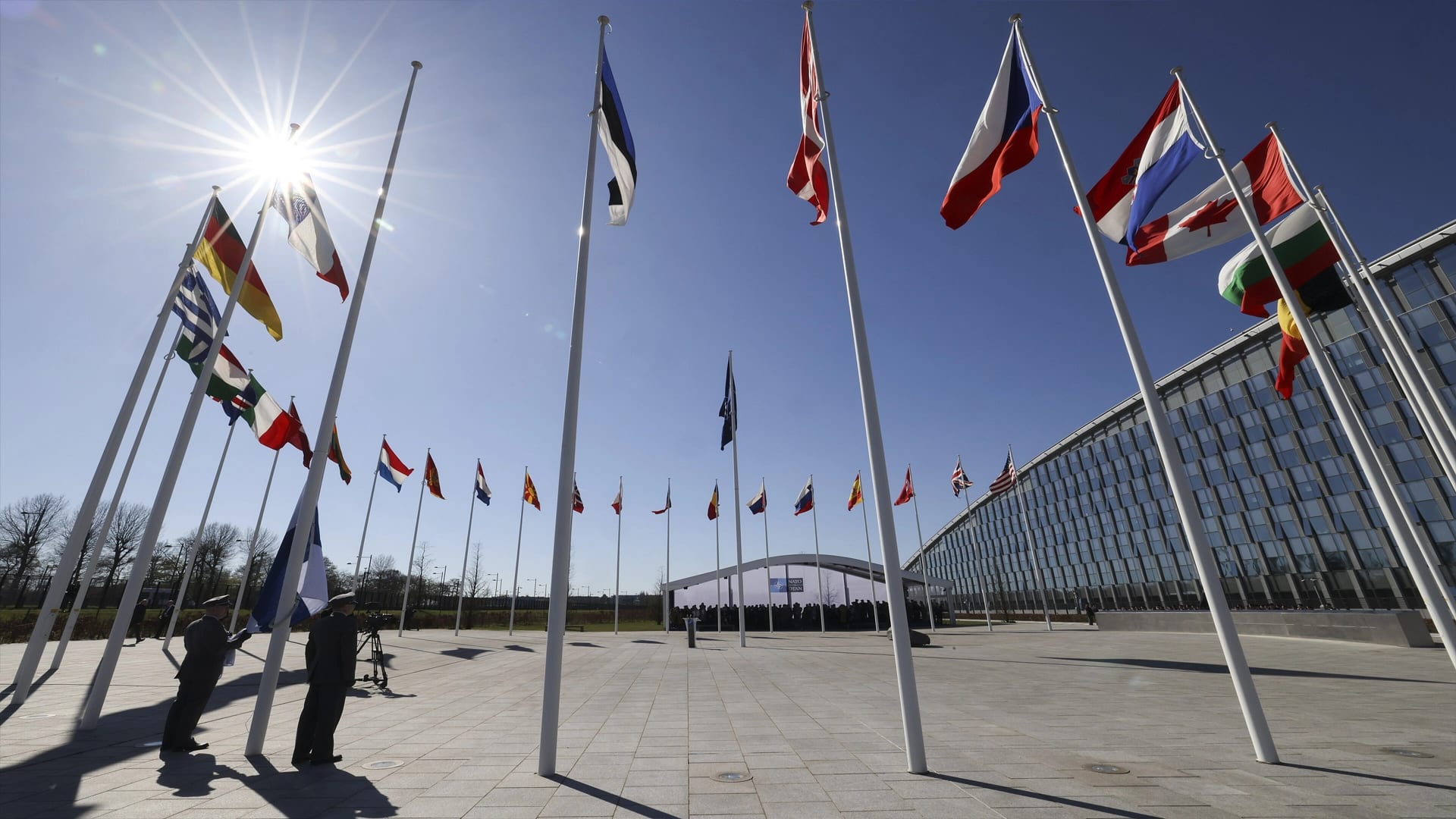
Flag raising at the NATO headquarters in Brussels, Belgium, 04/04/2023. Photo credit: UK Government, Wikimedia Commons, CC BY 2.0.
Looking at the polycrisis today, the polycrisis of a year ago appears the embodiment of rationality and order. Leaders still pursued rational, comprehensible aims, even if what they actually produced was usually unintended consequences. Institutions, however much they twisted into modified shapes, still maintained a family resemblance to their former selves. Today, who could claim to really know the aims of Trump or Putin, or to see today’s NATO as a logical outgrowth of NATO past?
There are many questions about the polycrisis we would like to know the answers to. How much of our world order is shaped by national objectives, how much by simply trying to grab resources and territory? Or, at another level, will the “West” as a socio-political entity survive the Trump assault on Europe? Or, what will become of the triangular relationship among Russia, China, and the US: tripartite division of the world into spheres of influence; continued de facto alliance of Russia and China against the US; three-way cold war; or limited or all-out war among two or three? Unfortunately, these are just the kind of questions that the unpredictable and chaotic character of the polycrisis makes it impossible to answer.
Starting in June, 2024, I wrote a series of ten Strike! Commentaries laying out some basic dynamics of the polycrisis. They included burgeoning warfare; accelerating conventional and nuclear arms races; breakdown of international cooperation around climate, public health, and conflict resolution; a “war crime wave”; conflict between a rising China and a resisting US; unstable tripartite rivalry between the US, Russia, and China; rising economic nationalism; struggle to control global economic networks; decay of democratic institutions; rise of fascist-style movements and governments; accelerating global warming as climate protection gave way to national economic rivalry; unpredictability; and proliferating folly.
The election of Donald Trump as US president in November 2024 was both a product of the polycrisis and its great accelerator. As I wrote in a Commentary on “Trump, Trumpism, and the Polycrisis” immediately after the election, “Trump’s style of provocation, deliberate unpredictability, and unrestrained folly will lead to intensified conflict, strange shifts in alliances, deliberately aggravated chaos, and wars.” Uncertainty is further aggravated because we do not know how long Donald Trump himself will remain in power and who and what will succeed his rule.
While Trump’s actions have indeed exacerbated the polycrisis, that doesn’t mean that his intentions are shaping the present, let alone the future, world order. The actions and reactions of other players, and their interactions, are also shaping the developing polycrisis. In fact, the polycrisis remains a dynamic, interactive, uncontrolled, and unpredictable reality in which the acts of actors – above all of Trump – have consequences different from and in many instances contradictory to their intentions. Consider, for example, Trump’s ignominious retreat from his demand to annex Greenland in the face of Europe’s threat to retaliate with its economic “big bazooka.” To paraphrase the Bible’s “Book of Proverbs,” Trump may propose, but the polycrisis disposes.
The polycrisis has consequences. Each year since 1947, the Bulletin of the Atomic Scientists has published a “Doomsday Clock” to “convey threats to humanity and the planet.”The clock has become a “universally recognized indicator of the world’s vulnerability to global catastrophe caused by man-made technologies.” Noting the threats from war, nuclear arms race, climate change, and a variety of new technologies, in January 2026 the Bulletin set the clock to 85 seconds to midnight — the closest it has ever been. That represents the catastrophe so many of us sense we are living in. It is not just the product of one or another actor, but the momentum of the polycrisis as a whole toward global destruction.
This article has also been published on STRIKE!: Commentaries on solidarity and survival in the labor-climate movement, written by Jeremy Brecher of the Labor Network for Sustainability.


Jeremy Brecher is a historian, author, and co-founder of the Labor Network for Sustainability. He has been active in peace, labor, environmental, and other social movements for more than half a century. Brecher is the author of more than a dozen books on labor and social movements, including Strike! and Global Village or Global Pillage and the winner of five regional Emmy awards for his documentary movie work.
ZNetwork is funded solely through the generosity of its readers.
Donate






.jpg)