


I love the Occupy Movement’s “1% vs. 99%” frame. It speaks clearly and directly to the major problem holding back social progress in a wide range of areas: the control of obscene wealth and political and economic power by a tiny minority at the expense of everyone else.
The truth is, though, that there’s little chance that the “99%” is going to be united anytime soon to stop that “1%” from the society-suicidal path they’ve got us on. However, it is possible that a big chunk of it, a majority or even 2/3rds or more, could come together in some way in the not too far off future. This can happen if we in the Occupy and progressive movements do our work well, and the economic/political/climate/social crisis continues or deepens (which is certain for the climate crisis and very likely otherwise).
Who are the social forces in society who must be united if we are to have the political power to enact change? I’ve put forward below what I see that could make up such a people’s alliance. I’ve done so using how President Barack Obama and the Democrats are perceived as the primary point of reference.
I see five groupings of people within the 70-75% of the U.S. population that, potentially, could come together in support of a broadly-based, independent, progressive popular movement. For a period of many years to come, I think we have little chance of winning over the other 25-30%, the 1% plus all those (overwhelmingly white people) from the upper-middle, middle and working classes who are ideological, or ideologically-influenced, right-wingers.
1) Least Likely: These are people who are “Obama and the Democrats” all the way. Some of this grouping are aware of the limitations of the Democratic Party but have little hope for anything better emerging that would become capable of winning political power. Some in this grouping benefit economically from their ties to the Democratic Party, on local, state or national levels, including a portion who are part of the 1%. Many are very afraid of the hard-right Republicans. Many have little direct, on-going exposure to organizations which put forward a consistently progressive point of view, a reflection of the weakness of the political Left (and something which is also true in general for all five groupings).
2) Critical Pro-Democrats: These are people who generally “get it” as far as the corporate ties of the dominant players within the Democratic Party, who are concerned about various aspects of the Dems’ policies, strategies or methods of operating, but who believe that a “lesser evil” is better than a “greater evil.” With Obama as President, many are more supportive of him and the Democrats and give them more slack because he is our nation’s first African American president. A higher percentage of people in this grouping are probably professionals, people with more of a stake in the system, than in the three categories below. Some in this grouping are willing to take part in campaigns on issues, including participation in street demonstrations. Some give money to activist progressive organizations.
3) The Ambivalent Middle: These are people who tend to be registered to vote as independents, if they are registered to vote at all. They don’t much like, or have little enthusiasm for, either party. There are probably more white working-class people in this grouping than in the two categories above. This grouping includes what have been called “Reagan Democrats” as well as low-income people of color who rarely vote because they have little hope that things will change no matter whom they vote for.
4) Dems a Problem, Not the Solution (With Exceptions): These are people who affirmatively want an alternative to two-party politics as usual, either through the electoral arena, outside of it, or both. They range from activists and supporters of groups like PDA, the Green Party and local Occupy groups to people who work in or support constituency-based or single-issue groups, to people who are more willing to vote for an independent candidate on election day. They are often critical of Obama, believing that many of his decisions are nowhere close to what is really needed or just plain wrong. They are willing to work with progressive Democrats on issues, and they are willing to actively pressure Obama to do the right thing, as was true, for example, for activist people from this grouping as far as the tar sands pipeline. Some of them might end up voting for Democrats on election day but wish there was a different kind of electoral system that gave them more genuine choices without having to worry about a third party vote helping Republicans. Others rarely vote for either Dems or Republicans, certainly on the national level.
5) Dems and Reps are the Enemy: This grouping includes people who hardly ever, if ever, vote because they see the electoral system as rigged and corrupt. For those who do vote it’s rarely for a major party candidate. Their view of Obama is very negative, believing that whatever he does that is positive is almost always partial, at best and, as with grouping #4, nowhere close to what is really needed or wrong. Overall he is seen as an apologist for the U.S. Empire and its dominant players, and there is little sympathy from this grouping for him when he is attacked by the hard-right. For many there is little willingness to work closely with progressive Democrats, even those who have a consistently good track record as far as their positions on issues and a willingness to stand up for those positions. It is from this grouping that a fairly large percentage of hard-core and militant progressive activists comes.
In general, I would see most of the activists and supporters of a new, broadly-based alliance representing the interests of the “99%” coming from groupings #2, 3 and 4. Less will come from groupings #1 and 5. A fairly high percentage of those from #1 are going to stay tied to the Democratic Party for a long, long time, and a fairly high percentage of those from #5 will be leery about building an alliance reaching into the ranks of Critical Pro-Democrats.
So much for sociological analysis. Let’s make it happen in reality! We badly need such an alliance. This is not the only thing we need, but it’s an absolute necessity if we are to stand a chance of overturning the relations of power, empowering the disempowered majority and building a new world.
Ted Glick has been active since 2004 building the climate movement and since 1975 building the independent progressive political movement. Other writings and information can be found at http://www.tedglick.com, and he can be followed on twitter at http://twitter.com/jtglick.

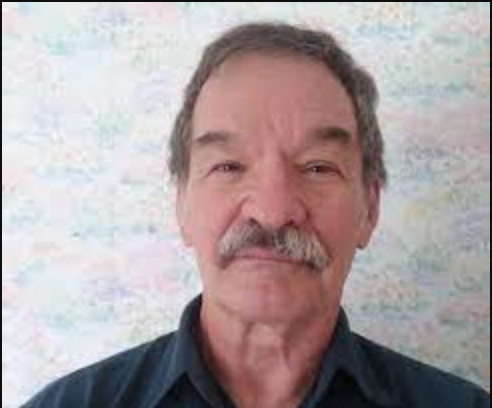
Ted Glick has devoted his life to the progressive social change movement. After a year of student activism as a sophomore at Grinnell College in Iowa, he left college in 1969 to work full time against the Vietnam War. As a Selective Service draft resister, he spent 11 months in prison. In 1973, he co-founded the National Committee to Impeach Nixon and worked as a national coordinator on grassroots street actions around the country, keeping the heat on Nixon until his August 1974 resignation. Since late 2003, Ted has played a national leadership role in the effort to stabilize our climate and for a renewable energy revolution. He was a co-founder in 2004 of the Climate Crisis Coalition and in 2005 coordinated the USA Join the World effort leading up to December actions during the United Nations Climate Change conference in Montreal. In May 2006, he began working with the Chesapeake Climate Action Network and was CCAN National Campaign Coordinator until his retirement in October 2015. He is a co-founder (2014) and one of the leaders of the group Beyond Extreme Energy. He is President of the group 350NJ/Rockland, on the steering committee of the DivestNJ Coalition and on the leadership group of the Climate Reality Check network.
ZNetwork is funded solely through the generosity of its readers.
Donate




