


The Syrian pro-democracy struggle has been both an enormous tragedy and a powerful inspiration. Indeed, as someone who has studied mass nonviolent civil insurrections in dozens of countries in recent decades, I know of no people who have demonstrated such courage and tenacity in the face of such savage repression as have the people of Syria these past 10 months.
The resulting decline in the legitimacy of Bashar al-Assad’s government gives hope that the opposition will eventually win. The question is how many more lives will be lost until then.
While the repressive nature of regime has never been in question, many observers believed it would be smarter and more nuanced in its reaction when the protests of the Arab Spring first came to Syria in March. Indeed, had the government responded to the initial demonstrations like those of Morocco and neighboring Jordan with genuine (if relatively minor) reforms and more subtle means of crowd control, the pro-democracy struggle would have probably faded rather quickly.
Instead, the regime has responded with live ammunition against overwhelmingly nonviolent demonstrators and with widespread torture and abuse of detainees, even as the protests spread to every major region of the country. The death toll as of this writing now stands at more than 5,000.
Unlike Tunisia and Egypt, where the opposition was relatively united and was able to take advantage of divisions within the ruling circles, the elites in Syria have been united against a divided opposition. Decades of human rights abuses, sectarian divisions, suppression of independent civil society institutions, ubiquitous secret police, and an overall culture of fear have made it difficult to build a unified opposition movement. Furthermore, the Israeli occupation of the southwestern region of the country, foreign invasions and occupations of neighboring Lebanon and Iraq, and periodic threats by Turkey, Israel and the United States have allowed the nationalistic regime to further solidify its control.
Another difference is that Assad is not a singular ruler, but part of a powerful oligarchy composed of top military officers, wealthy businessmen, Baath Party officials and others. Dictatorships that rest primarily on the power of just one man are generally more vulnerable in the face of popular revolt than are oligarchical systems where a broader network of elite interests has a stake in the system.
Syria has not had much experience in democracy. Its brief democratic period following independence was aborted by a CIA-supported coup in 1949. Following two decades of coups, countercoups, a brief union with Egypt, and chronic political instability, Defense Minister Hafez al-Assad seized power in 1970 and ruled until his death in 2000. Despite that the republican Baath movement was founded in large part on opposition to dynastic succession so common in the Arab world, Assad was succeeded by his son Bashar. The younger Assad, while allowing for an initial wave of liberalization upon first coming to power, soon cracked down on dissent. Indeed, the only liberalization subsequently has been on the economic front, and that has primarily benefited only a minority of Syrians and greatly increased social inequality.
Though nominally a secular regime, the top sectors of the government and armed forces are controlled by Alawites (members of an Islamic sect similar to the Shiites) who are concentrated along Syria’s northwestern coast — home of the Assad clan — and represent barely 12 percent of the country’s population. Stoking fears of a takeover by hard-line elements of Syria’s Sunni Muslim majority in the event of its overthrow, the regime still has a fair amount of support among the country’s Christians (representing around 10 percent of the population) and other minorities, as well as secular elements and powerful business interests.
In reality, the opposition’s goals are economic justice and political freedom, not the establishment of a Salafi Sunni theocracy, as the regime claims.
Despite the ruling Baath Party’s nominally socialist ideology, the uprising in Syria has a much stronger working-class base than most of the other Arab uprisings. The vast majority of the opposition rejects foreign intervention, recognizing that it would likely result in strengthening support for the nationalist regime and open the way for inordinate Western influence in a post-Assad system.
Despite enormous provocations, the uprising — which has brought millions of people out into the streets in scores of towns and cities across the country — has been overwhelmingly nonviolent. Hundreds of soldiers have been executed for refusing orders to fire on unarmed demonstrators. Thousands more have defected from the armed forces, forming the “Free Syrian Army,” which has engaged in a series of firefights with forces still loyal to the regime, leading to fears that the country could descend into a civil war.
This would likely harm the pro-democracy movement. Recent history has shown that armed struggles are far less likely to be successful than nonviolent struggles, even against dictatorships, since it lessens the likelihood of defections by security forces and government officials, reduces the numbers of active participants in the movement, alienates potential supporters, and gives the regime the excuse to crack down even harder by portraying the opposition as “terrorists.”
The best hope for Syria is that continued protests, strikes and other forms of nonviolent resistance, combined with targeted international sanctions, will cause enough disruption that powerful economic interests and other key sectors currently allied with the regime would force the government to negotiate with the opposition for a transfer of power to a democratic majority. Indeed, this is the scenario that eventually forced an end to another notorious minority regime, that of South Africa.
Stephen Zunes is a professor of politics at the University of San Francisco.

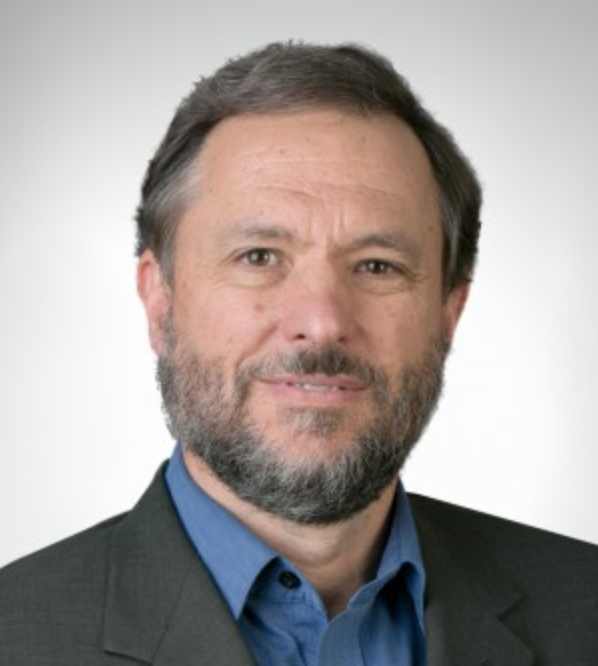
Stephen Zunes (born 1956) is an American international relations scholar specializing in the Middle Eastern politics, U.S. foreign policy, and strategic nonviolent action. He is known internationally as a leading critic of United States policy in the Middle East, particularly under the George W. Bush administration, and an analyst of nonviolent civil insurrections against autocratic regimes. Stephen has been at the University of San Franscico since 1995, teaching courses on the politics of the Middle East and other regions, nonviolence, conflict resolution, U.S. foreign policy, and globalization. He served as the founder and first director of the Middle Eastern Studies Program. A prominent specialist on U.S. Middle East policy, Professor Zunes has presented hundreds of public lectures and conference papers in both the United States and over a dozen foreign countries. He has traveled frequently to the Middle East and other conflict regions, meeting with prominent government officials, scholars, and dissidents. He has served as a political analyst for local, national, and international radio and television and as a columnist for several print and online publications, and has published hundreds of articles in academic journals, anthologies, magazines, and elsewhere on such topics as U.S. foreign policy, Middle Eastern politics, Latin American politics, African politics, human rights, arms control, social movements, and nonviolent action. He has served as a writer and senior analyst for Foreign Policy in Focus, an associate editor for Peace Review, and a contributing editor of Tikkun.
ZNetwork is funded solely through the generosity of its readers.
Donate




