

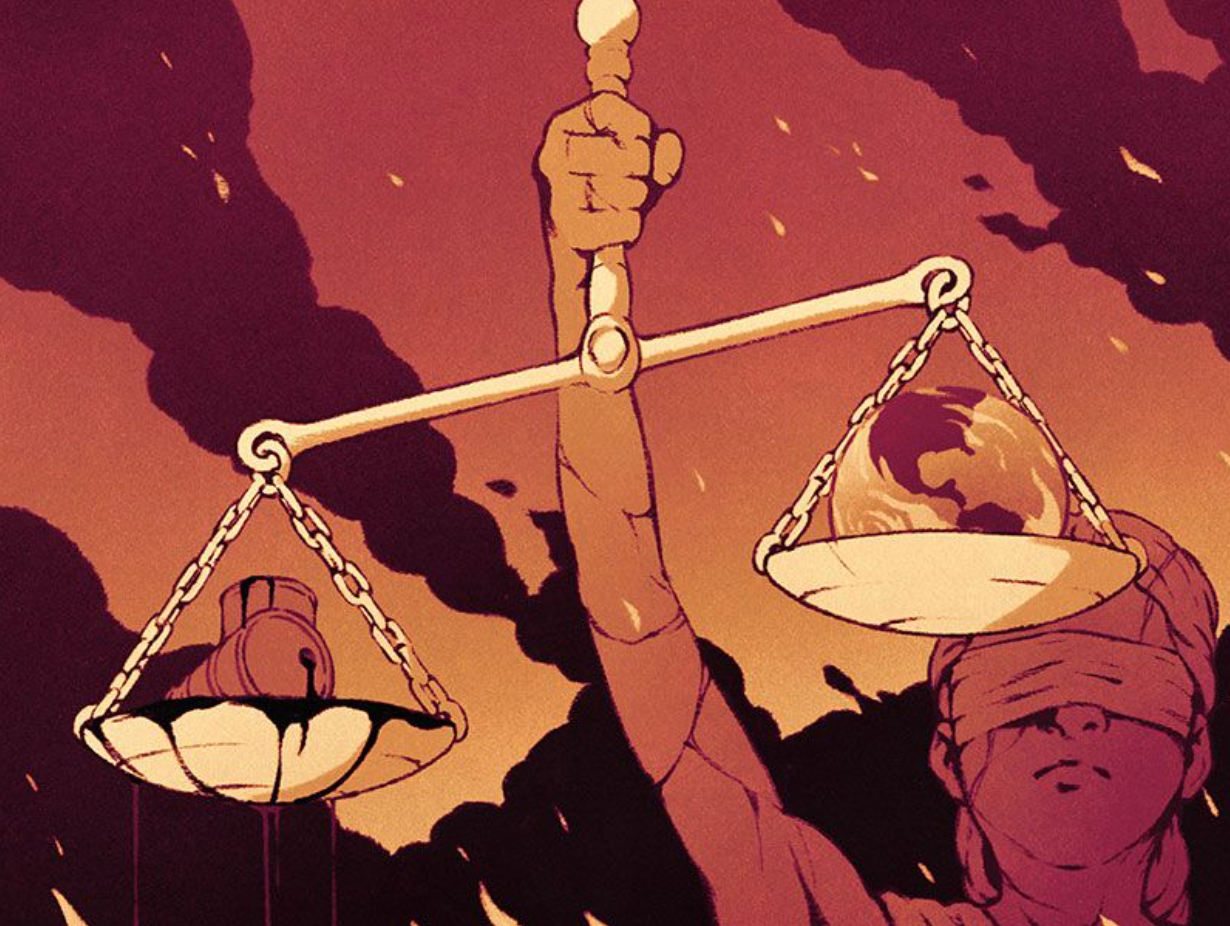
A trial is unfolding in UK courts, closely connected to millions of Brits — who remain blissfully unaware, despite desperate bids by the challengers for coverage.
Niger Delta civilians are accusing a UK corporation of devastating their habitat, livelihood, culture and bodies. It’s the corporation that supplies 10% of UK fossil fuels and delivers a fifth of its gas to our workplaces and homes.
And yet, if the story of Shell oil spills in the Niger Delta appears at all, it does so as a faraway feature under the ‘World News’ tab.
Oil spills in the Niger Delta have seen bursts of fantastic coverage, with the Guardian and BBC World Service leading the charge. But the victims are as frustrated by international media as they have been in their decades-long fight for justice.
The worst leak Lazarus Tamara remembers was in 1968, a decade after Shell first drilled for oil in the region. “There was oil everywhere,” he said on this week’s Media Storm podcast. “Our cultural heritage has been completely destroyed as a result.”
Tamara joined the fight in 1990, alongside Ken Saro-Wiwa, whose high-profile hanging as an activist in 1995 saw Nigeria expelled from the Commonwealth for over three years. Shell ultimately paid a $15.5 million settlement to families of victims of summary execution and alleged crimes against humanity in the Delta, though the company has always denied liability for Saro-Wiwa’s death.
Tamara took up his comrade’s mantle as one of the leaders of the Movement for the Survival of the Ogoni People (MOSOP). “It was out of that desperation that the movement was born,” he told us.
Dr Emem Okon fights her battle through academic research, laying down evidence of the poisonous impact of oil pollution on women’s health, fertility and rights.
“It is very important for the world to know the effects of hydrocarbons on women,” she said on Media Storm, citing her own early-onset menopause as well as the local blood samples she tested, which delivered hydrocarbon levels thousands of times above WHO’s permissible limit.
The resulting infertility, miscarriages, and stillbirths are more than just physical in impact, she said. “This causes confusion, misunderstanding, conflict within the family.”
“People were blaming the women for being promiscuous, of having their wombs removed, and all kinds of unfounded allegations,” she continued. “It’s traumatic. But before the research, people were not linking this to pollution, because we live with pollution — we drink polluted water, we inhale polluted air.”
Dr Okon appeared at Shell’s AGM this week, held at Heathrow (which feels random until you remember the airport has an injunction against climate activists, enabling the meeting to go ahead without disruption).
Tamara, meanwhile, has spent the week in court. While in the UK, they visited the Media Storm studio, to assess our national media’s coverage of climate and environmental news.
“People here in the UK — when we talk about the Niger Delta — they say, ‘oh it’s far away, 6,000 miles away’,” Tamara warned, “until it comes to them.”
While the media often fails to connect ‘UK stories’ of heatwave hosepipe bans and Net-Zero job losses with stories from the frontlines of climate destruction, Shell’s CEO does not. During the AGM, reported Dr Okon, Shell’s boss attributed continued exploration in Nigeria to shareholder demand at home. These stories are one.
The media is equally disconnected in the language it uses to report on climate issues, they went on. Six years ago, the Guardian updated its style guide to include the terms ‘climate crisis’ and ‘climate emergency’ rather than climate change. But aside from the Associated Press, who advise the terms only sparingly, no competitors have followed suit. Dr Okon argues this terminology should be the norm.
To us, what is happening is a crisis, it’s an emergency. So we feel that the media are not really giving the picture of what communities are experiencing, perhaps because they’re not directly impactedDr Emem Okon
“I think what the Guardian have done is something that others need to follow,” Tamara agreed. “But the others won’t do that — because they are pro-business.”
The Guardian (like Media Storm) has a funding model that is unusual for the sector, depending on reader donations and philanthropic foundations.
Most media rely on corporate advertising or content partnerships, such the Daily Mail, whose ‘news’ story this month about Amazon launching a rival service to Shein and Temu was peppered with advertisements allocated by Amazon Ads. In other words, the article — listed as ‘news’ by the Mail — directly earns revenue from the company it claims to journalistically report on.
Perhaps this is why the reporter abstains from asking how Amazon is able to compete with Chinese competitors, ignoring widespread claims of labour and environmental exploitation.
Another issue is our media’s attention span. Climate justice trials drag on for decades. “Is it that there is media fatigue?” Dr Okon asked. This year marked the start of the Ogale and Bille v. Shell case, ten years after the communities first filed a complaint. But snail-paced climate justice is incompatible with a fast-paced, short-term media cycle — for whom news must be new or be worthless.
“I was interviewed by the BBC Africa in December,” said Dr Okon. “So before we came on this trip [for the UK trial], I reached out. But somebody said they had interviewed me in December, so they have no intentions of covering this further. That is not encouraging.”
Tamara said he has to correct members of the British public passing by the courtroom that, no, the matter was not resolved years ago. “The press should assist us to constantly remind the population that these companies have not shifted an inch from their original position, which is driving the Ogoni people to extinction.”
“Let me use this forum to appeal to the international media, that they should not give up on the Niger Delta”, pleads Dr Okon. “We still need them to put pressure on the big corporations and the Federal Government of Nigeria to address all the challenges we have experienced as a result of the oil economy.”
“Indigenous people are crying all the time that their environment has been destroyed, they cannot live the way they used to live before, and it’s all caused by these fossil fuel companies and extractive companies that are on the land”, Tamara added. “Listen to them, or one day it will be you.”
ZNetwork is funded solely through the generosity of its readers.
Donate




