


In south-eastern Turkey’s Suruç, known to be a transit site for IS fighters getting into Syria, a suicide bomber killed 32 and injured over 100 members of the Federation of Socialist Youth Association (SGDF). These young people had gathered in this town near the Turkish-Syrian border to carry relief material to Kobane in Syria. Kobane has been the frontline of the fight-back against the Islamic State over the last year, with fierce resistance from the various Kurdish militant groups. In January, the Kurdish People’s Protection Units (YPG) beat IS out of Kobane. The cost of this largely symbolic victory was the destruction of Kobane. YPG’s advance into Kobane denied IS a stronghold on the Turkish-Syrian border. The suicide bomber in Suruç was venting the fury of IS on peaceful young people.
Turkish Intelligence (MIT) has long privately warned of the likelihood of an IS bomb attack in the south-east. IS’s hatred for the religious and cultural practices of the Kurds is combined with the YPG’s effectiveness in its fight against IS. Sending suicide bombers into south-eastern Turkey (with its considerable Kurdish presence) is a clear way to send a message to the Kurdish people. The first IS attack took place in 2012 in Reyhanli, when two car bombs killed 51 people. During the last Turkish election campaign, two bombs exploded at a political rally of the Peoples Democratic Party (HDP), which grew from being a largely Kurdish formation to the a pillar of the Turkish left and liberals. MIT appears to have done little to prevent this bombing, which raises questions about the Turkish government’s seriousness in dealing with IS.
Who did this IS suicide bomber target? The youth of SGDF are part of a Marxist-Leninist group — the Socialist Party of the Oppressed — committed to the national liberation of the Kurdish people. The group was active in the Gezi Park protests in Istanbul, and has been part of the solidarity movement in Turkey for the Kurds. Former leader Figen Yüksekdað left the Socialist Party of the Oppressed in 2014, joined the HDP, and became one of its co-chairs. After the Suruç attack, Ms Yüksekdað and Selahattin Demirtaº wrote an impassioned statement accusing the “governors in Ankara” for “threatening the HDP every day and embracing IS.” In the general elections of 2015, the HDP broke the 10 per cent barrier.
Turkish Prime Minister Ahmet Davutoðlu went to Suruç to condemn the attack and said that Turkey has “never tolerated any terrorist group”. Last year, a senior Kurdish commander of the YPG told me, with a smile, that Turkey was to Syria as Pakistan was to Afghanistan. What he meant was that, like Pakistan, Turkey had allowed itself to become a base for foreign jihadis eager to go across the border and destabilise its neighbour. Turkey had taken a maximum position against Syria’s Bashar al-Assad government — demanding his removal as early as 2011. President Erdoðan and Mr. Davutoðlu’s Justice and Development Party (AKP), with fraternal ties to the Muslim Brotherhood, had close links to the rebels in Syria. As the civil war fractured along sectarian lines, AKP stood strongly with the rebels — even as these morphed further and further into al-Qaeda extremism and IS. That Turkey has not been able to draw the West into massive aerial bombardment of Syria and that, therefore, the Assad government has not fallen has produced deep frustration in Mr. Erdoðan’s government.
What evidence is there of collusion between the government of President Erdoðan and IS? Reporters who put the pieces together seem to run into trouble from the Turkish state. In 2014, Press TV’s Serena Shim reported that IS fighters and supplies seemed to have no problem crossing the border. Her team took footage of trucks with World Food Organization logos carrying fighters into Syria. Syrian Kurdish journalist Barzan Iso reported that Qatari charities had sent aid and assistance to Carablus, under IS control. Shim died when a cement truck hit her car en route to Suruç a day after she filed her story. When Can Dündar of Cumhuriyet published photographs of trucks believed to be from the MIT carrying arms into Syria, he was charged with defamation.
Shim found that wounded IS fighters crossed into Turkey at the border town of Akçakale and went to Urfa’s Balıklıgöl State Hospital for treatment —in plain sight. Mr. Davutoðlu’s denials seem hollow given the evidence.The Turkish government has been belligerent towards journalists who have tried to cover stories of IS recruiters inside Turkey. Mr. Erdoðan called reports of recruitment centres “shameless, sordid and vile.” He went after New York Times’ Ceylan Yeginsu. Since July 10, the Turkish government has allowed small-scale police raids of known IS centres. The bombing in Suruç was not retaliation for these arrests; that will come later. IS will not bite the hand that feeds it. Turkey’s border is its main lifeline.
Rather than go after IS inside Turkey or along its border, Turkey has attacked Kurdish fighters who have gone after IS. In October 2014, Turkish jets bombed Kurdish positions on the Iraq-Syria border. This was during the time when Kurdish militias fought against IS in Kobane. There was no Turkish assistance to the Kurdish fighters in and around Kobane. With great reluctance and under immense pressure, the Turkish government allowed Kurdish forces in Kobane to be resupplied by the Iraqi Kurdish government.
When the YPG took the Syrian-Turkish border town of Tal Abyad, cutting off the IS capital of Raqqa from the Turkish border, an IS action was expected. The bombing during the elections and now in Suruç is certainly a thrust against the Kurdish onslaught. IS has used such attacks in the past to break the morale of its enemies. The protests across Turkey in solidarity with the SGDF youth and against the Turkish government show that IS might not have such an easy path this time.
Vijay Prashad teaches at Trinity College, Connecticut, U.S.

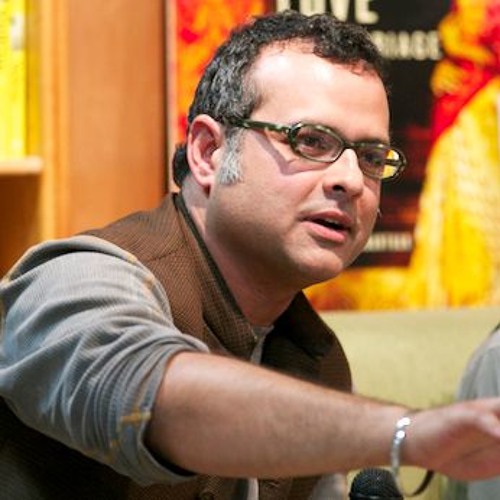
Vijay Prashad is an Indian historian, editor, and journalist. He is a writing fellow and chief correspondent at Globetrotter. He is an editor of LeftWord Books and the director of Tricontinental: Institute for Social Research. He is a senior non-resident fellow at Chongyang Institute for Financial Studies, Renmin University of China. He has written more than 20 books, including The Darker Nations and The Poorer Nations. His latest books are Struggle Makes Us Human: Learning from Movements for Socialism and (with Noam Chomsky) The Withdrawal: Iraq, Libya, Afghanistan, and the Fragility of U.S. Power. Tings Chak is the art director and a researcher at Tricontinental: Institute for Social Research and lead author of the study “Serve the People: The Eradication of Extreme Poverty in China.” She is also a member of Dongsheng, an international collective of researchers interested in Chinese politics and society.
ZNetwork is funded solely through the generosity of its readers.
Donate




