


Neoliberalism was neither new nor particularly liberal when it prevailed 50 years ago. Its great advantage was its sharp deviation from classical liberalism. Even though it paid tribute to liberal thinkers, neoliberalism shared neither their method nor their concept of the market. Today, we are on the cusp of another, equally profound, ideological innovation.
Unlike Adam Smith or John Stuart Mill, neoliberals felt no responsibility to demonstrate, theoretically or empirically, under what circumstances the unfettered market could be relied upon to transmute private profit-seeking into collective prosperity. The invisible hand was divine, infallible. Even when the market failed, they claimed, any attempt to correct it through some collective agency was doomed to fail more horribly. It was an attitude that suited Wall Street to a tee.
The 1970s craved such doctrinal indifference to actual evidence about the consequences of fully deregulating financial markets. Once America had become a deficit country and President Richard Nixon delivered his shock by decoupling the dollar from gold in 1971, successive administrations chose to enhance US global hegemony by boosting – not curtailing – the country’s fiscal and trade deficits.
Predictably, Wall Street banks were assigned the crucial role of recycling (into US Treasuries, equities, and real estate) the dollars foreign exporters were raking in as a result of America’s deficit-fueled demand for their wares. But, to do this – to become the hub of this audacious global surplus recycling scheme – the bankers had to be liberated from regulatory restraint, which meant that legislators and a public taught, since 1929, to fear an out-of-control Wall Street, had to be re-educated. Neoliberalism’s fundamentalist orthodoxy exalting the sanctity of deregulated markets, reflected in the growing influence of the “law and economics” movement, fulfilled that requirement perfectly.
Today, the ascendancy of a new form of capital – cloud capital, or networked algorithmic machines that furnish its owners’ remarkable powers to modify our behavior – needs its own ideology to be fully liberated. I have called this new system technofeudalism – a mode of production and distribution which, powered by cloud capital, is replacing markets with cloud fiefs (like Amazon) and capitalist profits with cloud rents.
To realize the full power of cloud capital, its owners (people like Jeff Bezos, Peter Thiel, Mark Zuckerberg, and Elon Musk) require a new ideology. Just as Wall Street financiers needed neoliberalism after the Nixon shock, this new ideology must support cloud capital’s expanding domain in three ways.
First, it must legitimize the colonization of human endeavor. Beginning with the relaxation of rules governing, say, self-driving vehicles and AI-driven medical and legal services, the ideology must justify the limitless replacement of fallible, recalcitrant humans by cloud capital-driven machines in every realm – including work that gives us pleasure (such as translating poetry) or that we should want to perform (such as raising children). The deeper cloud capital can penetrate tasks hitherto carried out by humans, the greater the cloud rents flowing to the technofeudal class.
Second, the new ideology must legitimize the colonization of state institutions, especially the privatization of public data through its transfer to Big Tech’s cloud capital. It must, for example, justify Musk’s use of his Department of Government Efficiency to hook his cloud-capital systems into various federal agencies, including the Internal Revenue Service, or the hard-wiring by Thiel’s defense firm Palantir and Google of their interfaces into the Pentagon, making their cloud capital indispensable to the military-industrial complex.
Third, it must legitimize the colonization of Wall Street. Zuckerberg was the first technofeudalist to try to create his own digital currency, Libra. Wall Street foiled him. But then Musk’s purchase of Twitter, now X, evolved into a bolder attempt to create an “Everything App” that challenges Wall Street’s payments monopoly. Encouraged by President Donald Trump’s executive order directing the Federal Reserve to create a strategic crypto reserve, Big Tech, seeking to provide unfettered cloud finance outside traditional financial markets, needs more than ever to justify the merger of its cloud capital with financial services.
This new ideology is already here. I call it techlordism, a mutation of transhumanism – a creed that advocates blurring the lines between organic and synthetic until augmented humans achieve genuine freedom, or even immortality. Just as neoliberalism borrowed from classical liberalism but usurped it by adding a divinity (the infallible market), techlordism makes itself useful to cloud capital’s three-pronged colonization drive by replacing the neoliberal Homo Economicus with an amorphous “HumAIn” (a human-AI continuum).
Techlordism also replaces neoliberalism’s divine being. The new divinity is the algorithm that renders the signaling functions of the decentralized market mechanism obsolete, yielding (in the image of amazon.com) a totally centralized mechanism for matching buyers and sellers.
The repercussions of the societal transformation accelerated by techlordism are breathtaking. They include unprecedented macroeconomic instability (as cloud rents decimate aggregate demand), the demise of democracy, even as an ideal (a position advocated by Thiel, an early prophet of techlordism), and the end of universities (replaced by personalized AI-driven augmentations).
In this light, Trump is a godsend to the technofeudalists. His agenda – fully deregulating their AI-driven services, bolstering crypto, and exempting their cloud rents from taxation – is supercharging cloud capital’s power to extract rents. For the new ruling class, whatever money they lose in the short run from Trump’s tariff delusions must seem like a magnificent long-term investment.

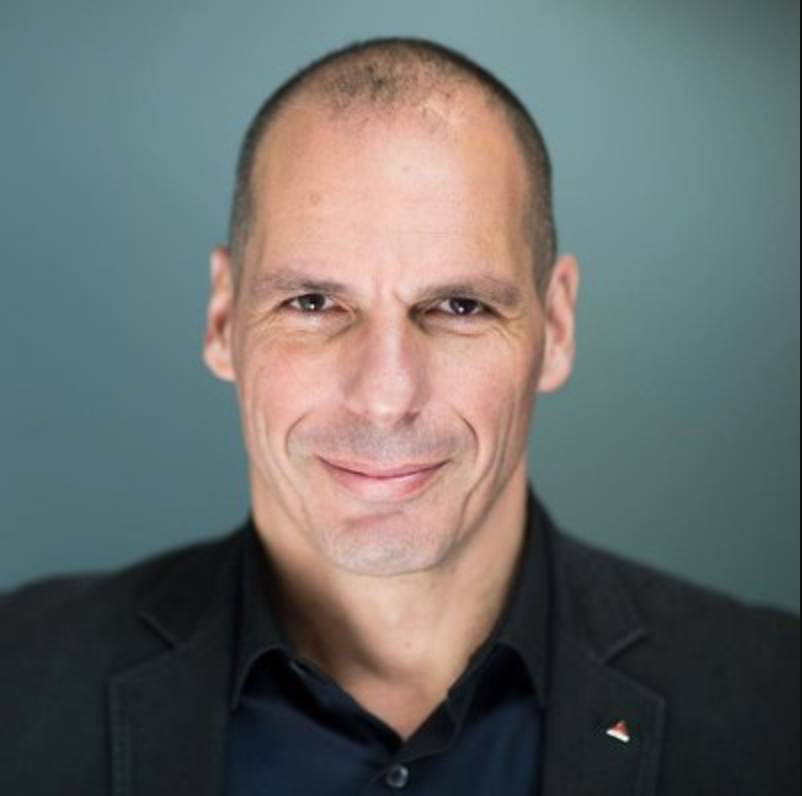
Yanis Varoufakis born 24 March 1961 is a Greek economist, politician, and co-founder of DiEM25. A former academic, he served as the Greek Minister of Finance from January to July 2015. Since 2019, he is again a Member of Greek Parliament and MeRA25 leader. He is the author of several books including, Another Now (2020). Varoufakis is also a professor of Economics – University of Athens, Honorary Professor of Political Economy – University of Sydney, Honoris Causa Professor of Law, Economics and Finance – University of Torino, and Distinguished Visiting Professor of Political Economy, Kings College, University of London.
ZNetwork is funded solely through the generosity of its readers.
Donate




