Source: Truthout

The Trump administration announced on Tuesday that it is seizing full control over which journalists have access to the press pool covering the president, taking the power from the organization that has represented journalists who cover the White House for over 100 years.

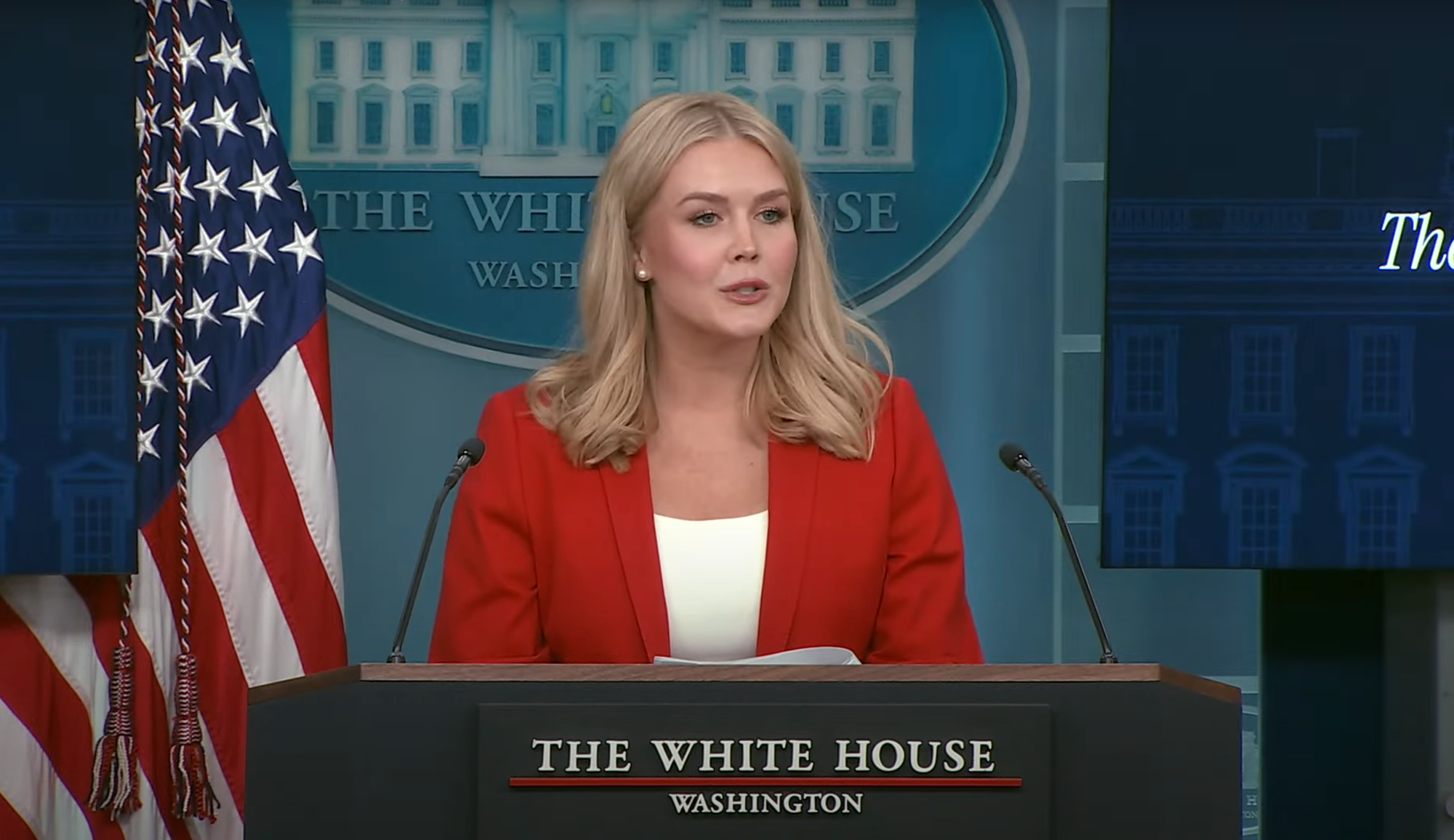
White House Press Secretary Karoline Leavitt informed reporters of the change during a briefing, saying that the Trump administration will now determine who is allowed to be part of the press gaggle that covers Trump in places where there are limited spots, like the Oval Office or Air Force One.

In the past, the makeup of the pool has been overseen by the White House Correspondents’ Association (WHCA), an independent group headed by journalists elected by fellow members of the media.

The White House’s move came in direct retaliation to the WCHA after it filed a lawsuit against the White House for discriminating against The Associated Press. Earlier this month, the White House revoked AP’s access to the pool because the publication said that it will not adhere to Trump’s renaming of the Gulf of Mexico since the change is not recognized by other countries, while still acknowledging the “Gulf of America” terminology.

Leavitt claimed that the change was made in order to give opportunities to outlets previously denied a spot in the pool — but the WHCA and commentators immediately noted that the move is actually an attempt to control press coverage and skew it in the White House’s favor.

“This move tears at the independence of a free press in the United States. It suggests the government will choose the journalists who cover the president,” said Eugene Daniels, WHCA President and Politico journalist, in a statement. “In a free country, leaders must not be able to choose their own press corps.”

Prior to this announcement, the White House has already stuffed the briefing room full of people working for far right and pro-Trump outlets, with ties to neo-Nazis and white supremacists. Reporters have observed Leavitt calling on these reporters for questions more often than those from other outlets, who then go on to ask softball questions or espouse outright praise for the administration.

A spot on the press pool allows journalists direct access to the president to ask questions, playing a crucial role in shaping coverage of executive orders and actions. Without journalists to press Trump on actions he’s taking, the media could become less critical, and runs the risk of becoming a public relations mouthpiece for the administration, rather than producing independent news coverage.

During Trump’s first term, he also retaliated against the press by revoking the White House credentials of CNN’s Jim Acosta after he angered Trump by questioning the president’s anti-immigrant rhetoric and bringing up the alleged Russian interference in the 2016 election. Acosta’s pass was restored after a federal judge ruled in his favor.

This article was originally published by Truthout; please consider supporting the original publication, and read the original version at the link above.

Sharon Zhang is a news writer at Truthout covering politics, climate and labor. Before coming to Truthout, Sharon had written stories for Pacific Standard, The New Republic, and more. She has a master’s degree in environmental studies.


ZNetwork is funded solely through the generosity of its readers.

Donate
Donate
Leave A Reply

Subscribe

All the latest from Z, directly to your inbox.

Institute for Social and Cultural Communications, Inc. is a 501(c)3 non-profit.

Our EIN# is #22-2959506. Your donation is tax-deductible to the extent allowable by law.

We do not accept funding from advertising or corporate sponsors.  We rely on donors like you to do our work.

ZNetwork: Left News, Analysis, Vision & Strategy

Subscribe

All the latest from Z, directly to your inbox.

THE WIND CRIES FREEDOM

The Wind Cries Freedom, the new book from Z co-founder Michael Albert, is a sweeping oral history of a future American revolution.

Through thirty interconnected chapters, it draws out the strategies, failures, turning points, and hard-won wisdom of a movement that called itself the Revolutionary Participatory Society. These are not the polished memoirs of politicians: they are the unfiltered accounts of people who organized in neighborhoods, hospitals, universities, stadiums, courthouses, and places of worship, and kept a shared vision alive through cynicism and exhaustion.

The result is speculative political fiction that reads like history: messy, human, and quietly hopeful in the way that only real experience and long thought can produce.

Get your copy and peruse more features on the book’s website below.

“Read it, argue with it, but don’t look away. The future it recalls is one we must still fight to deserve.”

Yanis Varoufakis

“The most unusual and intriguing combination of prophecy, manifesto, and movement building manual that I have ever encountered.”

Bill Fletcher Junior

“This work fills a huge gap in our social movement literature.”

Cynthia Peters

You've just read your article on Z this month.

DOES Z'S SURVIVAL MATTER?

You keep coming back for a reason: serious political analysis, movement reporting, and debate beyond the priorities of corporate media. Today, Z is in a precarious financial position. If Z is part of how you understand the world, help keep it going. The readers who give monthly are the reason this work survives between fundraisers.

Z is in a precarious financial position. If it’s part of how you understand the world, help keep it going.

Number of donors711
Our goal1,000

Sustainers at $9/month or more receive the digital Z Magazine.

Already a sustainer? Click here and we won’t ask again. Thank you!

Your reading count is stored only in your browser and is never sent to us.

Sound is muted by default.  Tap 🔊 for the full experience

CRITICAL ACTION

Critical Action is a longtime friend of Z and a music and storytelling project grounded in liberation, solidarity, and resistance to authoritarian power. Through music, narrative, and multimedia, the project engages the same political realities and movement traditions that guide and motivate Z’s work.

If this project resonates with you, you can learn more about it and find ways to support the work using the link below.

Z is in the most precarious financial position in its history.

Z is a place to think beyond the limits of the present.

For decades, Z has brought together political analysis, movement reporting, debate, and visions of a different future from writers and activists around the world. That work is more than journalism. It is movement infrastructure: movements need places to develop ideas, test arguments, learn from experience, and imagine what comes next.

In the first two days of this fundraiser, 19 donors and 8 new monthly sustainers stepped up. Help us reach 1,000 donors who keep Z independent, for everyone.

For decades, Z has published the analysis, debate, and visions movements need, free of paywalls, ads, and billionaire owners. If that work should continue, Z needs your support now.

Number of donors711
Our goal1,000

Sustainers at $9/month or more receive the digital Z Magazine.

Subscribe

Join the Z Community – receive event invites, announcements, a Weekly Digest, and opportunities to engage.

Exit mobile version

