


“Time after time on the Grenada (Miss.) Square [in 1966] when we were confronted and outnumbered by Klan-led mobs armed with baseball bats and steel pipes, our songs held us together. And often – not always, but often – our singing literally prevented them from charging into us with their clubs swinging. I know that sounds impossibly mystic and fanciful, but it’s true. I saw it. I experienced it.”
-Bruce Hartford, “Troublemaker”: Memories of the Freedom Movement
As I write it’s the day before the big Global Climate Strike, happening because, 13 months ago, one 15 year old young person in Sweden, Greta Thunberg, translated her despair about the climate emergency into action. Week after week, she and others who joined her somehow sparked a movement of young people that will see, tomorrow, 4500 actions in 150 or so countries, over a thousand of them in the USA, demanding that the governments of the world get truly serious about shifting rapidly from fossil fuels to renewables and energy efficiency, for a justice-based, clean energy revolution.
Those young people part of that movement, and all the rest of us, would gain a great deal by getting and reading the new book, “Troublemaker,” by Bruce Hartford, a personal memoir of what it was like to be part of the civil rights/Black Freedom movement between 1963 and 1967. There are so many lessons to be learned for today, so much inspiration from Hartford’s experiences and his insights about movement- and organization-building learned from those experiences.
The first part of the book is about Hartford’s involvement as a teenage activist in Los Angeles and the Bay Area in 1963 and 1964 as part of CORE, the Congress of Racial Equality, and, in the Bay Area, as part of the Free Speech Movement at the University of California in Berkeley. But the strength of the book is the stories about his time in the deep South, in Alabama and Mississippi, from early 1965 to 1967.
This section of the book begins with Hartford going to Selma, Alabama the day after the brutal Edmund Pettus Bridge attack on March 7th, 1965 by police against 600 nonviolent Black demonstrators. Hartford describes in detail what things were like afterwards as the movement held together and kept active until, two weeks later, it won a federal court case mandating that they could march from Selma to Montgomery, which they then did. This was one of the most historic moments of the epic 60’s battle against racist and violent Jim Crow segregation.
Hartford writes about his work after that march in Selma doing community organizing and voter registration, primarily with the Southern Christian Leadership Conference, while also working with the Student Nonviolent Coordinating Committee. That summer he was hired as a member of the SCLC field staff and moved to Crenshaw County, Alabama to do similar, on-going work. By 1966 he was working in Hale, Perry and Marengo counties, part of what is known as “Black Belt” Alabama, meaning counties with an African American majority but, at that time, total white power structure control. After James Meredith was shot and wounded while walking through Mississippi on a “March Against Fear,” a Meredith March was organized to continue what he had started, and Hartford was sent to take part in that. Following that march’s conclusion, he worked in Grenada County, Mississippi into early 1967.
I was in my early teens and wasn’t at all movement-connected at that time so I wasn’t part of any of this. However, I have read other books about that period in our history, and I do have friends who were deeply involved, and I’ve heard many stories from them about what it was like. But Hartford’s story was in many ways a revelation, so full of detail combined with reflective insights and analysis very much of value for anyone who is serious about organizing for justice and equality.
Here is a sampling of some of those insights:
“Sometimes I’m asked, how did we endure? And what kept us going? My answer is — freedom songs and freedom singing, our most effective nonviolent weapon, and the songs and singing were the psychic threads that bound us into a tapestry of purpose, solidarity, courage, and hope.” (p. 345)
“While most Afro-Americans approved of and voiced support for the Movement, only a small fraction of Blacks actually attended a mass meeting, joined protests, attempted to register to vote when it was a dangerous act of courage, or even just signed a petition, helped with office work, or contributed money to an organization. The great majority did not actively participate in any way in the Freedom Movement.” (p. 194)
“In the rural South, community organizing and voter registration were almost entirely about conversations. Not slogans, not chants, not oratory, not exhortations, but extended personal interactions with individuals on their porches or in their homes and with small clusters at little country stores, barbershops, beauty parlors, and even out in the fields. [We needed to] learn how to deeply listen to what people were saying, what they were actually meaning, and what they weren’t explicitly saying but still trying to tell us.” (p. 210)
“Tactical nonviolence was necessary on protests. In the South of the 1960s demonstrations that turned violent would have been quickly and ruthlessly suppressed by overwhelming police power. . . The only way to achieve progressive reform in America is through ‘people-power’ – mass movements of people demanding social change. Activists are few in number and they are the crucial catalyst, but they succeed only when they win support from the many.” (p, 252)
There is much more like this in “Troublemaker.” IMHO, it’s an indispensable book for anyone who is getting into the progressive movement, as well as those of us who have been in it for a long time, as one guide on our road to a stable climate, economic, social, gender and racial justice and equality, a peaceful world, and society-wide respect for and connection to Mother Earth.
Ted Glick has been a progressive activist, organizer and writer since 1968. Past writings and other information can be found at https://tedglick.com, and he can be followed on Twitter at https://twitter.com/jtglick.

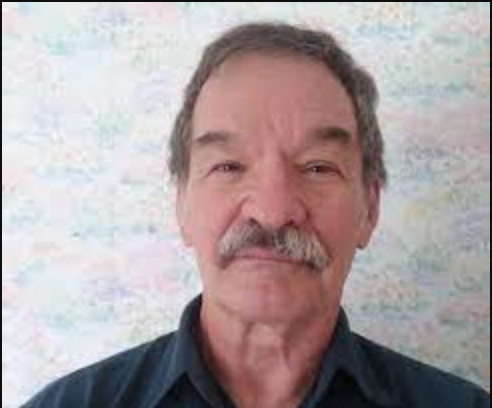
Ted Glick has devoted his life to the progressive social change movement. After a year of student activism as a sophomore at Grinnell College in Iowa, he left college in 1969 to work full time against the Vietnam War. As a Selective Service draft resister, he spent 11 months in prison. In 1973, he co-founded the National Committee to Impeach Nixon and worked as a national coordinator on grassroots street actions around the country, keeping the heat on Nixon until his August 1974 resignation. Since late 2003, Ted has played a national leadership role in the effort to stabilize our climate and for a renewable energy revolution. He was a co-founder in 2004 of the Climate Crisis Coalition and in 2005 coordinated the USA Join the World effort leading up to December actions during the United Nations Climate Change conference in Montreal. In May 2006, he began working with the Chesapeake Climate Action Network and was CCAN National Campaign Coordinator until his retirement in October 2015. He is a co-founder (2014) and one of the leaders of the group Beyond Extreme Energy. He is President of the group 350NJ/Rockland, on the steering committee of the DivestNJ Coalition and on the leadership group of the Climate Reality Check network.
ZNetwork is funded solely through the generosity of its readers.
Donate




