


Two weeks ago police shot and killed an individual at Pacific Wildcat Resources tantalum mine in central Mozambique. The incident received some attention in Canada because community members responded by seizing the Vancouver-based company’s mine site and setting some equipment ablaze.
One protester told O Pais newspaper this wasn’t the first time someone was shot dead at the mine and another said:
We don’t want to see the managers of this company operating in the mine anymore. Otherwise we will take the law into our own hands. The director of the company does not respect us, and we cannot allow someone to come and enslave us in our own country.
In recent years Canadian mining companies have engendered a great deal of violence across Africa. In 2008 Guinea’s military killed three in a bid to drive away small-scale miners from SEMAFO’s Kiniero mine in the southeast of the country. BBC Monitoring Africa reported that “the soldiers shot a woman at close range, burned a baby and in the panic another woman and her baby fell into a gold mining pit and a man fell fatally from his motor while running away from the rangers.” Blaming the Montréal-based company for the killings, locals damaged its equipment.
To the southeast the Ghanaian military opened fire on a 5,000-person demonstration against a Canadian-owned mine in June 2005. Seven of those protesting Golden Star’s pollution and refusal to compensate those impacted by its operations were hit by bullets. Backing a hardline approach to the local community, a company official called for “some radical way” to change the “mindset” of small-scale unlicensed miners in the region.
Fifteen hundred kilometers north, Mauritania’s national guard raided a peaceful protest, killing one employee and wounding several others during a July 2012 strike at First Quantum’s Guelb Moghrein mine. A release from the Vancouver company afterwards called the strike illegal, but failed to mention the death or injuries.
On the other side of the continent security guards paid by Barrick Gold (now Acacia) have killed a couple dozen villagers at, or in, close proximity, to the Toronto company’s North Mara mine since 2005. Hundreds more have been severely injured by the security and police Barrick pays to patrol the perimeter of its Tanzanian mine and regularly calls on site. Most of the victims were impoverished villagers who scratch rocks for tiny bits of gold and who mined these territories prior to Acacia’s arrival.
Two thousand kilometers southeast Anvil Mining transported Congolese government troops who killed 100 people near its Dikulushi mine in the port town of Kilwa, Katanga. Most of the victims were unarmed civilians.
After a half-dozen members of the little-known Mouvement revolutionnaire pour la liberation du Katanga occupied the Canada-Australian company’s Kilwa concession in October 2004, Anvil provided the trucks used to transport Congolese soldiers to the area and to dump the corpses of their victims into mass graves. A Congolese military commander told UN investigators that the military operation in Kilwa was “made possible thanks to the logistical efforts provided by Anvil mining.” Immediately after the massacre, an Anvil press release celebrated the return of law and order to its mining territory without reporting the use of Anvil planes and trucks to support the military intervention or the deaths near Kilwa.
Despite a long list of abuses by Canadian mining companies in Africa (and elsewhere) it’s incredibly difficult to hold them accountable domestically. The previous Stephen Harper government opposed legislation modeled on the U.S. Alien Torts Claims Act that would have allowed lawsuits against Canadian companies responsible for major human rights violations or ecological destruction abroad. Similarly, the Conservatives and some opposition MPs defeated Liberal MP John McKay’s private members bill (C – 300), which would have withheld diplomatic and financial support from companies found responsible for significant abuses abroad.
Is Justin Trudeau prepared to defy Canada’s powerful mining industry and adopt legislation to constrain their abuses abroad or will he continue to place the full power of Canadian foreign-policy behind this controversial industry?

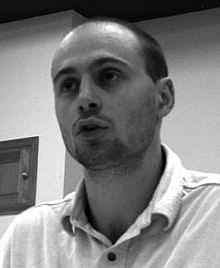
Yves Engler is a Montréal-based activist and author. He is author of the several books, including Stand on Guard For Whom? A People’s History of the Canadian Military.
ZNetwork is funded solely through the generosity of its readers.
Donate





1 Comment
Thank is an important article for everyone to read -since most of us are still consuming articles created in part from mined resources . It is especially important for the Canadian Public ,politicians and Law Makers/Enforcers to read as we must stop our countries corruption and become ethical and frugal in all our dealings-which probably equates stopping global mining all together at this point in the Earth’s demise .We especially like your final questions to our new Prime Minister Justin Trudeau . Here is Cheers to Justin standing for Justice .