


ATHENS – The blades of the wind turbines on the mountain range opposite my window are turning especially energetically today. Last night’s storm has abated but high winds continue, contributing extra kilowatts to the electricity grid at precisely zero additional cost (or marginal cost, in the language of the economists). But the people struggling to make ends meet during a dreadful cost-of-living crisis must pay for these kilowatts as if they were produced by the most expensive liquefied natural gas transported to Greece’s shores from Texas. This absurdity, which prevails well beyond Greece and Europe, must end.
The absurdity stems from the delusion that states can simulate a competitive, and thus efficient, electricity market. Because only one electricity cable enters our homes or businesses, leaving matters to the market would lead to a perfect monopoly – an outcome that nobody wants. But governments decided that they could simulate a competitive market to replace the public utilities that used to generate and distribute power. They can’t.
The European Union’s power sector is a good example of what market fundamentalism has done to electricity networks the world over. The EU obliged its member states to split the electricity grid from the power-generating stations and privatize the power stations to create new firms, which would compete with one another to provide electricity to a new company owning the grid. This company, in turn, would lease its cables to another host of companies that would buy the electricity wholesale and compete among themselves for the retail business of homes and firms. Competition among producers would minimize the wholesale price, while competition among retailers would ensure that final consumers benefit from low prices and high-quality service.
Alas, none of this could be made to work in theory, let alone in practice.
The simulated market faced contradictory imperatives: to ensure a minimum amount of electricity within the grid at every point in time, and to channel investment into green energy. The solution proposed by market fundamentalists was twofold: create another market for permissions to emit greenhouse gases, and introduce marginal-cost pricing, which meant that the wholesale price of every kilowatt should equal that of the costliest kilowatt.
The emission-permit market was meant to motivate electricity producers to shift to less polluting fuels. Unlike a fixed tax, the cost of emitting a ton of carbon dioxide would be determined by the market. In theory, the more industry relied on terrible fuels like lignite, the larger the demand for the EU-issued emission permits. This would drive up their price, strengthening the incentive to switch to natural gas and, ultimately, to renewables.

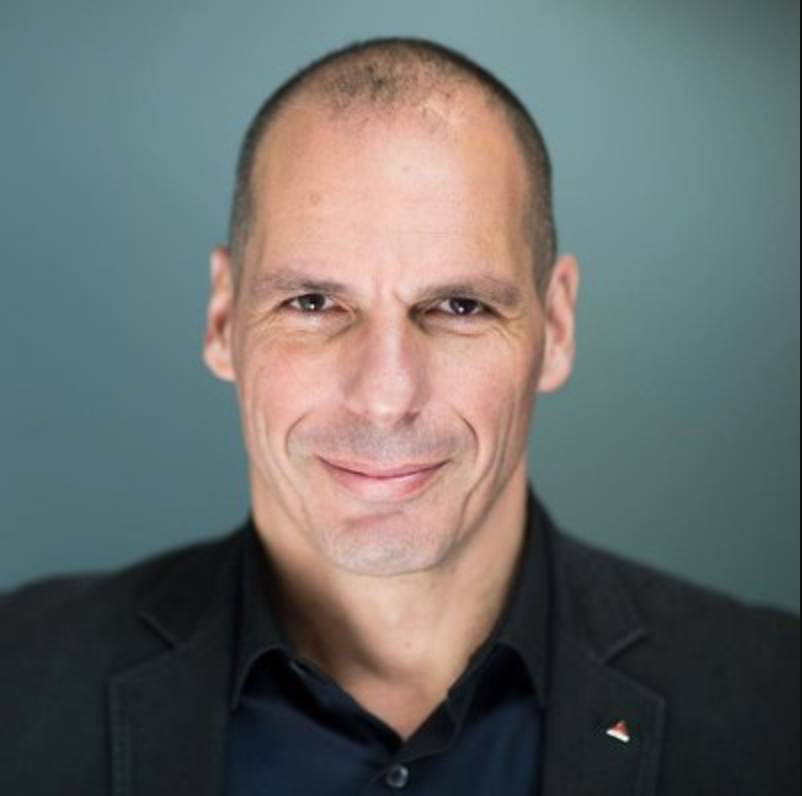
Yanis Varoufakis born 24 March 1961 is a Greek economist, politician, and co-founder of DiEM25. A former academic, he served as the Greek Minister of Finance from January to July 2015. Since 2019, he is again a Member of Greek Parliament and MeRA25 leader. He is the author of several books including, Another Now (2020). Varoufakis is also a professor of Economics – University of Athens, Honorary Professor of Political Economy – University of Sydney, Honoris Causa Professor of Law, Economics and Finance – University of Torino, and Distinguished Visiting Professor of Political Economy, Kings College, University of London.
ZNetwork is funded solely through the generosity of its readers.
Donate




