President Trump’s decision to give a green light for a Turkish invasion of Kurdish-populated regions of northern Syria has been faced with swift bipartisan opposition. Apparently, no one in the diplomatic, military or intelligence community — much less the leadership of the self-governing Kurdish enclave the U.S. has armed and supported and is now under siege — was consulted beforehand. U.S. troops should indeed be withdrawn from Syria, but the U.S. soldiers removed from the border area where Turkish forces are now attacking are not being sent home, and instead are simply being redeployed elsewhere in northeastern Syria. Trump’s sudden and apparently impulsive move following a conversation with authoritarian Turkish President Recep Tayyip Erdoğan (one of a number of autocratic leaders with whom Trump has developed a close relationship) is dangerous and irresponsible.
What many of the commentators are ignoring is that this is hardly the first time the United States has goaded Kurds to fight and then abandoned them to slaughter.
The Kurds are a nation of more than 30 million people divided among six countries, primarily in what is now northern Iraq and southeastern Turkey, with smaller numbers in northeastern Syria, northwestern Iran and the Caucasus. They are the world’s largest nation without a state of their own. Their struggle for self-determination has been hampered by the sometimes-bitter rivalry between competing nationalist groups, some of which have been used as pawns by regional powers as well as by the United States.
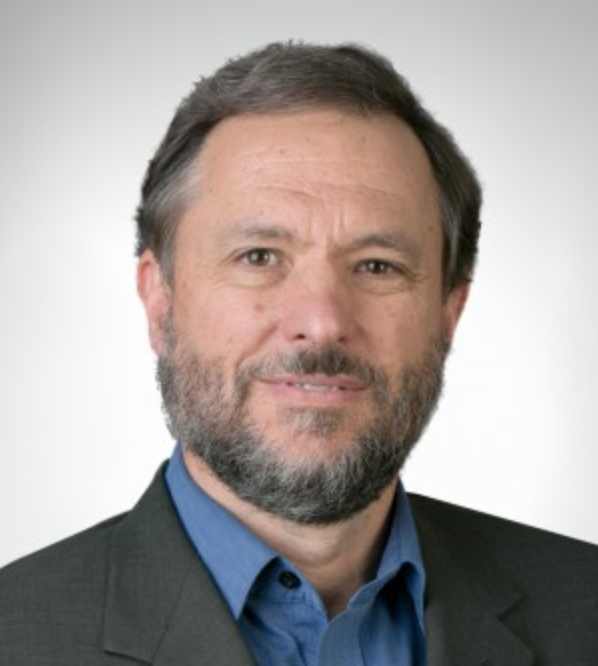
Stephen Zunes (born 1956) is an American international relations scholar specializing in the Middle Eastern politics, U.S. foreign policy, and strategic nonviolent action. He is known internationally as a leading critic of United States policy in the Middle East, particularly under the George W. Bush administration, and an analyst of nonviolent civil insurrections against autocratic regimes.
Stephen has been at the University of San Franscico since 1995, teaching courses on the politics of the Middle East and other regions, nonviolence, conflict resolution, U.S. foreign policy, and globalization. He served as the founder and first director of the Middle Eastern Studies Program.
A prominent specialist on U.S. Middle East policy, Professor Zunes has presented hundreds of public lectures and conference papers in both the United States and over a dozen foreign countries. He has traveled frequently to the Middle East and other conflict regions, meeting with prominent government officials, scholars, and dissidents. He has served as a political analyst for local, national, and international radio and television and as a columnist for several print and online publications, and has published hundreds of articles in academic journals, anthologies, magazines, and elsewhere on such topics as U.S. foreign policy, Middle Eastern politics, Latin American politics, African politics, human rights, arms control, social movements, and nonviolent action. He has served as a writer and senior analyst for Foreign Policy in Focus, an associate editor for Peace Review, and a contributing editor of Tikkun.
ZNetwork is funded solely through the generosity of its readers.
The Wind Cries Freedom, the new book from Z co-founder Michael Albert, is a sweeping oral history of a future American revolution.
Through thirty interconnected chapters, it draws out the strategies, failures, turning points, and hard-won wisdom of a movement that called itself the Revolutionary Participatory Society. These are not the polished memoirs of politicians: they are the unfiltered accounts of people who organized in neighborhoods, hospitals, universities, stadiums, courthouses, and places of worship, and kept a shared vision alive through cynicism and exhaustion.
The result is speculative political fiction that reads like history: messy, human, and quietly hopeful in the way that only real experience and long thought can produce.
Get your copy and peruse more features on the book’s website below.
“Read it, argue with it, but don’t look away. The future it recalls is one we must still fight to deserve.”
Yanis Varoufakis
“The most unusual and intriguing combination of prophecy, manifesto, and movement building manual that I have ever encountered.”
Bill Fletcher Junior
“This work fills a huge gap in our social movement literature.”
Cynthia Peters
You've just read your article on Z this month.
DOES Z'S SURVIVAL MATTER?
You keep coming back for a reason: serious political analysis, movement reporting, and debate beyond the priorities of corporate media. Today, Z is in a precarious financial position. If Z is part of how you understand the world, help keep it going. The readers who give monthly are the reason this work survives between fundraisers.
Z is in a precarious financial position. If it’s part of how you understand the world, help keep it going.
Your reading count is stored only in your browser and is never sent to us.
Sound is muted by default. Tap 🔊 for the full experience
CRITICAL ACTION
Critical Action is a longtime friend of Z and a music and storytelling project grounded in liberation, solidarity, and resistance to authoritarian power. Through music, narrative, and multimedia, the project engages the same political realities and movement traditions that guide and motivate Z’s work.
If this project resonates with you, you can learn more about it and find ways to support the work using the link below.
Z is in the most precarious financial position in its history.
Z is a place to think beyond the limits of the present.
For decades, Z has brought together political analysis, movement reporting, debate, and visions of a different future from writers and activists around the world. That work is more than journalism. It is movement infrastructure: movements need places to develop ideas, test arguments, learn from experience, and imagine what comes next.
In the first two days of this fundraiser, 19 donors and 8 new monthly sustainers stepped up. Help us reach 1,000 donors who keep Z independent, for everyone.
For decades, Z has published the analysis, debate, and visions movements need, free of paywalls, ads, and billionaire owners. If that work should continue, Z needs your support now.