


Two more young men were shot in my neighborhood last night. Last week, another unarmed black man was killed by police. Last month, a woman in Ohio whose fetus would have been stillborn had to drive 300 miles to get an abortion. The U.S. has the highest GDP in the world, but women who live here rank an abysmal 28th according to the World Economic Forum’s global gender gap index. Even more shocking: the U.S. is home to one tenth of the world’s poorest people, according to the recently released Global Wealth Databoook 2015. “That seems impossible,” says Paul Buchheit on Inequality.org. “It requires a second look at the data, and then a third look. But it’s true. In the world’s poorest decile (bottom 10%), one out of ten are Americans… Incredibly, then, nearly 50 million of America’s 243 million adults are part of the world’s poorest 10%.”
While the world paused to grieve terrorist attacks by ISIS last week, U.S. weapons manufacturers took it as a green light to shore up new contracts and add to their enormous profits and the U.S. House of Representatives exploited the moment to push through racist and xenophobic policies that would exclude certain refugees from entering the U.S. Meanwhile a prime source of terrorist attacks, the U.S. government itself, continued its many decades of state-sponsored terrorism, making us what Noam Chomsky calls the “http://inthesetimes.com/
The victims of his attack are of course not here to tell us how they feel.
Most of us are not former drone operators, but we all have something in common with Brandon Bryant. We watch what our country does to its own people and to others abroad, and we start to feel numb. How can we stay tuned in to all these atrocities? How can we respond in responsibly?
1. Find people to work with.
It almost doesn’t matter which atrocity you choose to focus on. Is police violence most important? Is climate change? Mass incarceration? The fight for a living wage? There is no right answer. Choose based on what organizations are near you, who you know, what pulls at you, or what most affects you. But do choose. And most importantly, find your people. To do this work, you need not only an issue that matters to you, but you need to build relationships with others over time. (This will help make #2 possible.)
2. Stick with them.
The pressures on us are to go numb, to keep our head down and at least take care of ourselves and our families, to give in to helplessness. We can’t fight back against these pressures alone. We need our people, and we need them by our side over a long period of time to keep us honest, to help us with childcare, to bring soup when we are sick, to celebrate victories and mourn defeats, to keep us in the struggle, and to remind us what it means to feel human.
3. Enlarge your base – in numbers and in skills.
You can get together with your same group of 5 people or 20 people or even 1000 people, and you can be 100% right in your analysis of the particular atrocity you are working on. But being right is not enough! What are you doing to build your base? What are you doing to mobilize an ever-increasing group of people that are gaining both an understanding of the issue and a sense of how to use collective power to make change? If you are not building your base or supporting others to build a base, you aren’t serious about winning.
4. Don’t get seduced.
It’s easy to settle for random reforms. At least it’s something! But dedicating yourself and mobilizing others to dedicate themselves to achieve random corrections to systemic atrocities is a recipe for burn-out. Whether you are stopping a pipeline, preventing an eviction, or interrupting police brutality, you’re likely to brush yourself off from the battle only to discover that they found another way to transport the fossil fuels, displace the low-income tenants, or confine, control and kill our most marginalized community members. This is where you get to call in everyone’s gifts and collectively aim for your most flexible, even acrobatic, thinking – which is what you need when you have to engage in pitched battles while simultaneously strategizing how to snuff out the oppression-based, for-profit system that threatens our planet, our homes, and our lives.
5. Be strategic. Be visionary. Build a left. Stay grounded.
It’s not easy or obvious how to connect winning the battle to winning the war, but it is essential that we all join with others and labor over this piece until we find a way. At a series of meetings recently in Boston, organizers gathered to discuss what it would take to implement a plan for building long-term, cross-movement, grassroots-based leadership that had the organizing skills, political analysis, and emotional intelligence to build the necessary relationships and networks, to develop the short-term campaigns, and to keep their eye on the long-term prize of replacing systems of oppression with new systems that support human liberation. In between meetings, we did our issue-based work (in this case via City Life/Vida Urbana), including collecting sheets and pillows and having cots delivered to a church basement so that tenants in East Boston who were recently made homeless by another greedy landlord would have a place to sleep.
It’s hard to see these families suffer, but it’s possible not to go numb, not to tune out, not to lose focus because (see #1) we are in a web of relationships that keeps calling us back to the work. And that work (insert any issue here!) is using solidarity and base-building to develop our collective power so that we can fight for social justice in both the short- and the long-term — no matter what threatens to distract us or make us want to give up.

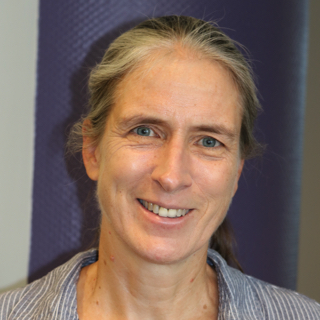
Cynthia Peters is the editor of The Change Agent magazine, an adult education teacher, and a nationally known professional development provider. She creates social-justice-oriented materials that feature student voices, along with standards-aligned, classroom-ready activities that teach basic skills and civic engagement. As a professional development provider, Cynthia supports teachers to apply evidence-based strategies to improve student persistence and develop curriculum and program norms that promote racial equity. Cynthia has a BA in social thought and political economy from UMass/Amherst. She is a long-time editor, writer, and community organizer in Boston.
ZNetwork is funded solely through the generosity of its readers.
Donate




