

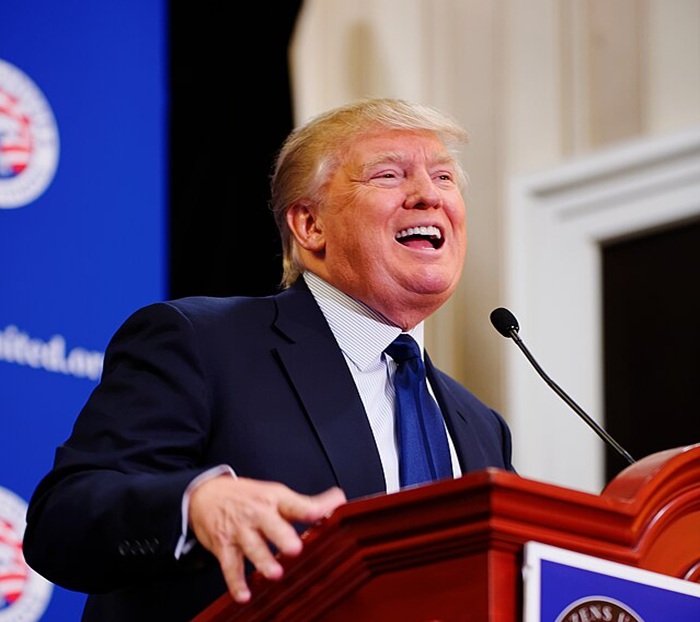
In the first three months of 2026, an account in the president’s name executed 3,642 trades worth hundreds of million of dollars. US regulators are examining oil futures trades placed shortly before major Trump policy shifts on Iran. In March, roughly $580 million in oil futures changed hands in a single minute before Trump posted about talks with Iran — nearly nine times the average volume for that window over the previous five trading days. On Polymarket, nine linked accounts made $2.4 million betting on Iran war outcomes, with a 98% win rate.
War has become tradable information: a post, a leak, a threat, a denial — each one capable of moving prices before it moves warships. Traders are profiting from privileged access to the imperial court. But the deeper scandal is that the world economy is being forced to organise itself around the whims of a power that can start wars, manipulate expectations, move markets — and then fail to control the consequences. This is the surface corruption of a deeper disorder: an imperialist war setting off a global struggle over who controls scarcity, who profits from it, and who is made to pay.
The US-Israeli war on Iran has brought traffic through the Strait of Hormuz close to a halt. Under normal conditions, the strait carries around a quarter of the world’s seaborne oil trade, along with significant volumes of LNG and fertiliser. The disruption is passing through the world economy in sequence: first into oil, freight and insurance; then into fertiliser, food prices, currencies and public debt. The shock is sharpest in the countries least responsible for the war and least able to absorb it.
The IEA’s 32 member states have agreed to make 400 million barrels of emergency oil reserves available to the market — the largest coordinated stock release in the agency’s history. The measure may calm markets. It cannot reopen a chokepoint closed by war. Even on the IEA’s own account, options for bypassing Hormuz are limited.
The danger is not confined to the next petrol bill. Around one third of global seaborne fertiliser trade passes through the strait. That turns today’s shipping shock into tomorrow’s harvest crisis.
The war is already becoming a hunger multiplier. The World Food Programme warns that almost 45 million more people could fall into acute food insecurity if the conflict continues and oil remains above $100 a barrel.
The first domestic responses have been uneven but familiar. India has raised fuel prices and moved to attract foreign capital to support the rupee. Across South and Southeast Asia, governments have turned to fuel quotas, work-from-home orders and reduced office travel. Elsewhere, states have cut fuel taxes. Behind these actions lies the same question: who will be made to absorb the shock?
The default response is already familiar: higher prices for households, sacrifice for workers, rationing for consumers, higher interest rates to defend currencies, and protection for oil companies, shippers, insurers and creditors. A response in the interests of the majority would turn the pressure upward: price controls, windfall taxes, capital controls, public guarantee of essentials, wage protection, and subsidies directed to those who cannot absorb the shock.
Alongside short-term responses, imperial planners are seeking ways around Iran’s Hormuz chokehold by advancing Netanyahu’s ambition to run oil and gas pipelines “west through the Arabian Peninsula” to Israel’s Mediterranean ports, “doing away with the choke points forever.” The India-Middle East-Europe Corridor (IMEC) is the clearest expression of that project: a sea-land-sea corridor linking India to the Gulf, then Saudi Arabia, Jordan and Israel, before reaching Europe through Haifa. India’s Adani Group acquired Haifa port in 2023, placing a key node of the route in the hands of a conglomerate closely aligned with New Delhi’s regional strategy. IMEC is designed to rival China’s Belt and Road, deepen normalisation between Israel and Arab states, and turn Israel into the indispensable gateway between Asia and Europe.
But the map remains contested. Türkiye has been excluded from IMEC even as Israel continues to depend on oil routed through the Turkish port of Ceyhan. The BTC pipeline, the Southern Gas Corridor and the dormant Iraq-Türkiye pipeline offer rival westward routes that bypass Hormuz without handing Israel full control of the corridor. The struggle over Hormuz is also a struggle over the next arteries of energy, trade and war.
The crisis is also pushing states along another path: away from exposure to US power. Gold has overtaken US Treasuries as a share of official reserves, partly because bullion prices have surged. The dollar system still stands. But around it, some states are building insurance against confiscation, sanctions and financial coercion. China has continued to reduce its Treasury holdings and expand alternative payment systems. For many central banks, gold has become a hedge against the instability of the old order rather than proof that a new one has arrived.
Iranian counter-pressure through Hormuz does not mark the end of the dollar, or the end of US American power. Declining hegemons do not disappear that quickly. They lash out, weaponise their remaining advantages and try to prevent any successor order from being born. Gaza, Lebanon and Iran are a military face of that decline. The oil, food and reserve shocks are its economic face.
In the months ahead, the same hard choice will confront every government: organise scarcity against the majority, or build sovereignty against the empire that produced it.
ZNetwork is funded solely through the generosity of its readers.
Donate




