

No one has been caught using a racial slur. There’s no video footage of an encounter between a White police officer and a Black motorist that ends in tragedy. It’s not an event with the familiar hallmarks of a racial story.
But make no mistake: TheUnited Auto Workers strike against Detroit’s Big Three automakers is not just a story about workers versus corporate power. It’s also about race.
If the UAW is successful, they could also impact one of the significant political trends in America: the exodus of White working-class voters, fueled in part by racial resentment, from the Democratic Party.
The labor dimension to the strike is well-known. The UAW launched its strike Sept.15 and is seeking increased wages, benefits and job protections for its members.
Last week, President Biden became the first sitting president to join workers on a picket line when he stood with UAW workers.
The strike came as major automakers had reported record or near-record profits, with their CEOs earning an estimated 300 times more than their workers.
The UAW strike is part of larger pattern. Unions are experiencing a resurgence amid a perception that workers aren’t sharing fairly in corporate profits. Public approval of unions last year reached its highest level since 1965 and has only fallen slightly this year, according to Gallup pollsters.
But the surging popularity of unions could reduce some of the racial divisions in our country.
Our parties, like much of the country, are divided mostly along racial lines. The Republican Party has benefitted from a steady exodus of White working-class voters since the mid-1960s, when Lyndon Johnson, a Democratic president, threw his party’s support behind major civil rights legislation.
No Democratic president has won a majority of the White vote since. More than 80% of Republican voters are White.
Several historians say the contemporary decline of unions paved the way for the election of Donald Trump in 2016. Working-class Whites who once found a political home in the union hall now “found solidarity in a new populist movement.”
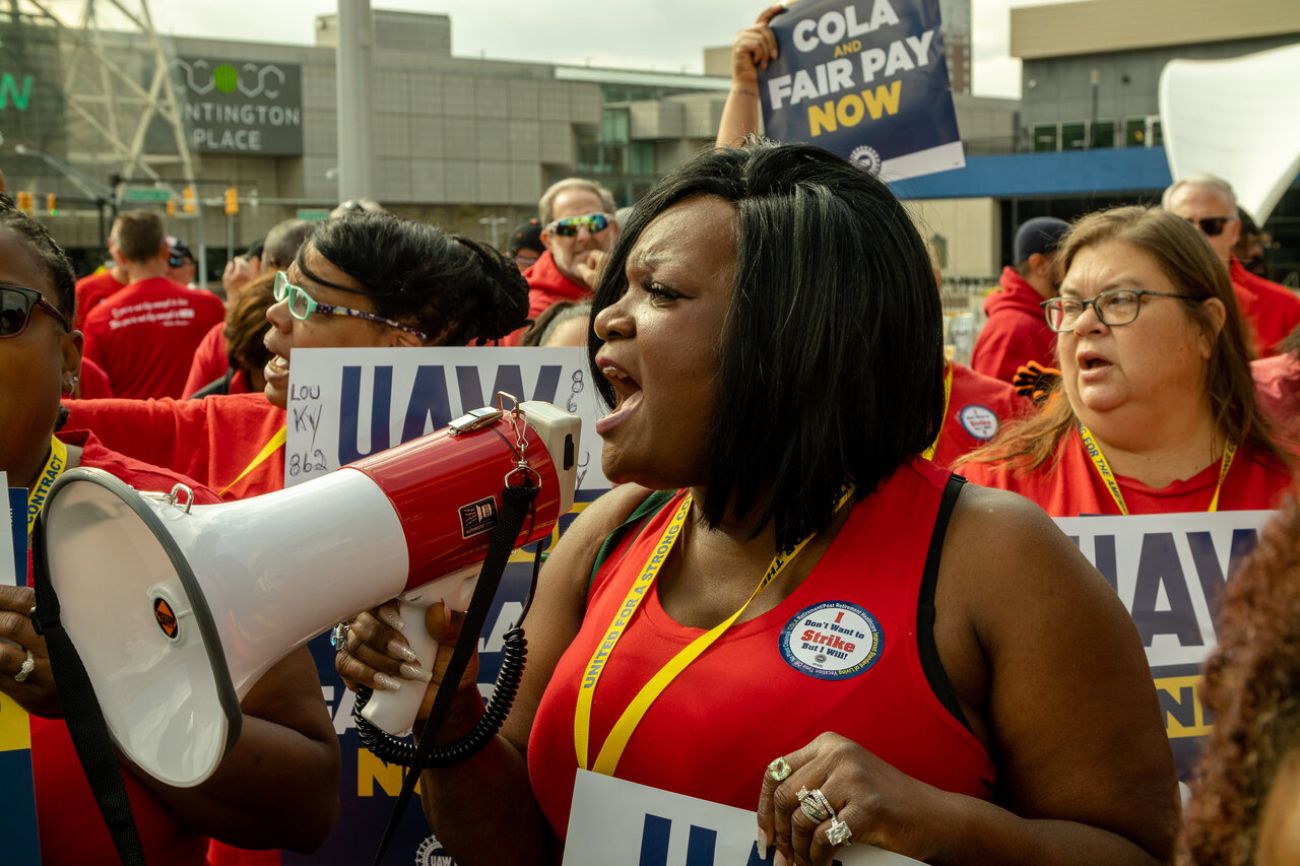
But this strike has given us a glimpse of another future. Rarely in contemporary America do we see multiracial crowds gathered for a common purpose. The UAW strike, however, has furnished plenty of images of White and non-White workers walking the picket lines together.
These images represent unions’ peculiar power. Unions shrink the physical and psychological differences between White and non-White Americans. They have a history of fostering racial solidarity between White, Black and brown workers.
Their message to those workers: The enemy is not a person of another skin color but something else: corporate greed.
That message has racial implications. Several studies have found union membership not only reduces racial resentment but also leads to White unionized workers becoming more likely to support economic policies that help the Black community.
“Unions provide opportunities for people of different racial backgrounds and identities to not merely work side by side — which may itself relax prejudice through sheer exposure — but to work toward a common goal together, promoting cooperation, and enhancing respect and mutuality across racial lines,” wrote Meagan Day, co-author of Bigger than Bernie: How We Go from the Sanders Campaign to Democratic Socialism, in an essay in Jacobin magazine.
Unions provided crucial support to the civil rights movement. It’s often been noted that Shawn Fain, the current UAW president, quotes Malcolm X. But Walter Reuther, his legendary predecessor in the 1950s and 1960s, was a “stalwart” ally of the Rev. Martin Luther King Jr.
Reuther gave critical support to the 1963 March on Washington and sat on the advisory board of the NAACP. He also joined King for the historic Selma to Montgomerymarch, which helped spark the passage of the 1965 Voting Rights Act.
King was also a strong supporter of unions. He had gone to Memphis, where he was assassinated in 1968, to support striking sanitation workers.
In fairness,unions don’t always practice the racial solidarity they preach. They, too, have a history of racism and corruption. Not long ago, the Justice Department unearthed a massive corruption scandal at the UAW.
But the UAW strike could have an impact not just in the immediate future, but long-term. The current labor resurgence could help Democrats make inroads among White, working-class voters.
The current headlines may not say this: But the UAW strike and others like it are about something more than labor rights.
They’re also about race.
And in America, the two have always been intertwined.
John Blake is the author of “More Than I Imagined: What a Black Man Discovered About the White Mother He Never Knew.”
ZNetwork is funded solely through the generosity of its readers.
Donate
