


The morgues at the hospitals of Baghdad are filling to capacity. At Yarmouk Hospital in central Baghdad, the three freezers reek of decaying bodies, despite the temperature.
The smell rushes out at us as the doors are opened. I’ve smelled the burning bodies on the funeral pires in Nepal…but this is different. This smell…how do I describe it? But it never leaves me, long after we leave the hospital later.
Many of the bodies are from Fallujah, obviously picked off the streets-parts of which are eaten by dogs .
The bodies from Fallujah have the typical oddly discolored skin, along with other abnormalities .
I walk out of the first freezer straight into a metal pole. Two of the people with me, including Abu Talat, make sure I’m OK as I stand there stunned…I didn’t even feel the pole, just that it stopped me from proceeding to the next freezer.
Bodies are piled into the freezers and most are uncovered, but not all. The hardest visuals to get out of my head are those of the eyes .
The doctor with us says that most of the bodies have been shot…and are not from Fallujah. The violence against Iraqis continues unabated…worsening by the day.
I do my job…taking photo after photo of the most horrible thing I’ve ever seen in my life. Many of the bodies are so old they are shrinking into themselves.
After the last cooler, we start to walk away. I am spitting, trying to get the smell to leave me…Abu Talat is staring off into distance. After I gag, the hospital worker who accompanied us to the coolers walks towards me with a small vial of scent, and begins rolling it across my upper lip.
“Shukran jazeelan (thank you very much),†I tell him, then he proceeds to do the same for Abu Talat, then we walk on.
We talk with the doctor more as we shuffle along. “The morgues in all the hospitals are filling with bodies everyday, most of them shot by soldiers,†she says, “But also from crime and accidents. So many dead civilians.â€
We walk, well, kind of shuffle out of the hospital, towards the car.
“That is the most horrible thing I’ve ever seen in my life,†I say to Abu Talat.
We get in the car and just drive.
“I don’t know what to do,†I tell him, “What do you want to do?â€
He holds his hands up, expressing that he doesn’t know either. “Let’s just drive,†I say.
“Ok, I’m just trying to drive,†he replies.
I decide to go buy some supplies…grasping towards normalcy as I catch whiffs of the decaying bodies despite the nice smelling scent that was rubbed across my upper lip.
We buy some lunch only because it’s lunch time and we’re supposed to be hungry, then drive the rest of the way to the hotel.
My head is spinning, as is Abu Talat’s. “I am traumatized,†I tell him. “Yes, my head is spinning also,†he replies before adding, “I want to take a shower.â€
“I wish I could shower from the inside,†I tell him.
“From the outside it’s very easy,†he says quietly, “But how do we clean from the inside?â€
We go to my room and I begin writing. The food sits in its bag on the couch…Abu Talat says, “In Islam, if we touch a dead body, even if we just see one, we should shower,†he says while walking into the bathroom.
He pauses as he catches me staring out the window at nothing, “Hey, don’t think about it. I know it is hard.†I slowly look up at him as he adds, “It is harder on me, because I am Iraqi. My heart is shredding.â€
He walks into the bathroom of my hotel room to take a shower, as I go back to writing this.
Nobody knows who these dead people are. The coolers are full. Others are full too, in the other hospitals.
He finishes and begins to pray as I start my shower, trying to wash the bodies away. It helps, some.
But it’s the eyes that got me. And they won’t go away.

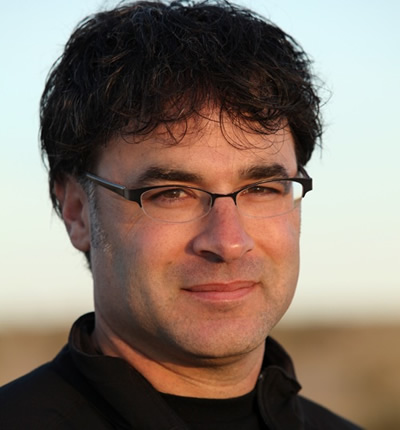
Dahr Jamail is the Baghdad correspondent for The NewStandard. Jamail, a political activist from Anchorage, Alaska, first traveled to Iraq in November 2003 to write about the effects of the US occupation on the Iraqi people. After nine weeks covering Iraq under occupation, he returned to the US and addressed audiences in Alaska and the Northeast about his experience. He has recently returned to Iraq in order to continue reporting on US occupation and privatization. You can view his dispatches and articles at http://newstandardnews.net/iraq.
ZNetwork is funded solely through the generosity of its readers.
Donate




