


Source: Globetrotter
On February 8, 2022, UNICEF (the United Nations Children’s Fund) Afghanistan sent out a bleak set of tweets. One of the tweets, which included a photograph of a child lying in a hospital bed with her mother seated beside her, said: “Having recently recovered from acute watery diarrhea, two years old Soria is back in hospital, this time suffering from edema and wasting. Her mother has been by her bedside for the past two weeks anxiously waiting for Soria to recover.” The series of tweets by UNICEF Afghanistan show that Soria is not alone in her suffering. “One in three adolescent girls suffers from anemia” in Afghanistan, with the country struggling with “one of the world’s highest rates of stunting in children under five: 41 percent,” according to UNICEF.
The story of Soria is one among millions; in Uruzgan Province, in southern Afghanistan, measles cases are rising due to lack of vaccines. The thread to the tweet about Soria from UNICEF Afghanistan was a further bleak reminder about the severity of the situation in the country and its impact on the lives of the children: “without urgent action, 1 million children could die from severe acute malnutrition.” UNICEF is now distributing “high energy peanut paste” to stave off catastrophe.
The United Nations has, meanwhile, warned that approximately 23 million Afghans—about half the total population of the country—are “facing a record level of acute hunger.” In early September, not even a month after the Taliban came to power in Kabul, the UN Development Program noted that “A 10-13 percent reduction in GDP could, in the worst-case scenario, bring Afghanistan to the precipice of near universal poverty—a 97 percent poverty rate by mid-2022.”
The World Bank has not provided a firm calculation of how much of Afghanistan’s GDP has declined, but other indicators show that the threshold of the “worst-case scenario” has likely already passed.
When the West fled the country at the end of August 2021, a large part of the foreign funding, which Afghanistan’s GDP is dependent on, also vanished with the troops: 43 percent of Afghanistan’s GDP and 75 percent of its public funding, which came from aid agencies, dried up overnight.
Ahmad Raza Khan, the chief collector (customs) in Khyber Pakhtunkhwa in Pakistan, says that exports from his country to Afghanistan have dropped by 25 percent; the State Bank of Pakistan, he says, “introduced a new policy of exports to Afghanistan on December 13” that requires Afghan traders to show that they have U.S. dollars on them to buy goods from Pakistan before entering the country, which is near impossible to show for many of the traders since the Taliban has banned the “use of foreign currency” in the country. It is likely that Afghanistan is not very far away from near universal poverty with the way things stand there presently.
On January 26, 2022, UN Secretary-General António Guterres said that “Afghanistan is hanging by a thread,” while pointing to the 30 percent “contraction” of its GDP.
Sanctions and Dollars
On February 7, 2022, Taliban spokesperson Suhail Shaheen told Sky News that this perilous situation, which is leading to starvation and illness among children in Afghanistan, “is not the result of our [Taliban] activities. It is the result of the sanctions imposed on Afghanistan.”
On this point, Shaheen is correct. In August 2021, the U.S. government froze the $9.5 billion that Afghanistan’s central bank (Da Afghanistan Bank) held in the New York Federal Reserve. Meanwhile, family members of the victims who died in the 9/11 attacks had sued “a list of targets,” including the Taliban, for their losses and a U.S. court later ruled that the plaintiffs be paid “damages” that now amount to $7 billion. Now that the Taliban is in power in Afghanistan, the Biden administration seems to be moving forward “to clear a legal path” to stake a claim on $3.5 billion out of the money deposited in the Federal Reserve for the families of the September 11 victims.
The European Union followed suit, cutting off $1.4 billion in government assistance and development aid to Afghanistan, which was supposed to have been paid between 2021 and 2025. Because of the loss of this funding from Europe, Afghanistan had to shut down “at least 2,000 health facilities serving around 30 million Afghans.” It should be noted here that the total population of Afghanistan is approximately 40 million, which means that most Afghans have lost access to health care due to that decision.
During the entire 20-year period of the U.S. occupation of Afghanistan, the Ministry of Public Health had come to rely on a combination of donor funds and assistance from nongovernmental organizations (NGOs). It was as a result of these funds that Afghanistan saw a decline in infant mortality and maternal mortality rates during the Afghanistan Mortality Survey 2010. Nonetheless, the entire public health care system, particularly outside Kabul, struggled during the U.S. occupation. “Many primary healthcare facilities were non-functional due to insecurity, lack of infrastructure, shortages of staff, severe weather, migrations and poor patient flow,” wrote health care professionals from Afghanistan and Pakistan, based on their analysis of how the conflict in Afghanistan affected the “maternal and child health service delivery.”
Walk Along Shaheed Mazari Road
On February 8, 2022, an Afghan friend who works along Shaheed Mazari Road in Kabul took me for a virtual walk—using the video option on his phone—to this busy part of the city. He wanted to show me that in the capital at least the shops had goods in them, but that the people simply did not have money to make purchases. We had been discussing how the International Labor Organization now estimates that nearly a million people will be pushed out of their jobs by the middle of the year, many of them women who are suffering from the Taliban’s restrictions on women working. Afghanistan, he tells me, is being destroyed by a combination of the lack of employment and the lack of cash in the country due to the sanctions imposed by the West.
We discuss the Taliban personnel in charge of finances, people such as Finance Minister Mullah Hidayatullah Badri and the governor of the Afghanistan central bank Shakir Jalali. Badri (or Gul Agha) is the money man for the Taliban, while Jalali is an expert in Islamic banking. There is no doubt that Badri is a resourceful person, who developed the Taliban’s financial infrastructure and learned about international finance in the illicit markets. “Even the smartest and most knowledgeable person would not be able to do anything if the sanctions remain,” my friend said. He would know. He used to work in Da Afghanistan Bank.
“Why can’t the World Bank’s Afghanistan Reconstruction Trust Fund (ARTF) be used to rush money to the banks?” he asked. This fund, a partnership between the World Bank and other donors, which was created in 2002, has $1.5 billion in funds. If you visit the ARTF website, you will receive a bleak update: “The World Bank has paused disbursements in our operations in Afghanistan.” I tell my friend that I don’t think the World Bank will unfreeze these assets soon. “Well, then we will starve,” he says, as he walks past children sitting on the side of the street.

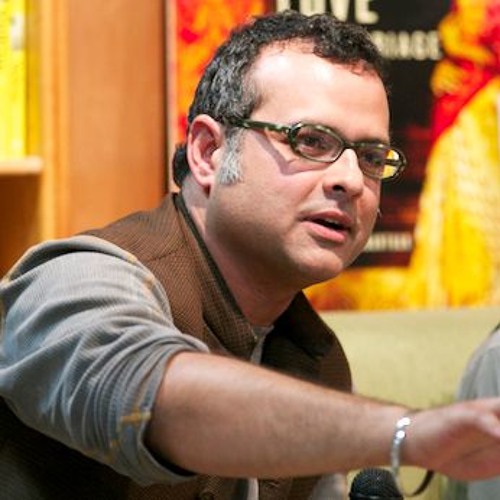
Vijay Prashad is an Indian historian, editor, and journalist. He is a writing fellow and chief correspondent at Globetrotter. He is an editor of LeftWord Books and the director of Tricontinental: Institute for Social Research. He is a senior non-resident fellow at Chongyang Institute for Financial Studies, Renmin University of China. He has written more than 20 books, including The Darker Nations and The Poorer Nations. His latest books are Struggle Makes Us Human: Learning from Movements for Socialism and (with Noam Chomsky) The Withdrawal: Iraq, Libya, Afghanistan, and the Fragility of U.S. Power. Tings Chak is the art director and a researcher at Tricontinental: Institute for Social Research and lead author of the study “Serve the People: The Eradication of Extreme Poverty in China.” She is also a member of Dongsheng, an international collective of researchers interested in Chinese politics and society.
ZNetwork is funded solely through the generosity of its readers.
Donate




