Source: Counterpunch

The United States took a decisive step toward democracy with the passage of the Voting Rights Act of 1965. At the time, Black political representation was not just limited — it was nearly nonexistent. African Americans made up more than 10 percent of the population but held less than 2 percent of seats in Congress and none in the Senate.

By dismantling formal barriers to voting, the Voting Rights Act opened the door for Black political participation — and over time, representation. That progress was neither immediate nor inevitable, but it was real.

It was in this context that the Joint Center for Political and Economic Studies, the organization I lead, was founded in 1970. Our mission is to support the growth of Black political leadership and ensure that increased representation translates into meaningful policy outcomes.

More than five decades later, that mission remains urgent.

Black representation in the House has grown from fewer than 10 members in 1965 to more than 60 today, reaching roughly 14 percent of members — finally approaching parity with the Black share of the U.S. population. But it took nearly 60 years to reach this point.

That underscores a critical truth: representation requires sustained protection and intentional policy.

Even now, the progress is incomplete. Even with a record high five Black senators — just 5 percent of the total — Black representation in the Senate remains far below the Black population share.

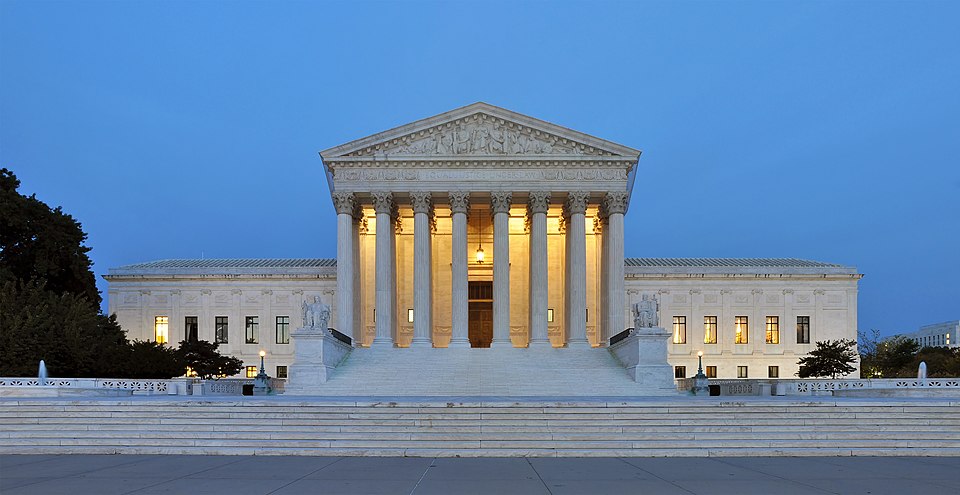
Today, even these gains are under threat. Recent Supreme Court decisions have weakened the Voting Rights Act, reducing federal oversight and making it more difficult to challenge discriminatory voting practices.

The Court’s most recent ruling gutted regulation designed to ensure Black representation, permitting what amounts to racial gerrymandering under the guise of partisan gerrymandering — a practice which itself badly undermines democracy for Americans of all races.

The result is a system increasingly driven by political advantage rather than fair representation. And Black representation is likely to suffer because of it.

Gerrymandering is often discussed as a partisan tactic, but it has broader structural consequences. When districts are drawn to maximize political control, they can dilute the voting power of communities of color — even without explicitly referencing race. For Black communities, whose political gains have often depended on fair districting, the erosion of these protections is particularly consequential.

This is not simply about who wins elections. It is about how policy is shaped and whose interests are represented in decisions that affect economic opportunity, education, healthcare, and wealth. Representation alone does not guarantee equity — but without it, inequity is almost certain.

The current moment demands clarity. The expansion of Black political representation over the past half-century was the result of deliberate policy choices, sustained advocacy, and legal enforcement. As those protections are weakened, the risk is not just stagnation — it is regression.

At the Joint Center, our goal is clear: to ensure that the gains of the past are protected and that the path toward equitable representation remains open.

Nearly 60 years after the Voting Rights Act, Black Americans have come closer than ever to achieving representation in Congress that reflects their share of the population. But progress at this level is not self-sustaining. Without strong protections and continued commitment, it can be reversed.

The work of building a representative democracy is ongoing. And at this moment, it is clear that the work must continue.

Dedrick Asante-Muhammad is host of the Race and Wealth Podcast and Director of the Racial Wealth Divide Initiative at the Corporation for Economic Development.


This article was originally published by Counterpunch; please consider supporting the original publication, and read the original version at the link above.

ZNetwork is funded solely through the generosity of its readers.

Donate
Donate
Leave A Reply

Subscribe

All the latest from Z, directly to your inbox.

Institute for Social and Cultural Communications, Inc. is a 501(c)3 non-profit.

Our EIN# is #22-2959506. Your donation is tax-deductible to the extent allowable by law.

We do not accept funding from advertising or corporate sponsors.  We rely on donors like you to do our work.

ZNetwork: Left News, Analysis, Vision & Strategy

Subscribe

All the latest from Z, directly to your inbox.

THE WIND CRIES FREEDOM

The Wind Cries Freedom, the new book from Z co-founder Michael Albert, is a sweeping oral history of a future American revolution.

Through thirty interconnected chapters, it draws out the strategies, failures, turning points, and hard-won wisdom of a movement that called itself the Revolutionary Participatory Society. These are not the polished memoirs of politicians: they are the unfiltered accounts of people who organized in neighborhoods, hospitals, universities, stadiums, courthouses, and places of worship, and kept a shared vision alive through cynicism and exhaustion.

The result is speculative political fiction that reads like history: messy, human, and quietly hopeful in the way that only real experience and long thought can produce.

Get your copy and peruse more features on the book’s website below.

“Read it, argue with it, but don’t look away. The future it recalls is one we must still fight to deserve.”

Yanis Varoufakis

“The most unusual and intriguing combination of prophecy, manifesto, and movement building manual that I have ever encountered.”

Bill Fletcher Junior

“This work fills a huge gap in our social movement literature.”

Cynthia Peters

You've just read your article on Z this month.

DOES Z'S SURVIVAL MATTER?

You keep coming back for a reason: serious political analysis, movement reporting, and debate beyond the priorities of corporate media. Today, Z is in a precarious financial position. If Z is part of how you understand the world, help keep it going. The readers who give monthly are the reason this work survives between fundraisers.

Z is in a precarious financial position. If it’s part of how you understand the world, help keep it going.

Number of donors706
Our goal1,000

Sustainers at $9/month or more receive the digital Z Magazine.

Already a sustainer? Click here and we won’t ask again. Thank you!

Your reading count is stored only in your browser and is never sent to us.

Sound is muted by default.  Tap 🔊 for the full experience

CRITICAL ACTION

Critical Action is a longtime friend of Z and a music and storytelling project grounded in liberation, solidarity, and resistance to authoritarian power. Through music, narrative, and multimedia, the project engages the same political realities and movement traditions that guide and motivate Z’s work.

If this project resonates with you, you can learn more about it and find ways to support the work using the link below.

Z is in the most precarious financial position in its history.

Z is a place to think beyond the limits of the present.

For decades, Z has brought together political analysis, movement reporting, debate, and visions of a different future from writers and activists around the world. That work is more than journalism. It is movement infrastructure: movements need places to develop ideas, test arguments, learn from experience, and imagine what comes next.

In the first two days of this fundraiser, 19 donors and 8 new monthly sustainers stepped up. Help us reach 1,000 donors who keep Z independent, for everyone.

For decades, Z has published the analysis, debate, and visions movements need, free of paywalls, ads, and billionaire owners. If that work should continue, Z needs your support now.

Number of donors706
Our goal1,000

Sustainers at $9/month or more receive the digital Z Magazine.

Subscribe

Join the Z Community – receive event invites, announcements, a Weekly Digest, and opportunities to engage.

Exit mobile version

