


I am writing in solidarity with and support for the student led movement at the Evergreen State College, “Those Who Are Not Often Heard”. The actions and demands from May 23rd to May 26th, 2017 are for the most part, very positive. I hope and trust this important movement will continue to grow, and with the support of many more students, faculty and staff win its demands. What is most significant about this Black led student movement is the centrality and leadership of Black students, their growing and powerful voice, the growing focus on issues of racism on campus, and a list of demands that make central the needs of Black and other students of color, undocumented immigrants, and LGBT students.
The winning of these demands would lead to a far more inclusive and just campus. Most of the media attention has focused on faculty member, Bret Weinstein, and his supposed mistreatment by some students. Only one of the twelve demands mentions Bret Weinstein, and this demand calls for his suspension, not firing. This movement is about far more than Bret Weinstein.
Bret Weinstein has demonstrated on more than one occasion a very limited understanding of the institutional and systemic racism that continues to be pervasive in U.S. society as the election and program of Donald Trump demonstrates. That he believes in racial justice in an abstract way is not a sufficient excuse. His comments both before and especially on and after, May 23rd, 2017 demonstrate a pattern of not taking seriously the needs and safety of Black students and staff at the Evergreen State College. On Friday, May 26th, Weinstein appeared on Tucker Carlson’s program on Fox News and accepted and did not challenge the misinformation put forward by Carlson, e.g., that whites were forced to leave campus during the “Day of Absence” in April of this year. The focus of this day was learning to understand racism more deeply and how to challenge it. In reality, 200 white students were asked to volunteer, not forced, to leave campus for this discussion, a minor departure from previous years where students, staff and faculty of color had left campus for one day. For this history, see https://www.pdf-archive.com/2017/05/26/doa-emails-1/preview/page/1/. Moreover, Weinstein accepted and contributed to a narrative on this TV show that he was blocked from leaving his classroom when about 50 students entered his classroom on May 23rd to challenge his positions. He could leave and was not facing any physical threat. Also totally false and his irresponsible was his claim that a mob was running the campus last week.
Occasionally, the word safety is overused at Evergreen but an interview such as Weinstein’s on Fox contributes to a climate where the growing numbers of emboldened white supremacists pose a growing and real danger, especially to Black students, staff and faculty. To do such an interview which furthers the right-wing agenda of Fox and also societal racism is the height of racial insensitivity. I do not believe that Bret Weinstein should be fired as he is no more racist than the majority of white people and faculty at Evergreen or in the society but there should be a process where he has to engage in an honest discussion about racism with those most affected by his behavior.
The Evergreen State College is not isolated from the broader Olympia community and the United States. Two years ago, May 21st, 2015, two young Black men, Bryson Chaplin and Andre Thompson were both shot in Olympia, Washington by white police officer Ryan Donald in Olympia as they were going home on their skateboards after attempting to shoplift some beer from a local Safeway. In a miscarriage of justice and emblematic of the continuing racism here, although there were no injuries to the white police officer, and Bryson Chaplin was shot multiple times by Officer Donald and is in a wheelchair; the police officer was not charged with any crime nor disciplined while the two young men, Bryson Chaplin and Andre Thompson were convicted on May 18, 2017 of third degree assault. They will be sentenced in June. This is part of the context for the movement on campus which also contains demands against racism by campus police.
This growing student movement which has signed many of their statements as “Those Who Are Not Often Heard”, and the related student activism is very significant and positive. The size of the meetings last week in support of these demands, and the sit-in on Wednesday, May 25th outside the President’s office that was organized and led by Black and other students of color have been large, hundreds of students, and inspiring and powerful. Many, many white students and some white faculty and staff, although not enough, have joined in and supported this anti-racist movement; our support is commendable although it needs to deepen and grow in numbers. For those whites who are active daily in the struggle against racism in the United States, we should learn to be supportive and act in solidarity but perhaps not unquestioning support. To me, this means, supporting in actions and not just words, this movement for racial and social justice by showing up and putting our bodies on the line, and accepting and supporting the leadership of Blacks, Latinx, Native and other people of color. I prefer the concept of solidarity or accompaniment to the term, allyship, at least how it is often applied. Solidarity or accompaniment to me, means putting into practice the idea that the struggle for racial justice affects all of us, although not in the same way; and that there should be honest dialog among all participants in this struggle. This is not an argument against Black autonomy or people of color leadership, which I support, but rather for a relationship among all participants that is respectful and participatory. It is important that whites involved in this struggle should not dominate the conversations and space and be humble but our role should be more than just uncritical support.
An important demand that has been addressed by this growing movement is for increased access to this campus by underrepresented and discriminated against groups and to make the Evergreen State College a better learning experience, e.g., for undocumented immigrants. For example, the demand for more financial aid for undocumented immigrants, demand Nine, is crucial. What possibly could also be added is a demand to make Evergreen more accessible to enter and a better learning experience for potential and actual first generation college students. Issues of economic class are sometimes ignored at Evergreen. I suggest that there be explicit demands in addition to what is already expressed for increased recruiting, financial aid and academic support of Blacks, Latinx, Native American and Pacific Islanders, immigrants, first generation college students, and the incarcerated and ex-incarcerated.
In closing, I want to enthusiastically thank those who have participated in this very significant activism for racial and social justice. You are setting a very good example. Thank You! It gives Evergreen the possibility to close the gap between its rhetoric and reality. I do believe that Evergreen has made some improvements in reducing racism in the 30 years I have been here, for example, in hiring more faculty of color, and is probably less racist than the majority of universities in the United States but that is a low standard, and there is a long, long way to go. These events of the last week, May 23rd to May 26th, 2017, have brought into the spotlight the pervasive racism that continues. I urge President George Bridges and the rest of the campus, including the faculty, to commit themselves to supporting and implementing these demands in a period of intense systemic racism in the larger society and politics.

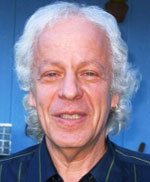
Peter Bohmer has been an activist in movements for radical social change since 1967, which have included anti-racist organizing and solidarity movements with the people of Vietnam, Southern Africa, Puerto Rico, Cuba, Palestine and Central America. For his activism and teaching, he was targeted by the FBI. He was a member of the faculty at the Evergreen State College in Olympia, WA from 1987 to 2021 where he taught political economy. He believes alternatives to capitalism are desirable and possible. Peter is the proud parent of a daughter and three sons.
ZNetwork is funded solely through the generosity of its readers.
Donate




